Plant Overview
Known as the "Source of a Thousand Fibers," the Raffia Palm (Raphia farinifera) is a tropical giant famous for providing the strong, flexible material used in gardening and crafts. Native to the riverine forests of Sub-Saharan Africa and Madagascar, this palm doesn't just grow—it dominates the landscape. While it looks like a typical palm on a grand scale, it holds secrets of ancient utility and botanical extremes.
🔍 How to Identify
- 🌿 The Giant Fronds: Its leaves are spectacularly long, feathery, and arching. They emerge in a rich green and can grow to be some of the largest individual leaves in the entire plant kingdom.
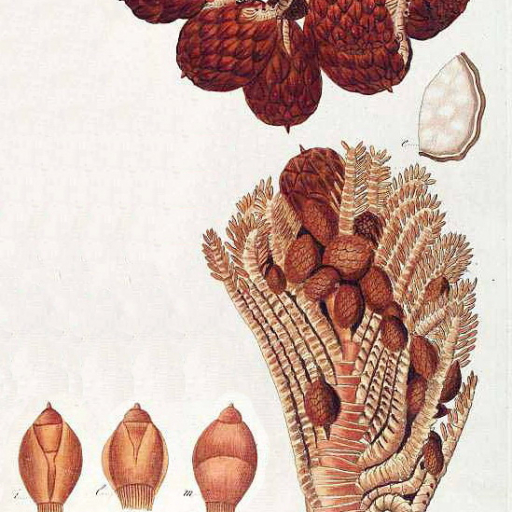
- 🥥 Scaled Fruits: The fruits are perhaps the most striking feature; they are covered in overlapping, polished reddish-brown scales, giving them a "dragon-egg" or reptilian appearance.
- 🪵 Fibrous Trunk: The trunk is often stout and shaggy, covered in the persistent, fibrous remains of old leaf bases that give the tree its famous texture.
🏡 In Your Garden
- 💧 Water Enthusiast: In its natural habitat, this palm loves "wet feet." It is typically found along riverbanks and in swamps, meaning it requires consistently moist, even boggy soil and high humidity to thrive.
- ☀️ Sun and Space: This is not a "houseplant" for a small apartment. It requires full sun and an enormous amount of vertical and horizontal space. It is best suited for large botanical gardens or tropical estates where its scale can be appreciated.
- ⏳ A Monocarpic Lifecycle: Unlike many palms, this species is monocarpic. It grows for many years (often 20-40), blooms in a spectacular display of flowers and fruit just once, and then the parent plant dies, leaving seeds to carry on its legacy.
⚠️ Safety & Toxicity
- 🛡️ Generally Safe: The Raffia Palm is non-toxic to humans and common domestic pets like cats and dogs.
- 🌵 Mechanical Hazards: The primary safety concern is physical. The massive falling fronds are extremely heavy, and the leaf stalks can have sharp, fibrous edges that may cause scratches if handled without heavy-duty gardening gloves.
✨ Fun Fact
- 📏 The Record Breaker: The Raffia Palm family holds the world record for leaf length. A single leaf of a Raphia palm can reach up to 25 meters (82 feet) long—that is longer than two standard school buses parked end-to-end!

Detailed Care Instructions
To grow Raphia farinifera, also known as the Raffia Palm or Ivory Coast Palm, follow these steps:
- Climate and Location: Ensure you are in a tropical or subtropical climate, as this palm requires warm temperatures to thrive. Choose a location that receives partial to full sun, preferably with protection from strong winds.
- Soil: Raffia palms prefer well-draining soil with a slightly acidic to neutral pH. Prepare the soil by incorporating sand or compost to improve drainage and fertility.
- Germination: Propagate Raphia farinifera from seeds. Soak the seeds in warm water for 24 hours, then plant them in pots or seed trays filled with moist, well-draining soil. Plant the seeds vertically, with the rounded end facing downward, about 1 inch deep.
- Watering: Keep the soil consistently moist during the germination process by watering gently. Avoid waterlogging the soil as it can cause root rot.
- Germination period: It may take up to several months for Raphia farinifera seeds to germinate. In some cases, it can take a year or longer. Be patient and maintain optimal conditions.
- Transplanting: Once the seedlings develop several leaves and are large enough to handle, transplant them into larger pots or directly into the ground. Choose a spacious container or find a suitable site with enough space for the large palm to grow.
- Maintenance: Regularly water the Raphia farinifera palm to keep the soil evenly moist but not waterlogged. Provide regular applications of balanced fertilizer during the growing season to promote healthy growth. Remove any dead or damaged leaves to maintain a tidy appearance.
- Protection: Protect the Raffia Palm from strong winds and cold temperatures, as they are susceptible to cold damage. Consider providing some form of windbreak if necessary.
- Growth and maturity: Raphia farinifera palms grow slowly, taking several years to reach maturity. Once matured, they can reach heights of up to 60 feet or more.
By following these steps and providing the necessary care, you can successfully grow Raphia farinifera. However, keep in mind that this palm tree requires space, time, and a suitable climate to thrive.

Place in a window with dappled sun or a spot in the middle of a room. Or directly in a window facing west or east.

To water this plant, first, make sure the soil is dry to the touch. Then, slowly pour water onto the soil, making sure not to overwhelm the plant's roots with too much water at once. Allow the excess water to drain out of the bottom of the pot, and be sure not to let the plant sit in standing water. Repeat the watering process when the soil begins to feel dry again, usually every 7-10 days depending on the plant's specific needs.
To fertilize this plant, you should apply a balanced liquid fertilizer once a month from early spring to late summer. Use half the recommended dose and dilute it in water. Make sure the soil is moist before applying the fertilizer and avoid getting the liquid on the leaves.
The ideal soil for the Raphia Farinifera plant should be well-draining, but able to retain moisture and provide enough nutrients for healthy growth. It is recommended to use a mixture of sand, vermiculite, and peat moss that is rich in organic matter. The pH level of the soil should be slightly acidic to neutral, ranging from 6.0 to 7.0. Additionally, the soil should not be compacted and should have good aeration to promote healthy root development. It is also important to avoid using soil that has been previously used for growing other plants, as it may contain harmful pathogens and pests that can adversely affect the Raphia Farinifera plant's growth.
To propagate this plant, you will need to find mature specimens in the wild or locate a mature specimen in a botanical garden. Once you have located a mature plant, you will need to obtain permission from the owner or authority to obtain a cutting.
Take a sharp knife or pruning shears and carefully cut a stem or shoot that is at least 6-8 inches long. Make the cut at a 45-degree angle to ensure that water does not collect on the cut surface.
Remove the lower leaves from the stem or shoot so that only 2-3 remain at the top. Dip the cut end of the stem or shoot in rooting hormone powder and tap off the excess.
Prepare a potting mix of well-draining soil and sand in a ratio of 1:1. Make a small hole in the center of the potting mix and insert the stem or shoot while gently pressing the soil down to hold it in place. Water the soil gently to settle it around the stem or shoot, and place the pot in a warm, bright, and humid location.
Water the plant as needed to keep the soil evenly moist but not waterlogged. In about 2-3 weeks, new growth should appear, indicating that the plant has successfully rooted. At this point, gradually acclimate the plant to drier conditions and brighter light until it is ready to be transplanted to a larger pot or planted outdoors.








