Plant Overview
Known as the "Ivory Coast Raffia Palm" or simply the "Wine Palm," Raphia hookeri is a majestic giant of the African wetlands. It is famous for producing some of the longest leaves in the entire plant kingdom, creating a dramatic, tropical silhouette wherever it grows. Deeply rooted in West African culture, this palm is not just a plant; it is a vital source of fiber for weaving and the primary ingredient for traditional palm wine.
🔍 How to Identify
- 🌿 The Leaves: Massive, feathery (pinnate) fronds that can reach staggering lengths. They arch gracefully from the crown, featuring a deep green hue with a sturdy midrib.
- 🧶 The Trunk: Unlike smooth-barked palms, the trunk is often covered in a dense, shaggy coat of dark brown fibers and persistent leaf bases, giving it a "hairy" or rugged appearance.
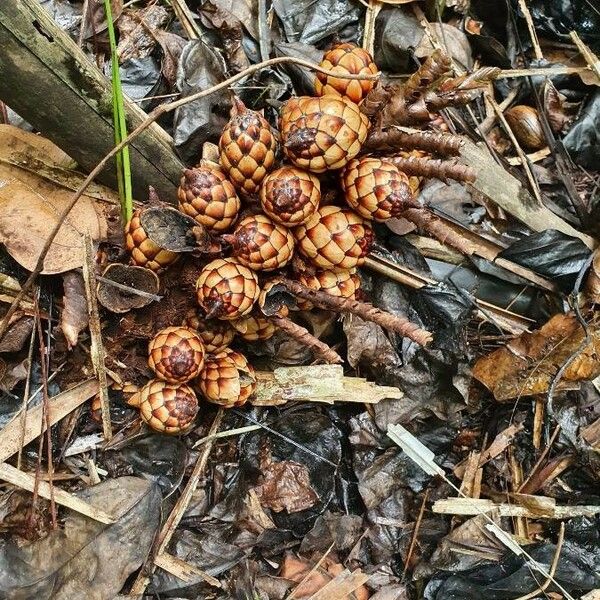
- 🥥 The Fruit: It produces large, pendulous clusters of egg-shaped fruits covered in shiny, overlapping reddish-brown scales, resembling a polished pinecone or a dragon’s egg.
🏡 In Your Garden & Habitat
- 💧 Thirsty Giants: This palm is naturally found in freshwater swamps and riverbanks. If you are growing one, it requires "wet feet"—it thrives in waterlogged soil and high humidity, making it perfect for pond edges but difficult for dry landscapes.
- 🏗️ Space Requirements: Due to its massive leaf span, this is not a plant for a small backyard. It needs significant vertical and horizontal clearance to prevent its heavy fronds from damaging nearby structures or other plants.
⚠️ Safety & Toxicity
- 🟢 General Safety: Raphia hookeri is generally considered non-toxic to humans and common household pets if touched or accidentally brushed against.
- ⚔️ Physical Hazards: The real danger lies in its physical structure. The leaf stalks and the fibrous trunk can be very coarse or even sharp. Handle with gloves to avoid skin irritation or "paper cuts" from the tough fibers.
- 🍷 The "Wine" Context: While the sap is used to create palm wine, the raw, unprocessed sap can ferment quickly and should be handled according to local traditional knowledge.
✨ Fun Fact
The Raphia genus holds the world record for the longest leaves in the plant kingdom; a single leaf from some species can reach over 80 feet (25 meters) long—longer than a standard basketball court!

Detailed Care Instructions
Raphia hookeri, commonly known as African raffia palm, is a tropical plant native to parts of Africa. Growing Raphia hookeri requires specific conditions to thrive, as it's adapted to wet or marshy environments. Here are some steps on how to grow this plant successfully:
1. Site Selection
- Sunlight: Raphia hookeri prefers partial shade to full sun. However, it can tolerate periods of full sun.
- Space: Ensure you have enough space for the plant, as it can grow quite tall and wide.
2. Soil Requirements
- Well-Draining Soil: Use rich, organic soil that retains moisture but drains well. A mixture of peat, compost, and sand can work well.
- pH Level: Aim for a slightly acidic to neutral pH (around 6.0 to 7.0).
3. Watering
- Consistent Moisture: Raphia hookeri thrives in wet conditions, so be sure to keep the soil consistently moist. However, avoid waterlogging by ensuring good drainage.
4. Temperature and Humidity
- Warm Conditions: The plant prefers warm temperatures (ideally between 20°C to 30°C or 68°F to 86°F).
- High Humidity: High humidity levels are beneficial. If growing in a dry climate, consider misting the plant or using a humidifier.
5. Fertilization
- Regular Feeding: During the growing season (spring and summer), use a balanced fertilizer every 4-6 weeks. Liquid fertilizers can be effective.
6. Propagation
- Seeds: Propagation is generally done by seeds. Soak the seeds in water for 24 hours before planting to improve germination. Plant seeds in a pot filled with the appropriate soil mix.
- Transplanting Seedlings: Once seedlings are a few inches tall and have developed leaves, they can be transplanted into the garden or larger pots.
7. Care and Maintenance
- Pruning: Remove any dead or damaged fronds to encourage healthy growth. However, be cautious about excessive pruning since the plant may need some foliage to maintain energy.
- Pest and Disease Management: Monitor for pests like aphids, spider mites, or scale insects. Treat infestations with insecticidal soap or neem oil as needed.
8. Protection
- Cold Climate Protection: If you live in a cooler climate, consider growing Raphia hookeri in containers that can be moved indoors during winter, or ensure it’s planted in a location that offers some protection from frost.
9. Patience
- Raphia hookeri can take several years to mature and produce significant growth, so patience is key.
By following these guidelines and providing the necessary conditions for growth, you should be able to cultivate a healthy Raphia hookeri plant.
Raphia hookeri is a species of palm that prefers a humid environment and requires careful watering practices to thrive. Here are some detailed steps on how to water it effectively:
- Soil Moisture Check: Before watering, check the soil moisture level. Insert your finger or a moisture meter into the soil about an inch deep. If the soil feels dry at that depth, it’s time to water.
- Watering Frequency: Depending on your climate and the plant's environment, watering frequency may vary. In warmer months or in a dry environment, you may need to water more frequently, while in cooler months, reduce the frequency. Generally, watering once a week is a good starting point.
- Water Quantity: When watering, ensure you provide enough water to moisten the root zone thoroughly. For potted specimens, water until you see excess drainage from the bottom of the pot. Ensure that the pot has drainage holes to prevent water accumulation, which can lead to root rot.
- Water Quality: Use room-temperature water, ideally rainwater or distilled water, if possible. Tap water that contains chlorine or other chemicals can be harmful in the long run.
- Humidity Consideration: Raphia hookeri thrives in high humidity. To help maintain humidity levels, consider misting the plant leaves or placing a humidifier nearby. You can also place the pot on a tray filled with pebbles and water, ensuring the pot's bottom is above the water level.
- Avoid Water Stress: Monitor for signs of water stress, both under-watering and over-watering. Under-watering may cause leaves to become brown and crispy at the tips, while over-watering can lead to yellowing leaves and a mushy base.
- Seasonal Adjustments: Adjust your watering routine based on seasons. During the growing season (spring and summer), the plant may require more frequent watering, while during dormancy (fall and winter), reduce the amount of water.
- Fertilization: When watering during the growing season, consider using a balanced liquid fertilizer diluted appropriately, as the nutrients in the water will help support growth.
By following these guidelines, you can establish an effective watering routine for this species to support its growth and health.
Raphia Hookeri requires specific fertilization practices to thrive. Here are detailed instructions for fertilizing this plant:
- Timing: Fertilize during the growing season, which typically spans from spring to early fall. This is when the plant is actively growing.
- Type of Fertilizer:
- Use a balanced, slow-release fertilizer with an N-P-K ratio of approximately 15-15-15 or similar.
- Alternatively, you can opt for an organic fertilizer, such as compost or well-aged manure, which provides a gradual nutrient release.
- Use a balanced, slow-release fertilizer with an N-P-K ratio of approximately 15-15-15 or similar.
- Application Rate:
- For slow-release granular fertilizers, apply according to the manufacturer's instructions, generally around 1 to 2 teaspoons per square foot of soil, depending on the product's concentration.
- If using organic matter, incorporate a layer of about 1 inch into the top 2 to 3 inches of the soil.
- For slow-release granular fertilizers, apply according to the manufacturer's instructions, generally around 1 to 2 teaspoons per square foot of soil, depending on the product's concentration.
- Method:
- Evenly distribute the fertilizer around the base of the plant, avoiding direct contact with the stem or roots to prevent burning.
- If using granular fertilizers, lightly work the granules into the soil surface.
- Evenly distribute the fertilizer around the base of the plant, avoiding direct contact with the stem or roots to prevent burning.
- Watering:
- After applying the fertilizer, water the plant thoroughly. This helps to activate the nutrients and ensures they penetrate the root zone.
- After applying the fertilizer, water the plant thoroughly. This helps to activate the nutrients and ensures they penetrate the root zone.
- Frequency:
- Fertilize every 6 to 8 weeks during the growing season. Reduce or cease fertilization during the dormant period in late fall and winter.
- Fertilize every 6 to 8 weeks during the growing season. Reduce or cease fertilization during the dormant period in late fall and winter.
- Signs of Nutrient Deficiency:
- Monitor the plant for signs of nutrient deficiency, such as yellowing leaves, stunted growth, or poor leaf development. If you notice these signs, consider adjusting your fertilization routine.
- Monitor the plant for signs of nutrient deficiency, such as yellowing leaves, stunted growth, or poor leaf development. If you notice these signs, consider adjusting your fertilization routine.
- Soil Testing:
- Periodically conduct a soil test to evaluate nutrient levels and pH. This will help you tailor your fertilization program to meet the specific needs of the plant.
By following these guidelines, you should be able to maintain a healthy and thriving Raphia Hookeri plant.
- Periodically conduct a soil test to evaluate nutrient levels and pH. This will help you tailor your fertilization program to meet the specific needs of the plant.
Raphia hookeri thrives in a well-draining, fertile soil mix that supports its growth requirements. Here are some key details about the type of soil to use:
- Texture: A loamy soil is ideal, as it features a balanced mixture of sand, silt, and clay. Loamy soils retain moisture while allowing excess water to drain away.
- Drainage: Good drainage is critical to prevent root rot and other moisture-related issues. Incorporating materials like perlite, coarse sand, or vermiculite can enhance drainage properties.
- pH Level: The soil should have a slightly acidic to neutral pH level, ideally between 6.0 and 7.0. Conducting a soil test can help determine its pH and inform any amendments needed.
- Organic Matter: Incorporating organic matter, such as well-rotted compost or leaf mold, will improve soil fertility and moisture retention, benefiting the plant's growth.
- Nutrient Content: Raphia hookeri benefits from nutrient-rich soil, so consider using a balanced fertilizer or organic amendments like compost to provide essential nutrients throughout the growing season.
- Moisture Retention: While the soil should drain well, it should also retain some moisture, particularly during the growing period. Mulching can help maintain consistent moisture levels and prevent soil erosion.
By combining these elements, you can create an optimal growing environment for Raphia hookeri, promoting healthy growth and development of this plant.
Propagation of Raphia Hookeri, a species of palm, can be accomplished through several methods, primarily focusing on its seeds. Here are the steps to propagate this plant effectively:
Seed Propagation:
- Seed Collection:
- Obtain mature seeds from fully developed fruits. The seeds should be dark brown and hard. It's important to collect seeds from healthy, mature plants to ensure viability.
- Obtain mature seeds from fully developed fruits. The seeds should be dark brown and hard. It's important to collect seeds from healthy, mature plants to ensure viability.
- Seed Preparation:
- Clean the seeds by removing any pulp or debris. This helps prevent fungal growth during the germination process.
- Soak the seeds in water for 24 to 48 hours to soften the outer layer, which can help facilitate germination.
- Clean the seeds by removing any pulp or debris. This helps prevent fungal growth during the germination process.
- Germination:
- Prepare a seed tray or small containers filled with a well-draining potting mix. A mixture of peat, sand, and perlite can work well.
- Plant the seeds about 1-2 centimeters deep in the soil, making sure to space them adequately.
- Water the soil gently to ensure it is moist but not soggy.
- Prepare a seed tray or small containers filled with a well-draining potting mix. A mixture of peat, sand, and perlite can work well.
- Create a Humid Environment:
- Cover the seed tray or containers with a plastic dome or cling film to maintain humidity, or place them in a greenhouse setting.
- Ensure that they receive indirect light to prevent overheating.
- Cover the seed tray or containers with a plastic dome or cling film to maintain humidity, or place them in a greenhouse setting.
- Temperature and Care:
- Keep the seeds in a warm location with temperatures around 25-30°C (77-86°F). Bottom heat can promote germination.
- Check regularly for moisture, ensuring the soil remains humid but not overly wet, as this can lead to rot.
- Keep the seeds in a warm location with temperatures around 25-30°C (77-86°F). Bottom heat can promote germination.
- Germination Time:
- Germination can take anywhere from several weeks to a few months, depending on the seed viability and environmental conditions. Be patient and maintain care during this period.
- Germination can take anywhere from several weeks to a few months, depending on the seed viability and environmental conditions. Be patient and maintain care during this period.
- Transplanting Seedlings:
- Once seedlings have developed a few true leaves and are sturdy enough to handle, carefully transplant them into individual pots. Ensure that the new pots have good drainage.
- Once seedlings have developed a few true leaves and are sturdy enough to handle, carefully transplant them into individual pots. Ensure that the new pots have good drainage.
- Acclimatization:
- Gradually acclimatize the young plants to their new environment by exposing them to outdoor conditions for a few hours each day before fully transitioning them outside.
Division (if applicable):
- Gradually acclimatize the young plants to their new environment by exposing them to outdoor conditions for a few hours each day before fully transitioning them outside.
- If the plant is mature and established, division is another method to propagate.
- Carefully remove the plant from its pot and gently separate the root ball into sections, ensuring each section has roots and at least one healthy leaf.
- Replant these divisions in separate pots with a well-draining mixture and care for them as you would with seedlings.
General Care Post-Propagation:
- Maintain consistent moisture and provide bright, indirect light for seedlings or newly divided plants.
- Fertilize lightly with a balanced fertilizer as they establish themselves over time.
By following these methods with patience and care, you can successfully propagate this palm species.








