Plant Overview
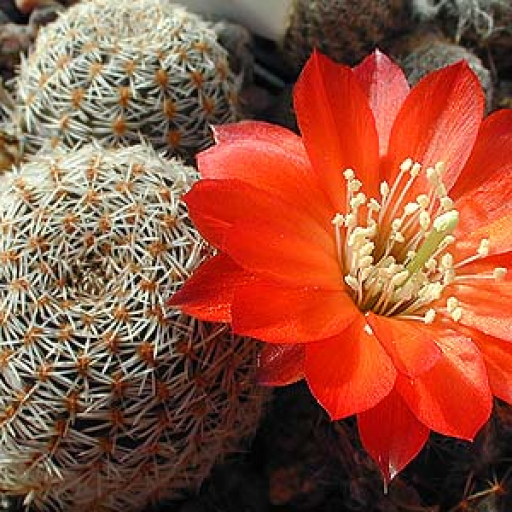
Often called the "Snowflake Cactus," this tiny treasure from the high Andes of Bolivia looks like a cluster of silver buttons dusted in frost. Despite its petite size, it is a powerhouse of color, producing neon-bright blooms that can grow even larger than the cactus itself. It is the perfect choice for windowsill gardeners who want high-impact beauty in a very small footprint.
🔍 How to Identify
- 🌵 Body Form: It stays remarkably small and globose (round), rarely exceeding two inches in diameter. Over time, it loves to sprout "pups" to form a dense, mounded colony.
- ❄️ Pectinate Spines: The plant is densely covered in tiny, brilliant white spines that lie flat against the ribs in a comb-like pattern. This gives the cactus a soft, silvery appearance from a distance.
- 🌸 Basal Blooms: Unlike many cacti that flower from the crown, this species produces funnel-shaped, vivid orange or red flowers that emerge from the very base of the stem.
🏡 In Your Garden
- ☀️ Mountain Heritage: Because it hails from high-altitude rocky slopes, it craves bright light and excellent air circulation. However, it appreciates a slight break from the most intense, scorching afternoon sun, which can "tan" its delicate white exterior.
- 💧 The Winter Rest: This cactus is a seasonal sleeper. To see those famous flowers in spring, it requires a cool, almost completely dry winter. Keeping it thirsty during the cold months triggers its reproductive cycle, telling the plant it’s time to set buds.
- 🪴 Drainage is King: It has a somewhat sensitive root system that cannot tolerate "wet feet." Use a gritty, mineral-heavy soil mix with plenty of pumice or perlite to ensure water passes through quickly.
⚠️ Safety & Toxicity
- 🐾 Pet Friendly: The Snowflake Cactus is considered non-toxic to cats, dogs, and humans, making it a safe choice for household shelves.
- 🧤 Gentle Prickles: While its spines are not as "stinging" as a Cholla or Prickly Pear, they are still sharp. Use tongs or soft gloves when repotting to avoid minor skin irritation from the tiny needles.
✨ Fun Fact
The name albopectinata literally translates to "white comb." If you look closely at a single cluster of spines through a magnifying glass, they look exactly like the teeth of a fine-toothed comb arranged in perfect symmetry!

Detailed Care Instructions
To grow Rebutia Albopectinata, also known as the White Comb Cactus, follow these steps:
- Choose a suitable location: Rebutia Albopectinata grows best in bright but indirect sunlight. Select a location with ample light, such as a south-facing window or a spot with filtered sunlight.
- Provide proper soil and pot: Use well-draining soil for the plant, preferably a cactus or succulent mix. Ensure that the pot has drainage holes to prevent water from accumulating and causing root rot.
- Planting: Gently remove the plant from its nursery pot, taking care not to damage the roots. Place it in the prepared pot and fill in the gaps with soil. Avoid burying the stem too deeply as it may lead to rot.
- Watering: Rebutia Albopectinata is drought-tolerant and prefers infrequent watering. Allow the soil to dry out completely between waterings. When watering, soak the soil thoroughly and let the excess water drain out. During winter, reduce watering frequency further to prevent root issues.
- Temperature and humidity: Rebutia Albopectinata thrives in temperatures between 60-80°F (15-27°C). It prefers relatively low humidity levels, making it suitable for indoor cultivation.
- Fertilizer: Feed the plant with a balanced cactus or succulent fertilizer during the growing season, typically in spring and summer. Follow the instructions on the fertilizer packaging and avoid over-fertilizing, as it can harm the plant.
- Propagation: Rebutia Albopectinata can be propagated through offsets, which are small offshoots that grow around the base of the plant. Carefully detach these offsets and plant them in separate pots with well-draining soil. Allow them to establish their own root system before watering.
- Pruning: Occasional pruning may be required to remove dead or damaged parts of the plant. Use clean, sharp tools to avoid introducing infections.
Remember to monitor the plant regularly for signs of pests or diseases. Provide adequate airflow around the plant and avoid excessive humidity to prevent issues such as rot or fungal infections. With proper care, your Rebutia Albopectinata will thrive and grow into a beautiful cactus.
To water this specific plant species, it is recommended to use a watering can or a small pitcher to avoid overwatering. Allow the soil to dry out slightly between waterings, but do not let it completely dry out. Water at the base of the plant, being careful to avoid getting water on the leaves or in the center of the rosette. It is also important to use room temperature or slightly warmer water to avoid shocking the plant's roots. Additionally, avoid fertilizing during winter months when the plant is dormant.
For best results, fertilize this plant during the growing season, which is typically spring and summer. Use a balanced fertilizer with equal amounts of nitrogen, phosphorus, and potassium. Dilute the fertilizer to half-strength and apply it to the soil every two to four weeks. Water the plant before and after fertilizing to prevent root burn. Be careful not to over-fertilize, as this can damage the plant.
Rebutia Albopectinata plant prefers a well-draining, gritty soil mixture that is specifically formulated for cacti and succulents. The soil should not be too rich in nutrients as this can cause the plant to become leggy and weak. A mixture of coarse sand, perlite, and peat moss or coconut coir is ideal for this plant. The pH level of the soil should be slightly acidic to neutral, with a range between 6.0 to 7.5. It is important to avoid using heavy or clay soils that retain too much moisture as this can cause the roots to rot. The soil should be dry before watering the plant, and it is best to use a watering can or spray bottle to avoid over-watering. Shallow watering is recommended to prevent water from sitting at the bottom of the pot.
To propagate this plant, you can use stem cuttings or offsets.
Stem cuttings: Select a healthy stem from the parent plant that is about 3-4 inches long and has at least two nodes. Cut the stem with clean, sharp scissors or a knife. Let the cut end dry for a few days until a callus forms. Plant the stem in well-draining soil and mist lightly. Keep it in a warm, bright spot but out of direct sunlight. The cutting should root in about 2-4 weeks.
Offsets: Rebutia Albopectinata produces offsets or “pups” that grow from the base of the parent plant. Wait until the offset is about 1/3 the size of the parent before gently removing it from the parent plant with a clean, sharp knife. Let the offset dry for a few days until a callus forms. Plant the offset in a well-draining soil mix and mist lightly. Keep it in a warm, bright spot but out of direct sunlight. The offset will root within a few weeks and can be cared for as a mature plant.








