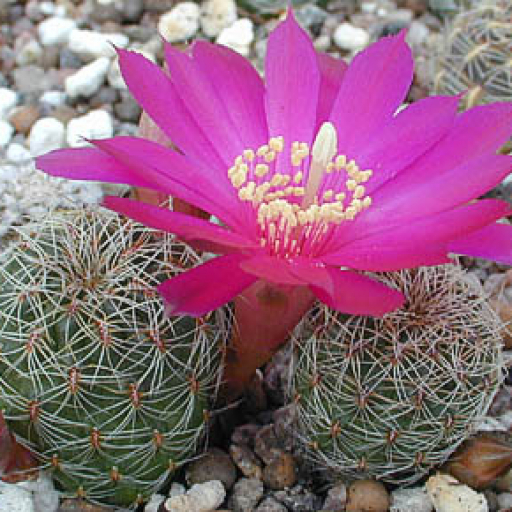
Plant Overview
Often referred to by collectors as a "Sulco," the Rebutia canigueralii is a pint-sized powerhouse from the high-altitude rocky slopes of Bolivia. Despite its miniature stature, it is famous for producing a spectacular "crown" of flowers that can almost entirely hide the plant body. It is a favorite among windowsill gardeners because it packs the drama of a desert landscape into a pot no larger than a coffee mug.
🔍 How to Identify
- 🌵 Body Shape: These cacti are small, globose (globe-shaped) to slightly flattened, and tend to sprout "pups" to form dense, low-growing clumps or mats over time.
- 🧶 The Spines: Unlike the long, scary needles of a Saguaro, these have tiny, comb-like (pectinate) spines that usually lay flat against the plant's ribs, giving it a textured, almost woven appearance.
- 🌸 Floral Display: The flowers are the star of the show. They are funnel-shaped and emerge from the base or the sides of the stem rather than the top, often appearing in vibrant shades of bicolor red and yellow, or deep magenta.
🏡 In Your Garden
- ⛰️ The Mountain Mimic: Because it originates from high elevations, this plant loves a distinct temperature drop at night. It thrives in gritty, mineral-heavy soil that mimics its rocky home; a "standard" potting mix will likely hold too much water and rot its sensitive taproot.
- ❄️ Winter Rest: To see those famous blooms in the spring, this cactus requires a "tough love" winter. It needs to stay cool (but frost-free) and almost completely bone-dry from late autumn until the first signs of spring growth appear.
⚠️ Safety & Toxicity
- 🟢 Status: Non-toxic and generally safe for homes with curious inhabitants.
- 🌵 Physical Hazard: While not chemically toxic to cats, dogs, or children, the spines are still sharp. If brushed against, they can cause minor skin irritation or become lodged in paws, so it is best kept on a high shelf away from high-traffic areas.
✨ Fun Fact
The Rebutia canigueralii is a bit of a "chameleon" in the plant world. Because it grows across various isolated mountain ridges in Bolivia, different colonies have evolved slightly different colors and spine patterns, leading botanists to give it dozens of different names over the years before realizing they were all looking at the same incredibly diverse species!

Detailed Care Instructions

Place in a bright room that is sun drenched almost all day. Or directly in a south-facing window.

When the top few inches of soil dry out, water your plants. If the top few inches of soil are still moist, do not water your plant. Wait a few days, then poke your finger into the soil to see if anything has changed. Overwatering poses a disease risk, such as the development of fungal diseases in the roots. These plants have adaptations in there leaves that allow them to survive in low water supply.
Without the need of fertilizer, these plants can thrive and bloom. If a plant requires fertilization, it will display indicators of nutrient insufficiency, such as yellowing leaves. It is safe to apply slightly diluted fertilizers in these circumstances. Over fertilizing, on the other hand, should be avoided because excess nutrients might cause plant mortality. Slow-release fertilizers are therefore advised for these plants.
You may use Cactus Fertilizer for your Rebutia Canigueralii
Common pests of the rebutia canigueralii include Scale insect, mealybugs, spider mites. Make a habit of checking your rebutia canigueralii frequently for pests so that any infestations can be caught and managed early.








