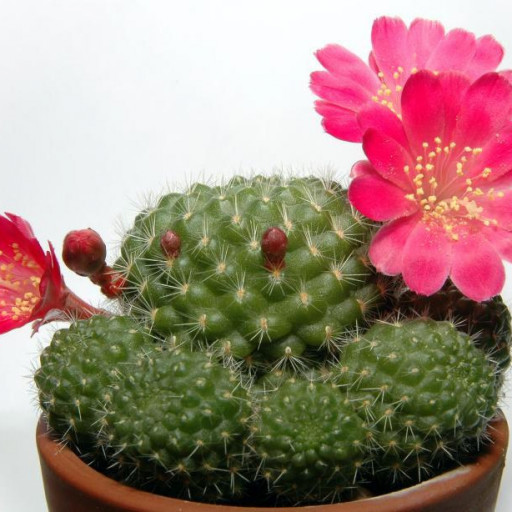
Plant Overview
Often called the "Fire Crown Cactus," this tiny powerhouse hails from the high altitudes of the Andes in Argentina. It is a favorite among succulent enthusiasts because it practically begs to show off its vibrant colors, turning a sunny windowsill into a fiery display with very little effort. Despite its name, its personality is anything but "minuscule."
🔍 How to Identify
- 🌵 The Body: A small, flattened globe that rarely exceeds 2 inches in diameter. As it matures, it loves to produce "pups" (offsets), eventually forming a crowded, charming cluster of mini-globes.
- ☁️ The Spines: It is covered in short, soft, bristle-like spines that give it a slightly fuzzy, silvery appearance. Unlike its desert cousins, it looks more "huggable" than hazardous.
- 🎺 The Blooms: Its most striking feature; large, funnel-shaped flowers in brilliant shades of crimson or orange. Uniquely, these flowers erupt from the base of the plant rather than the top, creating a "ring of fire" effect.
🏡 In Your Garden
- 🏔️ Mountain Roots: Because it originates from high-altitude regions, it actually appreciates a distinct temperature drop during the winter. This "cold rest" (keeping it in a cool, dry spot around 50°F/10°C) is the secret key to unlocking a massive flush of flowers in the spring.
- 💧 Drainage is Destiny: The Fire Crown has a sensitive root system that cannot tolerate "wet feet." It thrives in gritty, porous soil. If you use a standard potting mix, it will likely suffer from rot; always mix in plenty of perlite or pumice to keep the roots breathing.
⚠️ Safety & Toxicity
- ✅ Non-Toxic Status: Rebutia minuscula is generally considered non-toxic to cats, dogs, and humans. It is one of the "safest" cacti to keep in a family home.
- 🌵 Physical Irritant: While the spines are not "vicious" or hooked, they can still cause mild skin irritation or get stuck in the soft tissue of a curious pet's nose. It is best kept on a high shelf away from inquisitive toddlers and paws.
✨ Fun Fact
Unlike many cacti that take years or even decades to mature before they flower, the Fire Crown is a "precocious bloomer." It often produces its first spectacular flowers when it is barely a year old and only the size of a large marble!

Detailed Care Instructions
To grow Rebutia Minuscula, also known as the cluster cactus, you can follow these steps:
- Climate and Location: Rebutia Minuscula thrives in a warm and dry climate. It requires bright sunlight, but too much direct sunlight can scorch the plant. Therefore, placing it near a south-facing window or providing filtered light is ideal. It can also be grown outdoors in a well-drained, sunny spot if the climate allows.
- Soil: The plant prefers well-draining soil. Use a cactus or succulent potting mix, or create a mix by combining regular potting soil with perlite or coarse sand to ensure good drainage.
- Pot and Repotting: Select a small pot with drainage holes to plant your Rebutia Minuscula. Repotting is usually necessary every 2-3 years, or when the plant outgrows its current container. When repotting, choose a pot slightly bigger than the root ball and fill it with fresh soil.
- Watering: Water the plant when the top inch of soil is dry. During the growing season (spring and summer), water thoroughly, allowing the excess to drain out of the pot. In winter, reduce watering to once every 2-3 weeks as the plant enters a dormant period.
- Fertilization: Rebutia Minuscula benefits from light feeding during the growing season. Use a balanced, water-soluble fertilizer formulated for cacti and succulents. Follow the instructions on the package and apply it once a month.
- Propagation: Rebutia Minuscula can be propagated by seeds or offsets (pups that grow from the base of the main plant). To propagate through offsets, gently separate them from the main plant and replant them in their own pots.
- Pests and Diseases: Common pests that may affect Rebutia Minuscula include mealybugs and spider mites. Regularly check the plant for any signs of infestation and treat accordingly using organic or chemical insecticides.
- Growth and Care: Rebutia Minuscula is a slow-growing cactus that forms clumps over time. Take care not to overwater, as it is more susceptible to root rot. Additionally, protect it from extreme cold temperatures, as it is not frost-tolerant.
By following these steps, you can successfully grow and care for Rebutia Minuscula.

Place in a bright room that is sun drenched almost all day. Or directly in a south-facing window.

To water this plant, it is recommended to wait until the soil is completely dry before watering again. When it is time to water, thoroughly saturate the soil with water, ensuring that the water drains out from the bottom of the pot. Avoid getting water on the leaves or the body of the plant to prevent the risk of rot or damage. During the winter months, reduce the frequency of watering to allow the plant to go into a semi-dormant state. It is important not to overwater as this can quickly lead to root rot and damage.
To fertilize this plant, use a balanced fertilizer with a nitrogen, phosphorus, and potassium ratio of 10-10-10. Dilute the fertilizer to half strength and apply once every two weeks during the growing season, which is typically from spring to early fall. Do not fertilize during the winter months. Always water the plant before fertilizing to avoid burning the roots.
The soil that is most suitable for the Rebutia Minuscula plant is a well-draining soil mix that is not too compacted. It should be a blend of sandy soil, peat moss, and perlite or vermiculite to ensure proper drainage and aeration. The pH level of the soil should be slightly acidic, ranging from 6.0 to 6.5. The soil should not be too rich in nutrients as this plant prefers a lean soil. It is important that the pot has proper drainage holes to prevent water from accumulating at the roots. Additionally, the plant should not be overwatered, as this can lead to root rot and other fungal diseases. Instead, it should be watered when the soil is dry to the touch, and only enough water should be given to moisten the soil.
To propagate this plant, you will need to start by obtaining a healthy specimen. Once you have done so, carefully remove one of the offsets from the parent plant using sharp and sterile scissors.
Next, prepare a well-draining potting mix by mixing together sand, perlite, and peat moss in equal proportions. Moisten the soil lightly, without making it too wet, then fill a small container with it.
Make a small hole in the centre of the potting mix, gently place the offset in the hole, and cover it with soil. Ensure that the offset is not buried too deep and that it is situated at the same depth it was growing in the parent plant.
After planting the offset, place the container in a warm, bright, and ventilated area. Avoid direct sunlight and keep the soil moist but not wet. Within a few weeks, the offset should take root, and you can increase watering frequency and treat it like a mature plant.
Common pests of the fire crown cactus include Scale insect, mealybugs, spider mites. Make a habit of checking your fire crown cactus frequently for pests so that any infestations can be caught and managed early.








