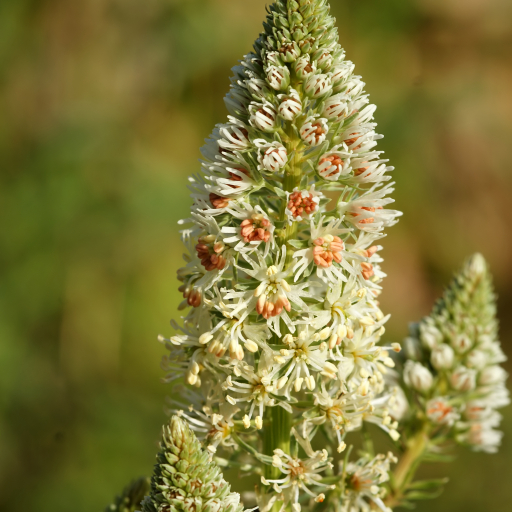
Plant Overview
Known as the "White Mignonette" or "White Upright Mignonette," this elegant Mediterranean native adds a vertical, architectural flair to any landscape. While its cousins are often grown for intense perfume, Reseda alba is prized for its pristine, star-shaped white flowers and delicate, feathery foliage. It carries a wild, meadow-like charm that has made it a cottage garden favorite for centuries.
🔍 How to Identify
- ☁️ The Bloom Spikes: It features long, upright racemes (spikes) packed with small, five-petaled white flowers. The greenish-yellow centers give the spikes a soft, bicolored appearance from a distance.
- 🌿 The Foliage: Unlike many garden weeds, its leaves are deeply lobed and pinnate, looking almost like ruffled feathers or fern fronds. They usually stay in a basal rosette before the flower stalks shoot upward.
- 📏 Growth Habit: This plant is a "weaver," growing in an upright, clumping fashion that typically reaches 2 to 3 feet in height, making it perfect for the middle or back of a flower bed.
🏡 In Your Garden
- 🦋 Pollinator Magnet: If you want to transform your garden into a butterfly sanctuary, this is the plant to choose. Its nectar-rich spikes are a favorite for honeybees and various white butterfly species.
- 🌱 Soil Preference: Reseda alba is a specialist in "lean" conditions. It actually prefers alkaline (chalky) soil and can become floppy or "leggy" if the soil is too rich or over-fertilized.
- 🌬️ Self-Seeding Nature: It is a prolific self-setter. Once you plant it, it will likely reappear year after year by dropping seeds, effectively acting like a perennial even though individual plants are often biennial.
⚠️ Safety & Toxicity
- ✅ Safe Status: Reseda alba is generally considered non-toxic to humans, cats, and dogs. It does not carry the high alkaloid risks associated with many other common garden flowers like Foxglove or Monkshood.
- 🧤 Skin Sensitivity: While not poisonous, the sap can occasionally cause mild skin irritation in individuals with very sensitive skin. Wearing gloves during heavy pruning is a simple precaution.
✨ Fun Fact
The name "Reseda" comes from the Latin word resedare, which means "to heal" or "to calm." In ancient Roman times, the plant was used as a sedative and a topical treatment for bruises, often accompanied by a ritual incantation to "calm" the inflammation.

Detailed Care Instructions
Reseda Alba, also known as white mignonette, is a fragrant annual plant that is easy to grow. Here are some tips on how to successfully grow Reseda Alba:
- Choose a sunny location: Reseda Alba prefers full sun, so choose a spot in your garden that receives at least 6-8 hours of direct sunlight each day.
- Prepare the soil: Reseda Alba grows best in well-draining soil that is rich in organic matter. Before planting, amend the soil with compost or aged manure to improve fertility and drainage.
- Plant seeds or seedlings: Reseda Alba can be grown from seeds or seedlings. Plant seeds directly in the garden in early spring after the last frost date, or start seeds indoors 6-8 weeks before the last frost date. If using seedlings, transplant them into the garden after the last frost date.
- Water regularly: Keep the soil consistently moist but not waterlogged. Water the plants at the base to avoid wetting the foliage, which can cause disease.
- Mulch around the plants: Mulching around Reseda Alba plants can help retain soil moisture, suppress weeds, and provide some insulation to the roots.
- Fertilize occasionally: Reseda Alba plants do not require much fertilization, but you can apply a balanced fertilizer once or twice during the growing season to promote healthy growth and flowering.
- Deadhead spent flowers: Remove faded blossoms to promote continuous blooming and prevent self-seeding.
- Control pests and diseases: Keep an eye out for common garden pests like aphids and caterpillars, and treat them promptly with insecticidal soap or neem oil. Rotate crop locations annually to reduce the risk of diseases.
With proper care and maintenance, Reseda Alba plants should thrive and produce fragrant white blooms throughout the growing season.

Place in a bright room that is sun drenched almost all day. Or directly in a south-facing window.

To water this plant, you should first check the soil moisture level by sticking your finger about an inch into the soil. If it feels dry, it's time to water. Use a watering can or hose with a gentle spray nozzle to avoid damaging the plant. Water the soil around the base of the plant, aiming for the roots. Avoid watering the leaves or foliage, as this can cause fungal growth or sun damage. Water deeply enough to ensure the entire root system is moistened, but be careful not to overwater, as this can lead to root rot. It's best to water early in the morning or late in the evening, when the sun isn't as intense and the water won't evaporate as quickly. During hot weather or drought conditions, you may need to water more frequently than usual.
To fertilize Reseda Alba plant, apply a balanced fertilizer with an N-P-K ratio of 10-10-10 in the spring and summer months. Follow the instructions on the fertilizer package for proper dilution and application. Be careful not to over-fertilize, as this can lead to nutrient imbalances and harm the plant. Water the plant thoroughly after applying the fertilizer to help it absorb the nutrients effectively. Repeat the fertilization process every 4-6 weeks during the growing season for optimal growth and blooms.
The Reseda Alba plant prefers a well-draining soil that is rich in organic matter. The soil should be slightly acidic to neutral with a pH range of 6.0 to 7.0. It also requires a soil that is able to retain moisture well, but not be overly wet or waterlogged. A loamy soil with a mixture of sand and clay is ideal. It can tolerate poor soil conditions, but will grow and thrive better in good quality soil.
Reseda Alba plants can be propagated through both seeds and cuttings.
To propagate Reseda Alba plants from seeds, collect mature seeds from a healthy plant and plant them in a well-draining soil mix. Keep the soil consistently moist and place the seeds in a warm, sunny location. Germination typically takes around 2-3 weeks.
To propagate Reseda Alba plants from cuttings, take a 4-6 inch cutting from a healthy plant using clean, sharp scissors. Remove the lower leaves from the cutting and dip the cut end in rooting hormone (optional). Plant the cutting in a well-draining soil mix and keep it consistently moist. Place the cutting in a warm, sunny location and roots should form within 2-4 weeks.
Regardless of the method used, it is important to provide the newly propagated plants with adequate sunlight, water, and nutrients to ensure their growth and development.








