Plant Overview
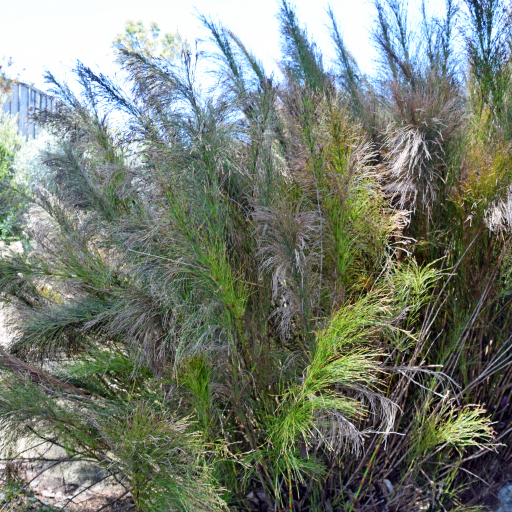
Known as the "Broom Reed," this South African beauty is often considered the aristocrat of the fynbos. It looks like a shimmering fountain of emerald lace, blending the architectural structure of bamboo with the soft, delicate texture of a fern. Historically used by Cape settlers to craft sturdy sweeping brooms, it has transitioned from a utility plant to a must-have for modern, minimalist landscapes.
🔍 How to Identify
- 🌿 The Culms: It produces tall, dark green stems (culms) that gracefully arch outward under the weight of their own foliage.
- 🪶 The Whorls: Unlike many reeds, this species features dense, feathery branchlets arranged in "sub-verticillate" whorls at each joint, giving it a fluffy, tiered appearance.
- 🍂 The Flowers: In late spring, the plant produces small, papery golden-brown flower spikes at the tips of the branches; as a dioecious species, male and female flowers appear on separate plants.
🏡 In Your Garden
- 💧 Thirst for Life: While many South African plants are drought-tolerant, the Broom Reed is a riparian plant by nature. It thrives near ponds, streams, or in "rain gardens" where its roots can stay consistently cool and moist.
- 🎋 A Tidy Neighbor: Unlike invasive bamboos, this plant is a slow-growing clumper. It won't send out underground runners to take over your yard, making it an excellent choice for structured borders or large patio containers.
- 🌬️ Wind & Movement: Because of its fine texture, it is highly reactive to the slightest breeze, adding a "living sculpture" element and a soothing rustling sound to your outdoor space.
⚠️ Safety & Toxicity
- ✅ Pet & Human Safe: This plant is generally considered non-toxic to humans, cats, and dogs.
- 🌾 Fiber Texture: While not poisonous, the stems are very high in silica and tough fibers. If a curious pet decides to chew on the "feathers," the rough texture might cause minor mouth irritation or a mild stomach upset from indigestion.
✨ Fun Fact
The Broom Reed belongs to the Restionaceae family, a group of plants so ancient they predate the breakup of the supercontinent Gondwana. They have survived for millions of years by evolving to thrive in nutrient-poor soils where other plants fail.

Detailed Care Instructions

Some plants require more regular watering than others, which should be done every few days. It's critical to maintain the soil moist all of the time. The water requirements of the same plant placed in pots with varying sizes will differ. Because the water in the smaller pot evaporates faster than the water in the larger pot, it will require more watering. Regardless of pot size, the surface should constantly be maintained moist.








