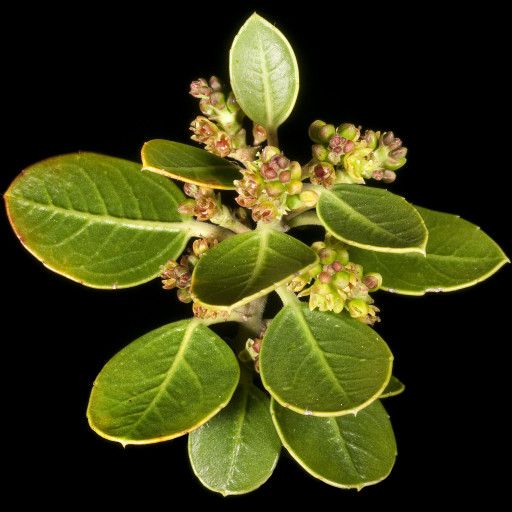
Plant Overview
Known as the Italian Buckthorn, this glossy evergreen is a cornerstone of Mediterranean landscapes. It is a "tough-as-nails" shrub prized for its ability to withstand scorching sun and salty sea breezes while maintaining a polished, vibrant appearance year-round. Often used as a structural backbone in gardens, it offers a sophisticated alternative to more common hedging plants.
🔍 How to Identify
- 🍃 Leathery Foliage: The leaves are small, oval, and distinctly "plasticky" or leathery to the touch, often with slightly toothed edges and a deep green luster.
- 🍒 Color-Shifting Berries: In late summer, it produces clusters of small berries that transition from a bright, showy red to a deep, ink-black as they fully ripen.
- 🌳 Dense Structure: It typically grows as a multi-stemmed, upright shrub with very stiff, greyish-brown branches that create a thick, impenetrable screen.
🏡 In Your Garden
- 🌊 Coastal Warrior: This plant is exceptionally tolerant of salt spray and strong winds, making it a premier choice for seaside gardens where other greenery might suffer from "salt burn."
- ✂️ The Living Wall: Because it responds beautifully to shearing, it is perfect for formal hedges. Its dense growth habit provides excellent privacy and serves as a vital nesting site for small songbirds.
- 🌱 Root Resilience: It is highly drought-tolerant once established, meaning it won’t demand constant attention during dry spells, though it prefers well-draining soil over "wet feet."
⚠️ Safety & Toxicity
- 🚫 Mildly Toxic: While birds feast on the berries with no ill effects, the fruit and bark are toxic to humans and domestic pets.
- 🤢 Digestive Upset: Ingestion of the berries can cause nausea, vomiting, and a powerful laxative effect. It is best to keep this plant away from areas where curious toddlers or dogs might be tempted to sample the "fruit."
✨ Fun Fact
The name Alaternus is an ancient Latin name for the plant, used by the Romans. It was historically favored because it looks remarkably like a Laurel tree but is much hardier, earning it the nickname "Mock Privet" in some older botanical circles.

Detailed Care Instructions
| Humidity | Normal |
| Lighting | Full Sun |
| Toxicity | Poisonous |
| Difficulty | Easy |
| Hibernation | Cold Period |
To grow Rhamnus Alaternus plant, also known as Italian buckthorn, you can follow these steps:
- Choose a suitable location: Rhamnus Alaternus prefers well-draining soil and full sunlight, although it can tolerate partial shade. Ensure the planting area is spacious enough to accommodate the plant's mature size.
- Prepare the soil: The soil should be loamy and nutrient-rich. Add organic matter such as compost or well-rotted manure to improve soil fertility and drainage.
- Planting: Dig a hole that is slightly wider and deeper than the root ball. Place the plant in the hole, making sure the top of the root ball is level with the surrounding soil. Backfill the hole with soil and gently firm it around the plant, being careful not to compact it excessively.
- Watering: After planting, water the Rhamnus Alaternus thoroughly to help establish its root system. Keep the soil consistently moist but not waterlogged, especially during the plant's early growth stages. Once established, the plant is relatively drought-tolerant.
- Mulching and weed control: Apply a layer of organic mulch around the base of the plant to suppress weeds, retain moisture, and regulate soil temperature. Keep the mulch a few inches away from the stem to prevent rotting.
- Pruning: Rhamnus Alaternus benefits from occasional pruning to maintain its shape and size. Prune in late winter or early spring before new growth begins. Remove any dead or damaged branches and trim the tips to encourage bushier growth.
- Fertilizing: In the spring, you can apply a slow-release balanced fertilizer to promote healthy growth. Follow the manufacturer's instructions for application rates.
- Pest and disease control: Rhamnus Alaternus is generally resistant to pests and diseases. However, keep an eye out for common issues like aphids, scale insects, or powdery mildew. If necessary, use appropriate organic or chemical treatments to control these problems.
- Monitor and care: Regularly inspect your Rhamnus Alaternus plant for signs of stress, pests, or diseases. Ensure it receives adequate sunlight, water, and nutrients, taking precautions during extreme weather conditions.
By following these steps and providing proper care, you can successfully grow and enjoy the beauty of Rhamnus Alaternus in your garden or landscape.

Place in a bright room that is sun drenched almost all day. Or directly in a south-facing window.

Rhamnus Alaternus is a shrub that requires a regular watering schedule to thrive. When watering, it is important to avoid overwatering as it can cause root rot. One way to determine if the plant needs water is by checking the soil moisture level. If the soil feels dry to the touch, it is time to water the plant.
To water the plant, slowly pour water directly onto the soil around the base of the plant until the soil is moist but not saturated. Avoid getting water on the leaves and branches of the plant as this can lead to fungal diseases.
During hot and dry periods, the plant may need more frequent watering to prevent wilting and stress on the plant. In winter, the plant may require less water as it enters a period of dormancy.
It is also important to note that the type of soil the plant is growing in can affect how much water it needs. In well-draining soils, the plant may need more frequent watering, while in heavy clay soils, it may require less frequent watering.
To fertilize this plant, use a balanced, slow-release fertilizer that contains nitrogen, phosphorus, and potassium. Apply the fertilizer during the spring or early summer, following the manufacturer's instructions for application rate and frequency. Avoid fertilizing during the plant's dormant season, which typically occurs in the fall and winter. Additionally, be sure to water the plant well after fertilizing to help the nutrients penetrate the soil and reach the plant's roots.
When planting this particular plant, it is recommended to use a well-draining soil that is rich in organic matter. The ideal pH range for the soil is slightly acidic to neutral. It is also important to ensure that the soil is not too heavy or compacted, as this can impede root growth and water uptake. Adding compost or other organic matter to the soil can help improve its texture and overall quality. Additionally, it is important to avoid using soil mixes that contain high levels of nitrogen, as this can lead to excessive foliage growth at the expense of flower and fruit production. Finally, regular fertilization with a balanced, slow-release fertilizer can help ensure that the plant receives the nutrients it needs to thrive.
To propagate this plant, take cuttings during the plant's growing season. Select healthy stems from the parent plant that are approximately 10-15cm long. Cut off the lower leaves and make a clean cut at the base of each stem. Dip the cuttings in rooting hormone and plant them in a well-draining soil mix. Water the cuttings regularly and keep them in a shaded area with indirect sunlight. After a few weeks, new growth should appear, indicating that the cuttings have rooted and are ready to be transplanted into individual pots or outside into the garden.








