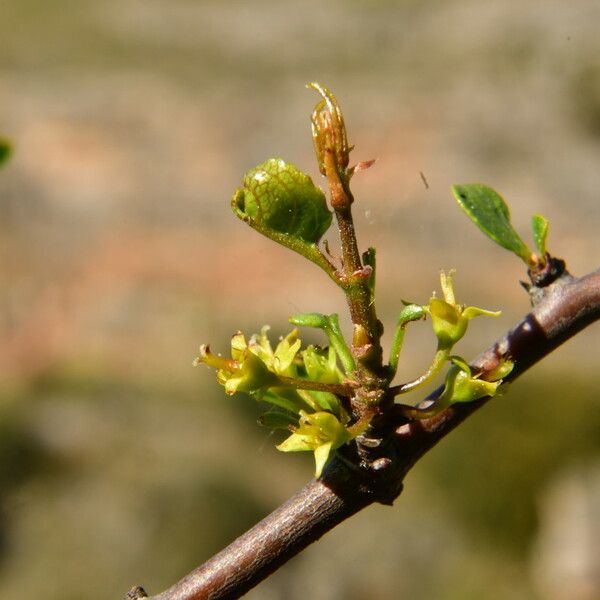
Plant Overview
Known as the Rock Buckthorn, this rugged survivor is a master of the vertical landscape. Native to the sun-scorched limestone cliffs of Central and Southern Europe, it is often seen clinging to rocky crevices where other plants would wither. While it might look like a humble, thorny bush, it plays a vital role in its ecosystem as a sanctuary for small birds and a feast for specialized pollinators.
🔍 How to Identify
- 🪨 Growth Habit: A low-growing, deciduous shrub that typically reaches only 1–2 meters in height. Its branches are stiff and frequently end in sharp, woody spines.
- 🍃 The Foliage: The leaves are tiny, oval, and delicately toothed along the edges. They often grow in clusters on "short shoots," giving the plant a dense, tufted appearance.
- 🌼 The Flowers: Look closely in late spring for miniature, four-petaled blossoms. They are a subtle yellowish-green and tucked away in the leaf axils.
- 🫐 The Fruit: In late summer, the plant produces small, pea-sized berries that transition from green to a deep, glossy black when fully ripe.
🏡 In Your Garden
- 🌱 The Limestone Lover: This plant is a "calciphile," meaning it thrives in alkaline soils. If you have a rocky garden or a spot where the soil is thin and poor, the Rock Buckthorn will feel right at home.
- ☀️ Drought Specialist: Once established, this shrub is incredibly drought-tolerant. It has evolved to survive with very little water, making it an excellent choice for xeriscaping or low-maintenance rockeries.
- ✂️ Natural Protection: Because of its thorny nature, it can be used as a "barrier plant" to discourage foot traffic in specific areas of the garden, while providing excellent nesting sites for small songbirds.
⚠️ Safety & Toxicity
- 🚫 Laxative Warning: Like many members of the Rhamnus genus, the bark and berries contain anthraquinones. If ingested, they can cause significant gastrointestinal upset, including severe stomach cramps and a strong laxative effect.
- 🐾 Pet & Child Safety: Keep a close eye on curious pets and children. While the berries are bitter and usually unappealing, they should never be eaten.
- 🌵 Mechanical Injury: The sharp terminal spines can easily puncture skin or gardening gloves. Always wear heavy-duty protection when pruning or transplanting.
✨ Fun Fact
Historically, the unripe berries of the Rock Buckthorn and its cousins were used to create a pigment known as "Sap Green." This color was a staple for medieval illustrators and Renaissance painters, though it was famously fugitive—meaning it would often fade or turn brown over centuries of exposure to light!

Detailed Care Instructions
To grow Rhamnus saxatilis, also known as rock buckthorn or pigmy buckthorn, follow these steps:
- Climate and soil requirements: Rhamnus saxatilis prefers a Mediterranean climate with mild winters and hot summers. It can tolerate a variety of soil types but prefers well-drained and moderately fertile soil.
- Seed collection or purchase: Obtain seeds from a reputable source, or collect them from mature plants. If collecting seeds, wait for the berries to ripen to a black or dark purple color before harvesting them.
- Stratification (optional): Some sources suggest stratifying the seeds by placing them in a moist paper towel in the refrigerator for a few weeks. This step can enhance germination rates.
- Germination: Sow the seeds in individual containers or directly in the ground in the fall or early spring. Plant the seeds about 1/4 to 1/2 inch deep. Keep the soil slightly moist, but not waterlogged.
- Growing conditions: Rhamnus saxatilis thrives in full sun to partial shade. Provide protection from strong winds, if necessary. Regularly check the soil moisture and ensure it stays evenly moist but not excessively wet.
- Transplanting (optional): If you started the seeds in containers, transplant the young plants into the desired location once they have grown a few inches tall. Space the plants about 2-3 feet apart to allow for adequate growth and spread.
- Maintenance: Regularly water the plants until they establish a strong root system. Mulch around the plants to help retain moisture and suppress weed growth. Prune any damaged or overcrowded branches to maintain a healthy shape.
- Pest and disease control: Rhamnus saxatilis is generally resistant to pests and diseases. However, regular monitoring for aphids, caterpillars, or signs of disease can help maintain plant health. Treat any issues with organic insecticides or disease control methods if necessary.
- Harvesting berries (optional): Rhamnus saxatilis produces small black berries that can be harvested in late summer or early fall. However, check local regulations and ensure the berries are safe for consumption before consuming.
By following these steps, you can successfully grow Rhamnus saxatilis and enjoy its unique beauty in your garden.

Place in a window with dappled sun or a spot in the middle of a room. Or directly in a window facing west or east.

Rhamnus Saxatilis is a shrub that requires moderate watering. Soil moisture should be maintained between moderate to dry conditions. Over-watering may lead to root rot and may damage the plant. The plant should be given a good soak once a week during the growing season. However, the frequency of watering can be adjusted based on the soil moisture and weather conditions. During hot and dry weather, the plant may require more frequent watering. It is advisable to water the plant early in the morning or late in the evening to avoid evaporation and minimize water runoff. Avoid wetting the foliage as this may lead to fungal diseases. The soil should be well-drained to prevent waterlogging. Adding organic matter to the soil can help retain moisture and create a well-drained growing environment for the plant.
- Use a slow-release fertilizer high in nitrogen, phosphorus, and potassium.
- Apply fertilizer evenly around the base of the plant.
- Water the plant after fertilizing to ensure the nutrients are absorbed.
- Repeat fertilizing every one to two months during the growing season.
- Do not over-fertilize as this can damage the plant.
- Consider using organic fertilizers to support sustainability and reduce environmental impact.
Rhamnus Saxatilis prefers well-draining soil with a neutral to slightly acidic pH. It can thrive in a variety of soil types, including sandy, loamy, or rocky soil. It is important to avoid using heavy clay soil or soil that retains too much moisture, as this can cause root rot. It is recommended to add organic matter, such as compost or peat moss, to the soil before planting to improve drainage and soil fertility. A layer of mulch can also be added around the base of the plant to help retain moisture and keep the soil cool.
To propagate this plant, you can take semi-ripe cuttings in the early summer, making sure to remove any leaves from the lower half of the stem. Dip the cut end in rooting hormone and then plant in a well-draining soil mix. Keep the cuttings moist and in a partially shaded location until they have developed a strong root system. Alternatively, you can collect and sow the seeds in autumn or early spring, but they may take a few months to germinate.








