Plant Overview
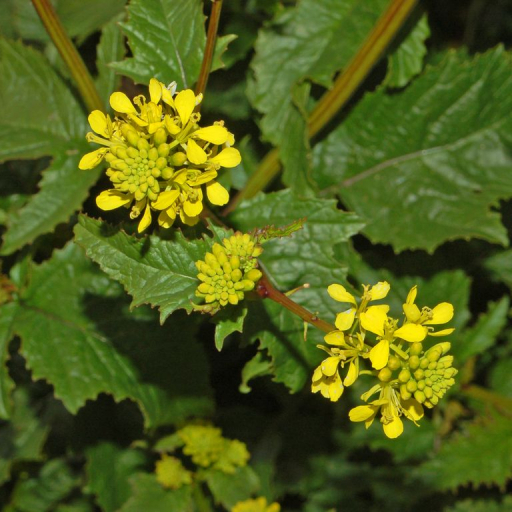
Known to many as Wild Mustard or Charlock, this vibrant yellow wildflower is a common sight across the globe, often painting entire meadows in gold. Originally from the Mediterranean and Eurasia, it has traveled the world as a resilient pioneer of disturbed soils. While farmers may view it as a persistent "weed," it holds a storied history as a wild edible and a vital lifeline for early-spring pollinators.
🔍 How to Identify
- 🌼 The Flowers: Features bright yellow, four-petaled flowers arranged in a cross shape, a classic signature of the cabbage family.
- 🍃 The Foliage: Lower leaves are deeply lobed and "lyre-shaped," while the upper leaves are smaller, lance-like, and grow directly from the stem without stalks.
- 🌱 The Seed Pods: Produces slender, upward-pointing pods (siliques) that end in a distinct, flattened "beak," which gives the plant its scientific name (Rhamphospermum means "beak-seed").
🏡 In Your Garden
- 🐝 A Pollinator Buffet: This plant is an absolute magnet for honeybees and hoverflies. If you find it on the edges of your property, consider leaving it to help support your local ecosystem.
- ⛏️ The Persistent Taproot: Because it develops a deep, sturdy taproot, it can be difficult to pull out by hand once mature. It prefers heavy, clay-rich soils and thrives wherever the ground has been recently turned or disturbed.
- 📦 Seed Longevity: Be aware that a single plant can drop thousands of seeds. These seeds are incredibly hardy and can remain dormant in the soil for over 50 years, waiting for the perfect moment to sprout.
⚠️ Safety & Toxicity
- 🐾 Mild Toxicity to Livestock: While the young leaves are often eaten by humans (after cooking), the plant contains glucosinolates which can be irritating.
- 🐕 Pet Caution: Large quantities can cause gastric distress in dogs, cats, or horses. It is generally safe to touch, but it’s best to keep curious grazers away from dense patches.
✨ Fun Fact
The seeds of the Wild Mustard are so resilient that they have been known to germinate successfully after being buried in the earth since the Victorian era! This "time-traveling" ability allows the plant to reappear suddenly in fields that haven't seen it for decades.

Detailed Care Instructions
To grow Rhamphospermum Arvense, also known as climbing snapdragon or creeping snapdragon, follow these steps:
- Climate and Sunlight: Choose a location that receives full to partial sunlight. This plant prefers a warm climate with temperatures ranging from 60-80°F (15-27°C).
- Soil: Provide well-draining soil that is rich in organic matter. The pH level should be slightly acidic to neutral, around 6.0-7.0. Amend the soil with compost before planting.
- Planting: Plant Rhamphospermum Arvense in spring or early summer after the threat of frost has passed. Dig a hole twice the size of the plant's root ball and place it in the hole, ensuring the top of the root ball is level with or slightly above the soil surface. Space multiple plants about 16-24 inches (40-60 cm) apart.
- Watering: Keep the soil evenly moist, but not waterlogged. Water the plant deeply whenever the top inch (2.5 cm) of soil feels dry. During hot and dry periods, you may need to water more frequently. Avoid overwatering as it can lead to root rot.
- Fertilization: Feed the plant with a balanced, slow-release fertilizer in early spring or use a water-soluble fertilizer every month during the growing season. Follow the package instructions for proper dilution and application.
- Pruning: Trim back any damaged or dead stems regularly to promote overall plant health and shape. You can also pinch off the tips of the stems to encourage bushier growth.
- Support: As Rhamphospermum Arvense is a climbing plant, provide a trellis, arbor, or other support structure for it to grow on. Gently tie the stems to the support structure using soft plant ties as needed.
- Winter Care: In regions with frost or cold winters, provide mulch around the plant's base to protect it from freezing temperatures. Alternatively, you can bring potted plants indoors during the colder months and place them in a cool area with bright indirect light.
Remember to regularly monitor your plants for pests and diseases. Treat any issues promptly to maintain the health of your Rhamphospermum Arvense plant.

Place in a bright room that is sun drenched almost all day. Or directly in a south-facing window.

Rhamphospermum arvense is a flowering plant that requires regular and appropriate watering in order to thrive. Here are some details on how to effectively water this plant:
1. Understanding water requirements: It is essential to understand the specific water needs of Rhamphospermum arvense. This plant prefers moist but well-drained soil, so it is important to balance moisture levels to avoid over-watering or allowing the soil to become too dry.
2. Soil type: Ensure that the plant is potted in a well-draining soil mix. This will prevent water from becoming stagnant in the pot and causing root rot or other water-related issues. A mix that includes ingredients such as peat moss, perlite, or sand can aid in proper drainage.
3. Watering frequency: To determine when to water the plant, it is helpful to check the moisture level of the soil. Insert your finger or a moisture meter into the soil up to a depth of about 1-2 inches (2.5-5 cm). If the soil feels dry at this depth, it is time to water.
4. Watering technique: Use a watering can or a gentle stream of water from a hose to evenly moisten the soil around the plant. Avoid watering directly onto the leaves or flowers, as this can create conditions for diseases or fungal growth. Instead, aim to water the base of the plant.
5. Watering amount: When watering Rhamphospermum arvense, it is crucial to provide sufficient moisture without causing waterlogging or drowning the roots. The goal is to moisten the soil until it is moist but not saturated. Allow excess water to drain out from the bottom of the pot.
6. Climate considerations: Take into account external factors such as the temperature, humidity, and seasonal changes when determining the watering schedule for this plant. During hot or dry spells, the plant may require more frequent watering. Conversely, during cooler or rainy periods, it may require less watering.
7. Adjusting watering schedule: Keep an eye on the plant's response to watering. If the leaves appear wilted or start turning yellow, it may be an indication of over or underwatering. Adjust the watering schedule accordingly to ensure optimal health.
8. Rainwater collection: If possible, collect rainwater to use for watering the plant. Rainwater is typically more beneficial for plants compared to tap water, as it lacks the chemicals and additives found in treated water.
Remember, individual plant needs may vary, so always monitor the plant's health and adjust watering practices as necessary.
To fertilize Rhamphospermum Arvense plant, begin by selecting a balanced, water-soluble fertilizer. Dilute the fertilizer according to the instructions on the package. Apply the diluted fertilizer around the base of the plant, making sure to avoid directly touching the foliage. Water the plant thoroughly after fertilizing to allow the nutrients to penetrate the soil. Repeat this process every two to three weeks during the growing season, typically from spring to early fall. It is essential to follow the recommended dosage and not over-fertilize, as this can harm the plant. Additionally, consider conducting a soil test before fertilizing to determine if any specific nutrients are deficient, allowing you to tailor the fertilizer accordingly.
The Rhamphospermum arvense plant thrives best in a specific type of soil that meets its specific requirements. It prefers a well-drained soil that offers good moisture retention capabilities. The soil should ideally be rich in organic matter, providing the necessary nutrients for healthy growth.
The pH level of the soil should be slightly acidic to neutral, ranging between 6.0 and 7.0. This ensures that the plant can absorb nutrients efficiently. Additionally, the soil should be loose and friable, enabling proper root development and preventing waterlogging.
To enhance the soil's drainage and aeration, you can amend it with perlite or sand. This helps prevent water accumulation around the roots, which can lead to root rot. You may also consider incorporating some organic compost into the soil, as it enriches the fertility and structure.
Furthermore, it is essential to note that the Rhamphospermum arvense plant prefers a soil that is porous and allows air circulation. This allows for oxygen to reach the roots, promoting overall plant health and preventing issues related to poor root oxygenation.
It is important to regularly monitor the soil moisture level and ensure it remains consistently damp, but not waterlogged. Over-watering should be avoided, as it can cause root rot and other related problems. Conversely, under-watering can lead to dehydration and stress for the plant.
Overall, providing the Rhamphospermum arvense plant with well-drained, nutrient-rich, slightly acidic to neutral soil that retains moisture and allows for proper root development will promote healthy growth and optimal performance of the plant.
Rhamphospermum arvense is a perennial plant that can be propagated by various methods. One common way to propagate it is through seed germination. Here is a step-by-step guide on how to propagate Rhamphospermum arvense without mentioning any of its common names:
- Obtain seeds: Look for mature seedpods on a healthy Rhamphospermum arvense plant. Once the pods have turned brown and dry, carefully collect them. Alternatively, you can purchase seeds from a reputable seed supplier if available.
- Seed preparation: Before sowing the seeds, it is essential to prepare them properly. Gently clean the seeds to remove any debris or pulp attached to them. Some gardeners recommend soaking the seeds in warm water for 24 to 48 hours to enhance germination rates.
- Seed sowing: Fill a seed tray or small pots with a well-draining seed-starting mix. Place the Rhamphospermum arvense seeds on the surface of the soil without burying them. Lightly press the seeds into the soil to ensure good contact.
- Ideal conditions: Rhamphospermum arvense prefers moist and warm conditions for germination. Place the seed tray in a bright location, but avoid exposing it to direct sunlight as it may dry out the soil quickly. Maintain a consistent temperature between 68-86°F (20-30°C) for optimal germination.
- Watering: Regular, light watering is crucial for seed germination. The soil should be moist but not waterlogged. Water the seeds gently using a fine mist or a watering can with a narrow spout to prevent seed displacement.
- Germination period: The germination period for Rhamphospermum arvense can vary, typically ranging from 2-4 weeks. Be patient and maintain the appropriate conditions throughout this time.
- Seedling care: Once the seedlings have emerged, provide them with adequate light. Gradually acclimate them to brighter light conditions over a period of a few days. Water the seedlings as needed, keeping the soil consistently moist but not saturated.
- Transplanting: When the seedlings have developed sufficient size and strength, they can be transplanted into individual pots or directly into a well-prepared garden bed. Ensure that the soil at the new location is well-drained and rich in organic matter.
- Plant maintenance: Continue caring for the Rhamphospermum arvense plants by providing sufficient water, sunlight, and protection from extreme weather conditions. Prune the plants as needed to shape them and improve overall plant health.
By following these propagation guidelines, you can successfully propagate Rhamphospermum arvense and enjoy the beauty of this unique plant in your garden.
Common pests of the charlock include Aphids, larvae. Make a habit of checking your charlock frequently for pests so that any infestations can be caught and managed early.








