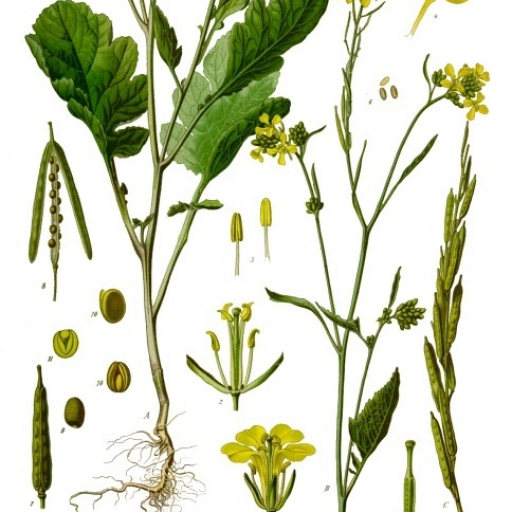
Plant Overview
Commonly known as Black Mustard, this ancient spice-maker has a fiery personality and a history that dates back to the Bronze Age. Once the primary source for the world’s table mustard, it now often grows wild along roadsides and in sunny meadows, flashing its bright yellow blooms. While it may look like a humble weed, it has fueled culinary traditions from the Mediterranean to India for thousands of years.
🔍 How to Identify
- 🌼 Petals in Crosses: Features small, brilliant yellow flowers with four petals arranged in a distinct "cross" shape, a classic trait of the Brassicaceae family.
- 📏 Stalky Silhouette: A surprisingly tall, slender plant that can reach heights of 6 feet, with lower leaves that are deeply lobed and bristly to the touch.
- 🌰 Hugging Seed Pods: Produces short, four-sided seed pods (siliques) that grow upright and press tightly against the main stem, rather than branching outward.
🏡 In Your Garden
- 🌱 Aggressive Pioneer: It thrives in disturbed soils and full sun; if you aren't careful, it can quickly take over a garden bed by dropping thousands of tiny, dark seeds.
- 🌾 Natural Protector: Many gardeners value it as a "bio-fumigant," as the compounds released when the plant is tilled back into the earth can naturally suppress certain soil-borne pests and fungi.
⚠️ Safety & Toxicity
- ✋ Skin Irritation: The seeds contain high concentrations of sinigrin; if crushed and held against the skin, they can cause a "mustard burn" or significant redness and irritation.
- 🐾 Pet Warning: While culinary mustard is common, grazing on large quantities of the raw plant can cause gastrointestinal distress in dogs, cats, and livestock due to its pungent oils.
✨ Fun Fact
The "heat" of the mustard seed doesn't actually exist until the seeds are broken and mixed with cold liquid, which triggers a chemical reaction that creates the spicy defense mechanism known as allyl isothiocyanate.

Detailed Care Instructions
To grow Rhamphospermum Nigrum, also known as black trumpet vine, you can follow these steps:
- Choosing the right location: Select a spot with full sun or partial shade. Ensure that the soil is well-drained and fertile.
- Planting: Dig a hole slightly larger than the root ball of the plant. Place the plant in the hole and backfill with soil, gently firming it around the roots. Ensure the plant is at the same depth it was in its nursery container.
- Watering: Keep the soil evenly moist but not waterlogged. Water the plant thoroughly after planting, and then water regularly, especially during dry periods. Avoid overwatering, as this can lead to root rot.
- Mulching: Apply a layer of organic mulch around the base of the plant to help retain moisture, prevent weed growth, and protect the roots.
- Training and support: Provide a trellis or other support for the plant to climb on. As it grows, gently guide the plant's tendrils toward the support structure. You can also use string or ties to secure the plant to the support.
- Fertilizing: Apply a balanced, slow-release fertilizer once a year in early spring. Follow the instructions on the fertilizer label for the correct application rate.
- Pruning: Prune the plant in early spring to remove any dead or damaged branches. You can also prune it to shape the plant and control its size. Regular pruning can help promote dense foliage and abundant flowering.
- Pests and diseases: Keep an eye out for common garden pests like aphids, spider mites, and scale insects. Treat any infestations promptly using organic or chemical insecticides. As for diseases, Rhamphospermum Nigrum is generally disease-resistant but can occasionally be susceptible to root rot in poorly draining soil.
By following these steps, you can successfully grow Rhamphospermum Nigrum and enjoy its attractive foliage and trumpet-shaped flowers.

Place in a bright room that is sun drenched almost all day. Or directly in a south-facing window.

To provide proper hydration to the Rhamphospermum Nigrum plant, it is important to follow these guidelines:
1. Observe the soil moisture: Before watering the plant, check the moisture level of the soil. Insert your finger into the soil up to the second knuckle to gauge its dryness. Avoid watering if the soil feels damp, as overwatering can lead to root rot.
2. Watering frequency: During the plant's active growing season, which is typically spring and summer, water the Rhamphospermum Nigrum plant every 7-10 days. However, adjust the frequency depending on environmental factors such as temperature and humidity. In cooler months or dormant periods, reduce the watering frequency to prevent waterlogged soil.
3. Watering method: Use a watering can or a gentle flow hose attachment to water the plant. Avoid using high-pressure sprays or watering directly onto the foliage, as the plant may be sensitive to excess moisture on its leaves.
4. Water drainage: Ensure proper drainage by planting the Rhamphospermum Nigrum plant in a well-draining potting mix or soil. Excess water should be able to drain freely from the container, preventing waterlogged conditions that could harm the plant's roots.
5. Sufficient watering amount: To adequately hydrate the plant, water until you see water flowing out from the drainage holes at the bottom of the pot. This ensures that moisture reaches the root zone while flushing any built-up salts or impurities from the soil.
6. Humidity considerations: Rhamphospermum Nigrum plants thrive in high humidity environments. If the air in your home or region is especially dry, consider using a humidifier or placing a water-filled tray near the plant to increase humidity levels and prevent excessive moisture loss.
Remember, these guidelines are general recommendations, and it is always essential to observe the individual plant's needs based on environmental conditions and how it responds to watering. Regular monitoring of soil moisture and the plant's overall health will help you adjust your watering routine accordingly.
To fertilize the Rhamphospermum Nigrum plant, here are the instructions:
- Choose a balanced, slow-release fertilizer formulated for flowering plants.
- Follow the packaging instructions to determine the appropriate amount of fertilizer for your specific plant size.
- Start fertilizing in the spring or early summer, once the plant has started actively growing.
- Apply the fertilizer evenly around the base of the plant, ensuring it reaches the root zone.
- Gently work the fertilizer into the soil surface with a hand cultivator or rake, taking care not to damage the plant's roots.
- Water the plant thoroughly after fertilizing to help distribute the nutrients.
- Repeat the fertilization process every 4-6 weeks during the growing season.
- If the plant shows signs of nutrient deficiency, such as yellowing leaves or slow growth, you may increase the frequency of fertilization to every 2-3 weeks.
- Avoid overfertilizing, as it can cause salt buildup and harm the plant. Always follow the recommended dosage guidelines.
When choosing soil for Rhamphospermum Nigrum, it is essential to consider its natural habitat and growth requirements. Rhamphospermum Nigrum is a plant that thrives in well-draining soil with good moisture retention. It prefers humus-rich, loamy soil with a slightly acidic to neutral pH level.
To create an ideal planting medium, it is recommended to blend equal parts of garden soil, peat moss, and compost. This mixture provides the necessary nutrients, water retention capacity, and aeration required for the plant's healthy growth. The garden soil should be high quality, free of contaminants, and have good drainage properties.
Additionally, incorporating organic matter into the soil mix promotes beneficial microbial activity, improves soil structure, and enhances overall soil fertility. Compost is a valuable source of organic matter that enriches the soil with nutrients, humus, and beneficial microbes. Peat moss, on the other hand, acts as a moisture retainer, preventing waterlogging while ensuring adequate hydration.
It is important to note that while Rhamphospermum Nigrum appreciates moist soil, excessive moisture can lead to root rot. Therefore, it is essential to ensure proper drainage to prevent water from stagnating around the plant's roots.
Regular monitoring of the soil's moisture levels and adjusting watering accordingly is crucial in maintaining a suitable environment for Rhamphospermum Nigrum's growth. Providing well-drained, nutrient-rich soil is vital for this plant to thrive and showcase its unique characteristics.
Rhamphospermum nigrum is a plant species that can be propagated through various methods. Here is a detailed explanation of how to propagate Rhamphospermum nigrum without mentioning its common names:
- Propagation by Seeds:
- Collect mature seeds from an existing Rhamphospermum nigrum plant.
- Gently clean the seeds to remove any pulp or debris.
- Place the seeds in a container with moist, well-draining soil.
- Ensure the soil remains consistently moist, but not waterlogged.
- Provide a warm and well-lit environment for seed germination.
- Seeds may take several weeks to germinate and can be transplanted into individual pots once they develop a few true leaves.
- Collect mature seeds from an existing Rhamphospermum nigrum plant.
- Propagation by Stem Cuttings:
- Prepare a clean cutting tool, such as a sharp pair of scissors or pruning shears.
- Select a healthy, non-flowering stem from a mature Rhamphospermum nigrum plant.
- Cut a 4-6 inch (10-15 cm) section of the stem just below a leaf node.
- Remove the lower leaves and any flower buds from the cutting.
- Optional: Dip the cut end of the stem in a rooting hormone powder or gel to promote root development.
- Insert the cutting into a well-draining soil mixture or a water-filled container.
- Maintain high humidity around the cutting by covering it with a clear plastic bag or using a propagator.
- Place the cutting in a warm and brightly lit area, but avoid direct sunlight.
- Ensure the soil remains evenly moist or regularly change the water in the container.
- After a few weeks, the cutting should develop roots and can be transplanted into a larger pot or garden bed.
- Prepare a clean cutting tool, such as a sharp pair of scissors or pruning shears.
- Propagation by Layering:
- Identify a low, flexible stem from a mature Rhamphospermum nigrum plant that can be bent towards the ground.
- Gently wound a small section of the stem where it contacts the soil.
- Place the wounded section of the stem into a shallow trench or hole in the soil.
- Bury the wounded section with soil, leaving the tip of the stem exposed.
- Secure the buried portion of the stem in place with a small stone or wire.
- Keep the layered stem consistently watered and ensure it receives sufficient sunlight.
- After a few months, roots should develop from the buried section of the stem.
- Cut the newly rooted plantlet from the parent plant and transplant it into an appropriate container or garden bed.
By following these propagation methods, you can successfully propagate Rhamphospermum nigrum and expand your collection or share this unique plant with others.
- Identify a low, flexible stem from a mature Rhamphospermum nigrum plant that can be bent towards the ground.
Common pests of the black mustard include Aphids, larvae. Make a habit of checking your black mustard frequently for pests so that any infestations can be caught and managed early.







