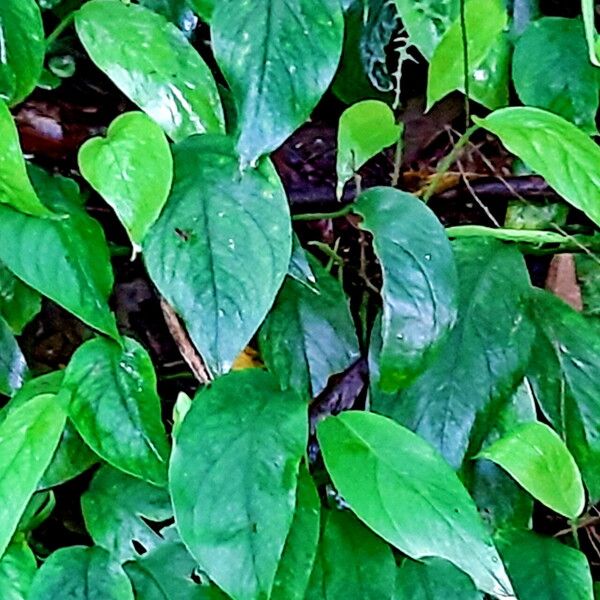
Plant Overview
Known as the Hong Kong Shingle Plant, this architectural climber is a master of adaptation. Found clinging to limestone cliffs and tree trunks across Southeast Asia, it brings a sophisticated, "shingling" texture to any indoor collection. While it belongs to the same family as the famous Monstera, it offers a more refined, understated elegance for those who love vertical greenery.
🔍 How to Identify
- 🍃 Leaf Texture: The leaves are remarkably thick, leathery, and have a matte to semi-glossy finish that feels sturdier than a common Pothos.
- 🪜 Shingling Habit: In its juvenile stage, the leaves press themselves flat against their support surface, overlapping like the scales of a lizard or roof shingles.
- 🌿 Vining Structure: It produces long, searching vines with strong aerial roots that "glue" themselves to wood or moss.
🏡 In Your Garden
- 🧗 The Need for Support: To see this plant truly thrive, you must provide a moss pole or wooden plank. Without something to climb, the leaves will remain small and the plant may lose its iconic shingling look.
- 🌤️ Light Nuances: While it handles lower light better than variegated plants, it needs bright, indirect "jungle floor" light to grow quickly. Avoid direct afternoon sun, which can scorch its thick foliage.
- 🌬️ Humidity Lover: Coming from the humid forests of Hong Kong and Taiwan, it appreciates a misty environment. If the air is too dry, the new leaves may struggle to unfurl from the stem.
⚠️ Safety & Toxicity
- 🐾 Toxic to Pets: Like most members of the Araceae family, it contains insoluble calcium oxalate crystals.
- 👄 Irritation: If chewed or swallowed by cats, dogs, or curious children, it can cause immediate mouth pain, swelling of the tongue, and digestive upset. It is best kept on high shelves or mounted walls.
✨ Fun Fact
In the wild, Rhaphidophora hongkongensis is a "phototropic" explorer. The juvenile runners actually grow away from the light (towards the darkness of a tree trunk) to find a surface to climb, only turning back toward the sun once they have secured a vertical grip!

Detailed Care Instructions

Place in a window with dappled sun or a spot in the middle of a room. Or directly in a window facing west or east.

The presence of a dry surface layer of soil does not indicate that the plant requires water. Instead, stick your finger 1-2" (3-5 cm) deep in the soil to feel dampness or moisture content. If the soil seems dry, it's time to water your greens. If the soil is still moist, however, it is better not to water your plant and instead wait a day or two. Overwatering or waterlogging raises the risk of root rot. So if the soil takes longer than a week to dry, check the light conditions because it's likely that the plant isn't getting enough light. It's fine if the upper layer of soil is dry between waterings, but the deeper soil layer should always have some moisture.
These plant needs regular fertilizing during growing seasons. Fertilizing your plants in dormant state during the winter, might result in scorching or browning of the leaf tips. If mature plants display signs of nutrient insufficiency, fertilizer administration is necessary to restore the plant to its previous state.







