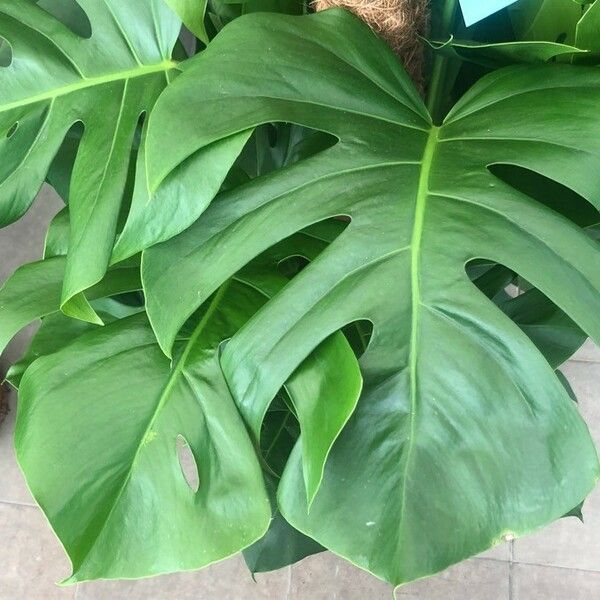
Plant Overview
Often mistaken for its famous cousin, the Monstera deliciosa, Rhaphidophora pertusa is a tropical powerhouse originating from the lush jungles of South Asia and the Indian subcontinent. Known as the "Perforated Rhaphidophora," it brings a dramatic, Jurassic vibe to any space with its architectural, hole-punched foliage. It is a vigorous climber that truly comes to life when allowed to scale a vertical surface, mimicking its natural journey up forest giants.
🔍 How to Identify
- 🍃 Fenestrated Foliage: As the plant matures, the leaves transition from solid green ovals into deeply lobed shapes with large, irregular holes (fenestrations) near the midrib.
- 🎋 Aerial Roots: Look for thick, brownish "anchors" growing from the nodes. These roots are designed to grip onto bark and stones, pulling the plant upward toward the light.
- 🟢 Thick Stems: The vines are notably thick and succulent-like, capable of supporting the weight of large, heavy leaves as the plant matures.
🏡 In Your Garden
- 🧗 Vertical Ambition: Unlike some vines that are happy trailing from a basket, R. pertusa thrives when given a moss pole or cedar plank. Providing a "tree to climb" signals the plant to produce larger, more dramatic leaves.
- 🌤️ Canopy Light: In the wild, it lives under the dappled light of the forest canopy. In your home, it prefers bright, indirect light; too much direct sun will scorch the leaves, while too little will stop the "holes" from forming.
⚠️ Safety & Toxicity
- 🚫 Toxic Status: Highly toxic to pets and humans.
- 👄 The Danger: The plant contains insoluble calcium oxalate crystals. If any part of the leaf or stem is chewed or swallowed, it can cause intense oral irritation, swelling of the throat, and digestive distress. Always wear gloves when pruning if you have sensitive skin, as the sap can cause minor irritation.
✨ Fun Fact
The specific epithet pertusa comes from the Latin word pertusus, which means "perforated" or "bored through." It’s nature’s clever engineering—these holes allow wind to pass through the leaves during tropical storms without tearing them!

Detailed Care Instructions
Rhaphidophora Pertusa, also known as the Mini Monstera or Mini Swiss Cheese plant, is a popular houseplant known for its unique foliage and easy care requirements. Here are some tips to help you grow and care for your Rhaphidophora Pertusa:
- Light: Rhaphidophora Pertusa prefers bright, indirect light. Avoid placing it in direct sunlight as this can scorch the leaves. A location with filtered sunlight or a few feet away from a window with sheer curtains is ideal.
- Watering: Water your Rhaphidophora Pertusa when the top inch of soil feels dry to the touch. Water thoroughly, allowing excess water to drain out of the bottom of the pot. Make sure the plant is not sitting in water as this can lead to root rot.
- Humidity: Rhaphidophora Pertusa prefers high humidity levels. You can increase humidity by placing a humidifier near the plant, using a pebble tray filled with water, or misting the leaves regularly.
- Temperature: Rhaphidophora Pertusa thrives in temperatures between 60-80°F (15-27°C). Avoid exposing the plant to temperatures below 55°F (13°C).
- Soil: Use a well-draining potting mix that retains some moisture but does not become waterlogged. A mix of peat moss, perlite, and bark works well for Rhaphidophora Pertusa.
- Fertilization: Feed your Rhaphidophora Pertusa with a balanced liquid fertilizer every 2-4 weeks during the growing season (spring and summer). Follow the package instructions for dilution and frequency.
- Pruning: Regularly prune your Rhaphidophora Pertusa to encourage bushier growth and remove any yellow or damaged leaves. Use clean, sharp scissors or pruning shears to make clean cuts.
- Repotting: Repot your Rhaphidophora Pertusa every 1-2 years, or when the roots start to outgrow the pot. Choose a pot that is 1-2 inches larger in diameter than the current one and use fresh potting mix.
By following these care tips, you can help your Rhaphidophora Pertusa plant thrive and grow beautifully in your home.

Place in a window with dappled sun or a spot in the middle of a room. Or directly in a window facing west or east.

To water this plant, ensure that the soil is dry to the touch before watering. Use room temperature water and thoroughly saturate the soil until water drains out of the bottom of the pot. Do not allow the plant to sit in standing water as it can cause root rot. Water the plant only when necessary, which may be once a week or less frequently depending on environmental conditions. When in doubt, it is better to underwater than overwater.
To fertilize the Rhaphidophora Pertusa plant, use a balanced liquid fertilizer diluted to half strength during the growing season (spring and summer). Apply the fertilizer directly to the soil, avoiding contact with the leaves. Repeat this process every 4-6 weeks to promote healthy growth and development. Stop fertilizing during the dormant season (fall and winter) to allow the plant to rest.
Rhaphidophora Pertusa plant requires well-draining and fertile soil with good moisture retention capacity. The ideal pH range for the soil should be between 6.0 to 7.0. The soil should also have high organic matter content and good aeration. As for the texture of the soil, it should be rich and loamy with excellent drainage properties. The use of mulch can also help to retain moisture in the soil, which is beneficial for the plant's growth and development. It is important to avoid using heavy clay soils that can retain too much moisture and lead to root rot. Additionally, the use of high-quality potting soil can also improve the plant's growth and overall health.
Rhaphidophora Pertusa can be propagated through stem cuttings. Here is a step-by-step guide on how to propagate this plant:
- Start by selecting a healthy and well-established Rhaphidophora Pertusa plant with mature stems. Choose a stem that is at least 6 inches long with several nodes.
- Use a sharp, clean pair of pruning shears to cut the stem just below a node. Make sure the cutting is done at a 45-degree angle to increase the surface area for root growth.
- Remove any leaves from the lower half of the stem cutting to prevent excess moisture loss.
- Fill a small container with well-draining potting mix or a mix of perlite and peat moss.
- Make a hole in the soil with a pencil or your finger and gently insert the cut end of the stem cutting into the soil. Firmly press the soil around the cutting to keep it upright.
- Place the container in a warm and bright location with indirect sunlight. Avoid direct sunlight as it can scorch the cutting.
- Keep the soil slightly moist but not waterlogged. Check the soil regularly and water when the top layer feels dry to the touch.
- After a few weeks, new roots should begin to grow from the nodes of the stem cutting. You can gently tug on the cutting to check for resistance, which indicates the presence of roots.
- Once the cutting has established a good root system, you can transplant it into a larger pot with well-draining soil.
- Continue to care for the newly propagated Rhaphidophora Pertusa plant by providing it with regular watering, occasional fertilization, and adequate humidity.
By following these steps, you can successfully propagate Rhaphidophora Pertusa plant and expand your collection of this beautiful species.
Common pests of the rhaphidophora pertusa include Mealybugs, spider mites, fungus gnats, thrips. Make a habit of checking your rhaphidophora pertusa frequently for pests so that any infestations can be caught and managed early.








