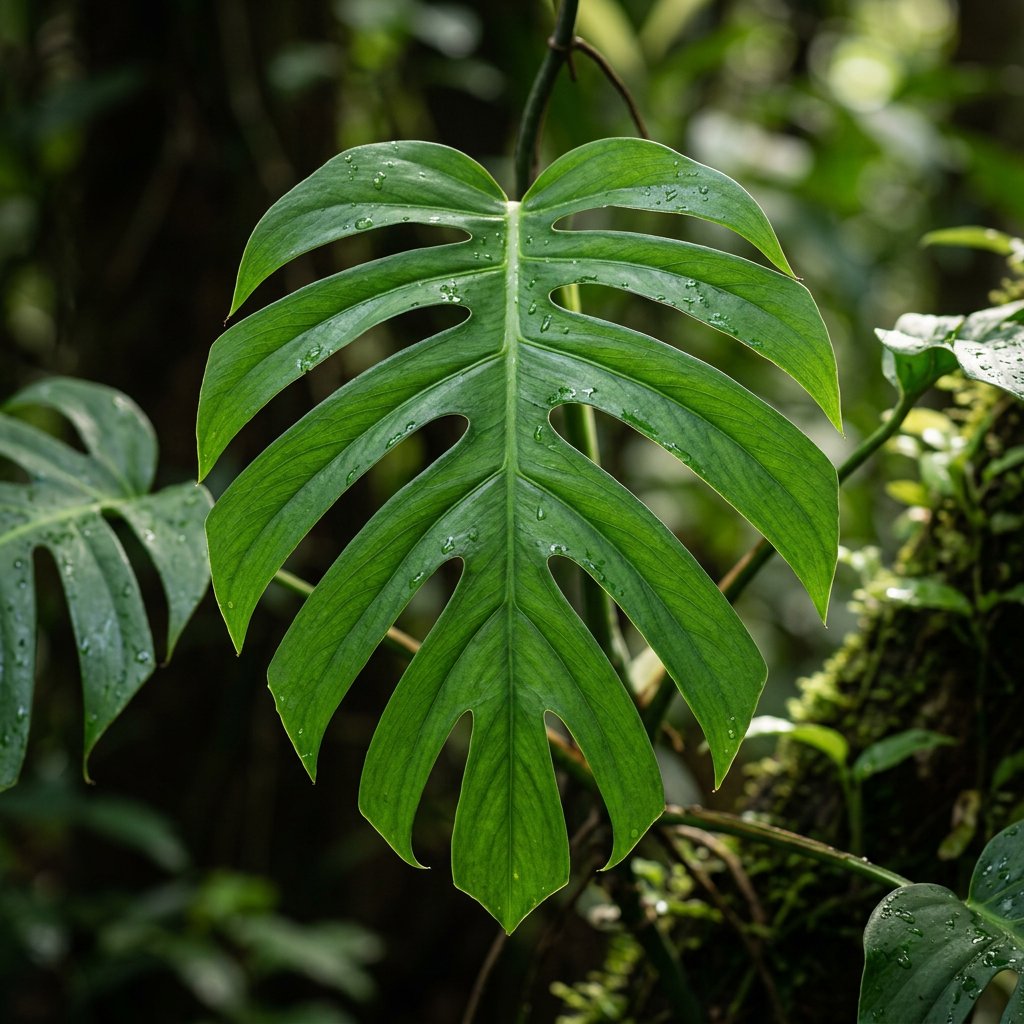
Plant Overview
Often called the "Mini Monstera" or "Ginny Philodendron," Rhaphidophora tetrasperma is the ultimate "cheat code" for plant lovers who want the tropical look of a giant Monstera in a fraction of the space. Despite its nicknames, it is neither a Monstera nor a Philodendron, but a distinct species native to the rainforests of Southern Thailand and Malaysia. It is a vigorous, "social climber" that uses its aerial roots to scale trees (or your living room walls) with incredible speed.
🔍 How to Identify
- 🍃 Fenestrated Foliage: The leaves feature deep, elegant splits (fenestrations) that look like they’ve been carefully cut with scissors, even when the plant is quite young.
- 📏 Compact Scale: Unlike the massive Monstera deliciosa, these leaves stay relatively small—usually between 6 to 10 inches—allowing for a lush look in small apartments.
- 🪜 Vining Growth: It grows along a single, flexible stem that produces "elbow-like" joints at every leaf node, where it sprouts aerial roots to grab onto textures.
🏡 In Your Garden
- 🧗 The Support System: Because this plant is an epiphyte (a tree-climber), it hates crawling along the ground. If you don't provide a moss pole or trellis, the leaves will eventually become smaller and lose their iconic splits as the plant "searches" for something to climb.
- 🌤️ Light Nuance: This species is a high-energy grower. While it is often sold as a low-light plant, it actually requires bright, filtered light to maintain its rapid growth rate and signature leaf shape. If it gets too dark, the vine will become "leggy" and stretched out.
⚠️ Safety & Toxicity
- 🚫 Toxic Status: Toxic to cats, dogs, and humans.
- 👄 The Irritant: Like many members of the Araceae family, it contains insoluble calcium oxalate crystals. If a leaf is bitten, these crystals act like tiny needles, causing immediate mouth pain, drooling, and swelling of the throat. Always display this climber high up or on a secure shelf away from curious pets.
✨ Fun Fact
- 💰 The High-Stakes Houseplant: While the green version is very affordable, a rare variegated (white-and-green) Rhaphidophora tetrasperma once sold at an auction in New Zealand for over $19,000 USD, making it one of the most expensive individual houseplants in history!

Detailed Care Instructions
| Humidity | Normal |
| Lighting | Part Sun |
| Toxicity | Poisonous |
| Difficulty | Easy |
| Hibernation | Cold Period |
| Temperature | 18°C - 25°C |
| Hardiness Zones | 9B - 10B |
To grow Rhaphidophora Tetrasperma, also known as Mini Monstera or Monstera Ginny, follow these steps:
- Propagation: Start by obtaining a healthy Rhaphidophora Tetrasperma plant from a nursery, garden center, or online. It can also be grown from stem cuttings. Ensure the cutting has at least two nodes.
- Potting: Choose a well-draining pot with drainage holes. Use a mix of potting soil and perlite or sand to promote good drainage. Plant the cutting or young plant in the pot, making sure to leave enough space for root growth.
- Light: Place the plant in a spot with bright indirect light. Avoid direct sunlight, as it can scorch the leaves. A north or east-facing window is ideal. If the light is inadequate, consider using a grow light to supplement.
- Temperature and Humidity: Rhaphidophora Tetrasperma thrives in warm temperatures between 65-85°F (18-29°C). Aim for consistent temperatures and avoid cold drafts. Higher humidity levels are beneficial to the plant, so misting the leaves or using a humidifier can help.
- Watering: Water the plant when the top inch (2.5 cm) of soil is dry. Ensure thorough watering, allowing excess water to drain out of the pot. Avoid overwatering, as it can lead to root rot. Rhaphidophora Tetrasperma prefers slightly moist soil but not excessively wet.
- Fertilization: Feed the plant with a balanced liquid fertilizer every 2-4 weeks during the growing season (spring and summer). Follow the instructions on the fertilizer packaging for the correct dosage.
- Support: As the Rhaphidophora Tetrasperma grows, it will develop aerial roots and vining stems. Provide a sturdy trellis or moss pole for support. Gently train the vines to grow around the support.
- Pruning: Regularly prune the plant to maintain its shape and promote healthy growth. Remove any dead or yellowing leaves, and trim any overly long or tangled vines.
- Repotting: As the plant grows, you may need to repot it into a larger container. Only repot when necessary, generally every 1-2 years, to avoid disturbing the plant unnecessarily.
- Propagation: You can propagate Rhaphidophora Tetrasperma by taking stem cuttings with at least two nodes. Place the cuttings in water until roots develop, and then transfer them to a pot with soil.
By following these guidelines, you should be able to successfully grow and care for your Rhaphidophora Tetrasperma plant.

Place in a window with dappled sun or a spot in the middle of a room. Or directly in a window facing west or east.

To water this plant, observe the soil moisture level by inserting a finger about an inch into the soil. Water only when the topsoil is dry to the touch. Water thoroughly but avoid overwatering. Ensure proper drainage by allowing excess water to drain away from the pot. Water less frequently in winter months when the plant doesn't grow as actively.
To fertilize this plant, use a balanced, water-soluble fertilizer with equal amounts of nitrogen, phosphorus, and potassium. Dilute the fertilizer to half the recommended strength and apply it every two weeks during the growing season, which is from spring to fall. During the winter months, reduce the frequency of fertilization to once a month. Be sure to water the plant thoroughly before and after applying the fertilizer to avoid burning the roots.
The optimal soil for the plant is well-draining, loose and rich in nutrients. It should have good aeration qualities and be able to retain some moisture without becoming waterlogged. A mixture of high-quality potting soil, perlite, and peat moss is recommended. Additionally, adding some organic matter like compost or worm castings can enrich the soil further. The pH level of the soil should be ideally between 5.5 to 7.5 for optimal growth and nutrient uptake. It is advised to avoid heavy soils like clay or soils that tend to compact over time. The soil should also be free of pests and diseases and should be sterilized before use.
To propagate this plant, you will need:
- A mature and healthy Rhaphidophora Tetrasperma plant with several leaves and established roots
- Pruning shears or a sharp knife
- A pot or container with well-draining potting soil
- A clear plastic bag or plastic wrap
- Choose a healthy stem that is approximately 4-6 inches in length and has at least one leaf attached.
- Using pruning shears or a sharp knife, cut the stem just below a leaf node (the point on the stem where a leaf attaches).
- Remove any leaves that are close to the bottom of the stem so that there is only one leaf remaining.
- Dip the cut end of the stem into rooting hormone powder (optional).
- Fill a pot or container with well-draining potting soil.
- Create a hole in the soil with your finger or a pencil.
- Insert the stem into the hole, making sure that the bottom of the stem is covered with soil.
- Water the soil lightly.
- Cover the pot or container with a clear plastic bag or plastic wrap. This will create a mini greenhouse and help to retain moisture.
- Place the pot or container in a bright, indirect light location.
- Check the soil every few days and water as needed to keep it lightly moist.
- After 4-6 weeks, gently tug on the stem to see if there is any resistance. If the stem has rooted, it should be firmly anchored into the soil. Remove the plastic bag or wrap and continue to care for the new plant as you would for a mature Rhaphidophora Tetrasperma plant.
Common pests of the mini monstera include Mealybugs, spider mites, fungus gnats, thrips. Make a habit of checking your mini monstera frequently for pests so that any infestations can be caught and managed early.








