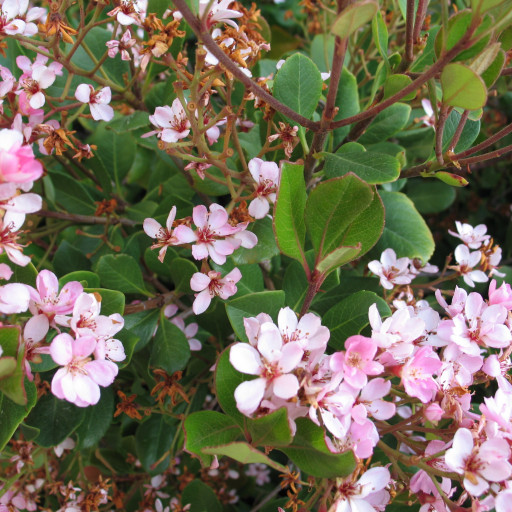
Plant Overview
Known affectionately as the "Indian Hawthorn," the Rhaphiolepis is a low-maintenance superstar found in warm-climate gardens around the world. These sturdy shrubs are famous for their "evergreen elegance," providing year-round structure even when they aren't draped in their signature apple-blossom-like flowers. Despite its name, this plant isn't actually from India; it hails from the subtropical regions of East Asia, where it has been a garden staple for centuries.
🔍 How to Identify
- 🍃 Leathery Foliage: The leaves are thick, oval, and slightly serrated at the edges, featuring a deep, glossy green that feels waxy to the touch. New growth often emerges with a beautiful bronze or burgundy tint.
- 🌸 Star-Shaped Blooms: In the spring, the shrub explodes with clusters of five-petaled flowers that range from snowy white to a vibrant "ballet slipper" pink, often featuring a sweet, light fragrance.
- 🫐 Dark Pomes: Following the flowers, the plant produces small, round, dark blue or purplish-black berries (pomes) that linger into the winter, providing visual interest and food for birds.
🏡 In Your Garden
- 🌊 Salt & Sun Toughness: This plant is incredibly salt-tolerant, making it a "go-to" choice for beachside homes where salty spray usually kills off more sensitive greenery. It thrives in the "heat of the moment" and prefers sunny spots to keep its foliage dense.
- ✂️ Pruning Patience: Because it is a slow grower, you should avoid heavy "haircuts." It naturally maintains a neat, mounded shape; if you must prune, do so immediately after the spring bloom so you don't accidentally cut off next year's flower buds.
⚠️ Safety & Toxicity
- 🐾 Pet Safety: Rhaphiolepis is generally considered non-toxic to dogs and cats, making it a much safer hedging choice for pet owners compared to the highly poisonous Oleander.
- 👅 Digestive Caution: While not classified as "poisonous," the berries and leaves are not meant for human or pet snacks. Ingesting large quantities can cause mild stomach upset or lethargy in small animals, so it's best to keep curious nibblers away.
✨ Fun Fact
The name Rhaphiolepis is derived from the Greek words rhaphis (needle) and lepis (scale), which refers to the tiny, needle-like scales found on the flower stalks—a detail you can only see if you look very closely at the base of the blossoms!

Detailed Care Instructions

Place in a bright room that is sun drenched almost all day. Or directly in a south-facing window.

To properly water this specific ornamental plant, it is important to understand its watering needs. It is crucial to keep the soil moist but not overly saturated. Over watering can lead to root rot which can harm the plant. It is generally recommended to water this plant once a week, but this may vary depending on the specific conditions of your environment. Before watering, one should check the soil moisture level by sticking a finger an inch or two into the soil. If the soil feels dry, it is time to water. When watering, it is important to pour water into the soil, not on the plant leaves or flowers, as this can cause damage or promote fungal growth. Additionally, make sure the plant is located in well-draining soil or use a container with proper drainage holes. This will prevent water from pooling and causing damage to the plant.
The ideal soil for Rhaphiolepis plants should be well-draining and slightly acidic with a pH range of 5.0-6.5. It should also be rich in organic matter, such as compost or peat moss, to promote healthy root growth and prevent waterlogging. Avoid using heavy or clay soils, as they do not allow for adequate water drainage and may cause root rot. Adding perlite or sand to the soil can improve drainage and increase oxygen availability to the roots. Additionally, the soil should be free of any pathogens or pests that could harm the plant. It is important to regularly fertilize the soil with a balanced fertilizer to provide the plant with the necessary nutrients for optimal growth.







