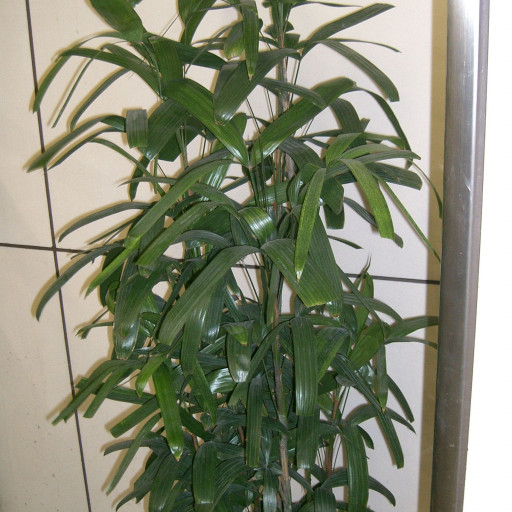
Plant Overview
The Broadleaf Lady Palm, or Rhapis excelsa, is often called the "aristocrat of palms" due to its long history of decorating Japanese palaces and Victorian-era conservatories. Unlike many of its finicky tropical cousins, this palm is prized for its resilience and ability to thrive in low-light corners. With its fan-like foliage and rustic, fibrous trunks, it brings a sophisticated, timeless look to any interior space or shaded garden.
🔍 How to Identify
- 🌿 Fan-Shaped Fronds: The leaves are glossy, dark green, and deeply divided into 5–10 broad, finger-like segments. Unlike many palms that have pointed tips, these segments end in a distinctive, jagged "saw-tooth" edge.
- 🎋 Bamboo-Like Stems: It grows in multi-stemmed clumps. Each slender, upright trunk is wrapped in a dark, mat-like brown fiber that resembles coarse burlap or hemp, giving it a texture similar to bamboo.
- 📏 Compact Growth: Because it is exceptionally slow-growing, it maintains a neat, bushy appearance for years, rarely outgrowing its space indoors.
🏡 In Your Garden & Home
- ☁️ Low-Light Champion: While most palms crave intense sun, the Lady Palm is a shade-dweller. It is one of the few plants that can maintain its deep green color in dim hallways or North-facing rooms.
- 💧 Water Quality Matters: This plant is a bit of a "clean water" enthusiast. It is sensitive to fluoride and minerals found in tap water, which can cause the leaf tips to turn brown. Using filtered water or rainwater will keep the foliage looking pristine.
- 🪴 Root Stability: It prefers to be slightly root-bound and dislikes frequent repotting. Moving it too often can stress the plant, so it's best to leave it in the same container until the roots truly begin to crowd the surface.
⚠️ Safety & Toxicity
- ✅ Safe for All: The Rhapis excelsa is considered non-toxic to humans, cats, and dogs. It is one of the safest choices for a "green" home with curious pets.
- 🧤 Fiber Texture: The brown fibers on the stems are not sharp, but they can be slightly dusty. If you have sensitive skin or allergies, you might want to wear gloves when pruning away old stems.
✨ Fun Fact
🌬️ NASA Approved: In the famous NASA Clean Air Study, the Lady Palm was ranked as one of the best plants for removing indoor toxins, specifically excelling at filtering out ammonia, which is commonly found in household cleaning products.

Detailed Care Instructions
| Humidity | Dry |
| Lighting | Part Sun |
| Difficulty | Easy |
| Temperature | 18°C - 24°C |
| Hardiness Zones | Min 8B |
To grow a Rhapis Excelsa plant, also known as the Lady Palm, you can follow these steps:
- Choose the right location: Rhapis Excelsa plants prefer bright, indirect light. Place them near a window that receives filtered sunlight or in a well-lit area indoors. Avoid direct sunlight as it can burn the leaves.
- Provide proper humidity: Lady Palms thrive in high humidity environments. You can use a humidifier to increase humidity levels or place a tray filled with water near the plant to enhance moisture in the air.
- Watering: Water regularly, keeping the soil moist but not overly soaked. Ensure proper drainage and avoid allowing the plant to sit in standing water. During winter, reduce watering frequency as the plant's growth slows.
- Fertilize occasionally: Apply a balanced houseplant fertilizer once every two months during the growing season (spring and summer). Follow the instructions on the label for proper dilution and application.
- Repotting: Repot the plant every 2-3 years or when it becomes root-bound. Use well-draining soil mix, such as a combination of peat moss and perlite, and choose a pot slightly larger than the current one.
- Pruning: Remove any yellowing or dead leaves regularly to maintain the plant's visual appeal. Additionally, trim any brown leaf tips using clean and sharp pruning shears.
- Temperature: Rhapis Excelsa plants thrive in temperatures ranging from 60-85°F (15-29°C). Avoid exposing them to extreme cold or hot drafts.
- Pest control: Keep an eye out for common houseplant pests such as spider mites, mealybugs, and scale insects. If detected, use an appropriate insecticidal soap or neem oil solution to control the infestation.
By following these care instructions, your Rhapis Excelsa plant should grow healthy and lush. Remember to observe the plant for any signs of distress or nutritional deficiencies and make necessary adjustments to ensure its well-being.

Place in a window with dappled sun or a spot in the middle of a room. Or directly in a window facing west or east.

To water this plant, ensure that the soil is moist but not waterlogged. Using a watering can or hose, slowly water the soil around the plant until water begins to drain from the bottom of the container. Avoid getting water on the leaves as this can lead to fungal diseases. Water the plant more frequently during the warmer months and less frequently during the cooler months. Check the soil regularly and water when the top inch feels dry to the touch. Ensure that the plant is not sitting in standing water as this can lead to root rot.
To fertilize this plant, use a balanced fertilizer with equal amounts of nitrogen, phosphorus, and potassium. Apply the fertilizer every two months during the spring and summer growing season. Dilute the fertilizer to half strength before applying it to the soil around the plant. Avoid fertilizing during the winter months when the plant is dormant. Ensure the soil is moist before applying the fertilizer to prevent burning the plant's roots.
Rhapis Excelsa plant prefers a well-draining soil that is rich in organic matter. The soil should be slightly acidic and have a pH range between 5.5 and 6.5. A mixture of peat moss, perlite, and vermiculite can be used to create the ideal soil mix for this plant. The soil should be kept moist but not waterlogged, and it is best to avoid overwatering to prevent root rot. A layer of mulch or organic matter can be added on top of the soil to help retain moisture and improve fertility. Additionally, regular fertilization with a balanced, slow-release fertilizer can help promote healthy growth and lush foliage.
Rhapis excelsa is a plant that can be propagated by division. First, the plant should be carefully removed from the pot and the roots should be gently separated. The individual divisions should then be planted in their own pots with well-draining soil. The new pots should be watered thoroughly and placed in a bright, indirect light. It is important to keep the soil consistently moist but not waterlogged. The new plants should begin to grow within a few weeks and can be fertilized with a balanced fertilizer every few months to encourage growth.
Common pests of the bamboo palm include Scale insect, mealybugs, spider mites. Make a habit of checking your bamboo palm frequently for pests so that any infestations can be caught and managed early.








