Plant Overview
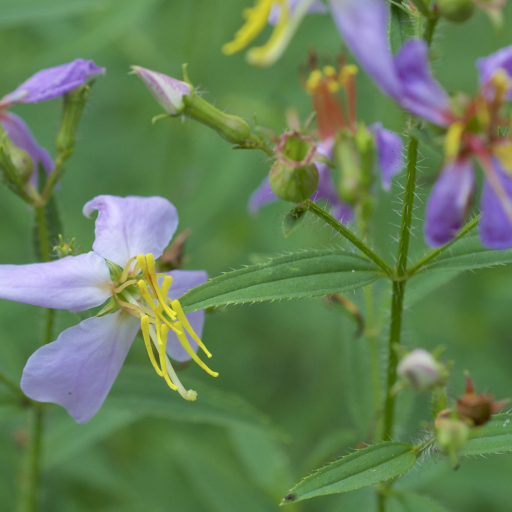
Known as the Maryland Meadow Beauty, this wildflower is a delicate star of the damp lowlands and marshes of the Eastern United States. It is a rare northern representative of a mostly tropical plant family, giving it an exotic, sophisticated look despite its rugged ability to grow in roadside ditches. Its most striking feature is its "candelabra" of bright yellow stamens that seem to glow against its soft pink petals.
🔍 How to Identify
- 🌸 The Bloom: Four asymmetrical petals, ranging from pale lavender-pink to nearly white, often with a slightly "rumpled" texture.
- 🍌 Curved Anthers: A cluster of large, bright yellow anthers that curve sharply outward, resembling tiny bananas or a golden crown.
- 🌿 Veined Foliage: Opposite, lance-shaped leaves with three to five very distinct longitudinal veins running from base to tip.
- 🏺 Urn-Shaped Fruit: After the petals fall, the seed pod develops into a unique, pitcher-shaped structure (the hypanthium) that looks like a tiny ancient Greek urn.
🏡 In Your Garden
- 💧 Bog Specialist: Unlike many garden flowers that fear "wet feet," the Meadow Beauty thrives in soggy, acidic, and sandy soils. It is a premier choice for rain gardens or the muddy edges of a backyard pond.
- 🐝 Buzz Pollination: This plant requires "buzz pollination," a specialized technique where bumblebees must vibrate their flight muscles at a specific frequency to shake the pollen out of the pores in the anthers.
- 🌱 Specific Needs: It struggles in heavy clay or alkaline soils. If your garden soil isn't naturally acidic, it is best grown in a specialized container or a dedicated peat-rich bog bed.
⚠️ Safety & Toxicity
- ✅ Generally Safe: The Maryland Meadow Beauty is considered non-toxic to humans, dogs, and cats.
- 🍋 Edible Note: Historically, the leaves have been used in salads for their slightly sour, acidic "lemon-like" flavor, and the seeds have a pleasant nutty taste. However, always ensure the area hasn't been treated with pesticides before tasting wild plants.
✨ Fun Fact
The famous philosopher and naturalist Henry David Thoreau was enchanted by the fruit of this plant family, describing the tiny, urn-shaped seed pods as "perfect little cream pitchers" scattered across the meadow floor.

Detailed Care Instructions
To grow Rhexia Mariana (also known as Maryland Meadow Beauty), follow these steps:
- Climate and Location: Rhexia Mariana thrives in moist to wet soil and prefers full sun or partial shade. Ensure that your planting location receives at least six hours of direct sunlight per day.
- Soil Preparation: Rhexia Mariana grows best in acidic soil with a pH of 4.5 to 6.0. Prepare the planting area by removing weeds and incorporating organic matter like compost or peat moss to enrich the soil.
- Planting: You can sow Rhexia Mariana from seeds or purchase young plants from a nursery. If planting from seeds, scatter them over the prepared soil and lightly cover them with a thin layer of soil or sand. Space the seeds or plants about 12 inches apart.
- Watering: Keep the soil consistently moist but not waterlogged. Water regularly, especially during dry periods, to encourage healthy growth.
- Mulching: Apply a layer of organic mulch around the plants to conserve moisture and suppress weed growth. Avoid mulching directly around the base of the plant to prevent rotting.
- Fertilizing: Rhexia Mariana generally does not require much fertilization. You can apply a slow-release, general-purpose fertilizer in the spring to provide some additional nutrients.
- Maintenance: Remove any weeds that may compete with the plants for water and nutrients. Prune back any dead or damaged foliage as needed to maintain plant health.
- Propagation: Rhexia Mariana can be propagated through division. Every few years, dig up the plant and gently separate the clumps, replanting them in fresh soil.
- Overwintering: Rhexia Mariana is perennial and should survive winters in its natural range. However, if you live in a colder climate, you may need to provide protection during winter months, such as covering the plants with a thick layer of mulch.
- Enjoy the Blooms: Rhexia Mariana typically produces pink or purple flowers from late spring to early fall. Once the plant is established, it should continue to bloom year after year.
Remember to check specific care instructions for Rhexia Mariana in your region, as environmental conditions can vary.

Place in a bright room that is sun drenched almost all day. Or directly in a south-facing window.

Rhexia Mariana is a perennial flowering plant that is native to North America. When it comes to watering this plant, it is essential to mimic its natural habitat, which is typically found in wetlands and moist areas. Here are some detailed guidelines on how to properly water Rhexia Mariana:
1. Soil Moisture: Rhexia Mariana prefers consistently moist soil, but not waterlogged conditions. The soil should never completely dry out, but make sure to avoid standing water or excessively soggy conditions.
2. Watering Frequency: Water the plant regularly, especially during the growing season. Aim to keep the soil consistently damp without allowing it to dry out between watering sessions.
3. Observe the Moisture Level: Regularly check the soil moisture level by inserting your finger into the soil. If the top inch of the soil feels dry to the touch, it is time to water the plant.
4. Watering Methods: It is advisable to use a watering can or a garden hose with a gentle spray nozzle to avoid disturbing the delicate roots of the plant. Water the soil directly at the base of the plant, aiming to moisten the entire root zone.
5. Deep Watering: To promote a healthy root system, ensure that water penetrates deeply into the soil. Watering deeply encourages the plant's roots to grow downward, enhancing their ability to access moisture and nutrients.
6. Watering Time: It is recommended to water Rhexia Mariana early in the morning or late in the evening. This allows the plant to absorb water effectively without losing excessive moisture due to evaporation during hot daytime temperatures.
7. Water Quality: Use clean and fresh water to water Rhexia Mariana. Tap water is generally suitable; however, if your tap water contains high levels of salts or chemicals, it may be better to use filtered or rainwater.
8. Weather Considerations: Adjust the watering frequency and amount based on weather conditions. During periods of heavy rainfall, you may need to reduce watering to prevent oversaturation. Conversely, during dry spells, you may need to increase watering sessions.
9. Drip Irrigation: If you have a larger planting of Rhexia Mariana, consider installing a drip irrigation system to ensure consistent and efficient watering. Drip irrigation minimizes water waste and delivers moisture directly to the plant's root zone.
Remember, while providing sufficient water to Rhexia Mariana is important, it is equally crucial to avoid overwatering, as it can lead to root rot and other plant health issues. Maintaining a balance of moisture in the soil is key to keeping this beautiful plant thriving.
To ensure the optimal growth of Rhexia Mariana plants, it is important to provide appropriate fertilization. Here are some fertilizing instructions:
- Preparing the soil: Before fertilizing, make sure the soil is well-drained, enriched, and organic-rich. This helps to maximize the absorption of nutrients by the plant.
- Choose a balanced fertilizer: Select a balanced, slow-release fertilizer with equal amounts of nitrogen (N), phosphorus (P), and potassium (K). For example, a 10-10-10 or 14-14-14 formulation.
- Timing: Apply the first round of fertilizer in early spring before the active growing season begins. Follow up with subsequent applications every 6-8 weeks throughout the growing season. Avoid fertilizing during periods of dormancy or when the plant is not actively growing.
- Application method: Sprinkle the fertilizer evenly around the base of the plant, ensuring it is distributed within the drip line where the majority of the feeder roots are located. Be careful not to let the fertilizer come into direct contact with the leaves or stems.
- Watering: After applying the fertilizer, thoroughly water the plant to help dissolve the nutrients and carry them into the soil. This promotes efficient uptake by the roots.
- Follow package instructions: Every fertilizer may differ in concentration and application rates. Follow the instructions on the fertilizer packaging for specific measurements and guidance.
- Avoid over-fertilizing: Applying excessive amounts of fertilizer can harm the plant and lead to nutrient imbalances or environmental issues. Always apply the recommended amount as stated on the fertilizer package.
Remember, it is essential to monitor the plant's response to fertilization. If you notice any signs of stress or nutrient deficiencies, adjust your fertilization routine accordingly.
When it comes to choosing the right soil for Rhexia Mariana plants, it is important to consider their natural habitat and requirements for optimal growth. Rhexia Mariana plants are typically found in specific regions with unique soil characteristics.
These plants thrive in soil that is well-draining yet moisture-retentive. A sandy loam soil or a soil mix with a good balance of sand, silt, and clay is well-suited for Rhexia Mariana plants. Such soil texture allows for proper water drainage while permitting enough moisture retention to meet the plant's needs.
Additionally, the soil pH should ideally be slightly acidic to neutral. Rhexia Mariana plants tend to prefer a pH range between 5.5 and 7.0. This soil acidity level ensures optimal nutrient availability for the plant's growth and development.
To enhance the soil texture and drainage capabilities, it is beneficial to amend it with organic matter like compost or well-rotted manure. This addition can improve moisture retention, increase fertility, and promote overall soil health.
While Rhexia Mariana plants exhibit adaptability, it is crucial to avoid heavy or poorly-draining soils. These types of soil can lead to waterlogged conditions that may cause root rot and hinder the plant's growth and vigor.
It is worth noting that Rhexia Mariana plants might have specific soil preferences based on their location within their natural range. Therefore, studying their specific habitat and making adjustments accordingly could provide the best possible soil conditions to support their successful cultivation.
To propagate the Rhexia Mariana plant, follow these steps:
- Collect mature seeds: Look for ripe seed capsules on the Rhexia Mariana plant. These capsules are usually brown and dry. Remove the capsules and collect the seed.
- Prepare the soil: Rhexia Mariana prefers moist to wet soil, so choose a planting site accordingly. Ensure the soil is well-drained and rich in organic matter. Prepare the soil by loosening it with a garden fork or tiller.
- Sow the seeds: Spread the Rhexia Mariana seeds evenly over the prepared soil surface. Press the seeds lightly into the soil using the backside of a rake or your hands. Avoid burying them too deep.
- Water the seeds: After sowing the seeds, gently water the soil to ensure proper moisture and seed-to-soil contact. Use a fine mist or a gentle spray to prevent dislodging the seeds.
- Provide shade: Initially, it is beneficial to provide some shade to the Rhexia Mariana seeds to help them germinate. This can be achieved by placing a shade cloth or by planting them under the cover of taller plants. However, make sure the shade is not too dense, allowing some sunlight to reach the seeds.
- Maintain moisture: Rhexia Mariana requires a consistently moist environment for successful germination. Regularly water the area to keep the soil adequately moist but not waterlogged. Monitor moisture levels regularly and adjust watering accordingly.
- Protect against pests: During the germination period, protect the seedlings from potential threats such as slugs, snails, or herbivorous animals. Consider using barriers or organic pest control methods to safeguard the young plants.
- Transplanting: Once the seedlings have grown to a suitable size, usually around 3-4 inches tall, they can be transplanted into their permanent location. Choose a location that meets the specific growing requirements of Rhexia Mariana.
- Regular care: After transplanting, continue to provide regular watering, especially during dry spells, to ensure the plants thrive. Remove any competing weeds to minimize competition for resources.
It's important to note that the propagation success rate may vary, and it might take some time for the Rhexia Mariana plants to mature and bloom. However, with patience and proper care, you can successfully propagate this beautiful plant.








