Plant Overview
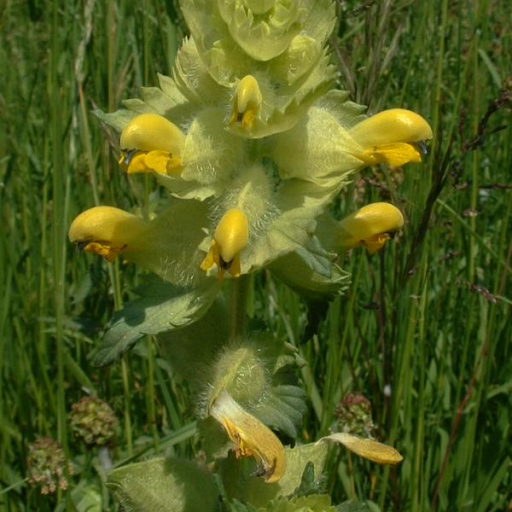
Often called the "Meadow Maker," the Greater Yellow-rattle is a charming European wildflower known for its distinctive cockscomb-like appearance. Its name comes from the characteristic rattling sound its dry seeds make inside their papery pods, a sound that traditionally signaled to farmers that it was time to harvest the hay. Beyond its beauty, it acts as a "Robin Hood" of the plant world, stealing nutrients from dominant grasses to give smaller wildflowers a chance to shine.
🔍 How to Identify
- 🌼 The "Cockscomb" Bloom: Bright yellow, two-lipped flowers that feature a protective upper "hood" with two tiny, often bluish teeth at the tip.
- 🧶 Hairy Pouches: The flowers are cradled by an inflated, pale green, bladder-like structure (the calyx) that is covered in fine, soft hairs.
- 🌿 Toothed Foliage: Dark green, lance-shaped leaves with deeply serrated or "saw-toothed" edges that grow directly opposite one another along the stem.
🏡 In Your Garden
- 🌾 The Grass Whisperer: This plant is hemiparasitic, meaning it attaches its roots to nearby aggressive grasses and siphons off their energy. This naturally thins out the grass, making it the secret weapon for anyone trying to establish a diverse wildflower meadow.
- 🍂 Autumn Sowing: Unlike many garden plants, Yellow-rattle is an annual that requires a "cold snap" (stratification) to wake up. Seeds must be sown in late autumn on top of short-cut grass to ensure they can find host roots by springtime.
⚠️ Safety & Toxicity
- ✅ Generally Safe: Greater Yellow-rattle is not known to be toxic to humans or common household pets like cats and dogs.
- 🐄 Livestock Caution: The plant contains a bitter glycoside called rhinanthin. While grazing animals usually avoid it due to the taste, it can cause mild digestive irritation in livestock if consumed in very high volumes within dried hay.
✨ Fun Fact
In many rural European cultures, the plant was known as "Nature’s Maraca." Folklore suggests that the rattling sound of the ripe seeds was a warning from the earth itself, telling farmers that the hay was perfectly dry and must be mown immediately before the summer storms arrived.

Detailed Care Instructions
| Humidity | Normal |
| Lighting | Part Sun |
| Difficulty | Hard |
| Hibernation | Cold Period |
To grow Rhinanthus alectorolophus, also known as yellow rattle, you can follow these steps:
- Obtain seeds: Find a reputable nursery or seed supplier that offers Rhinanthus alectorolophus seeds. Alternatively, you can collect seeds from mature plants if you have access to them.
- Determine the planting location: Yellow rattle is a semi-parasitic plant that relies on grasses for nutrients. Select an area of your garden or a meadow where grasses dominate.
- Prepare the soil: Rhinanthus alectorolophus prefers well-drained soil that is slightly acidic to neutral. Remove any existing vegetation and loosen the top layer of soil. Add compost or organic matter to improve fertility if needed.
- Sow the seeds: Scatter the seeds over the prepared soil in late autumn or early spring. The seeds need a period of cold stratification to germinate, so sowing them in autumn allows the natural winter temperatures to fulfill this requirement.
- Press the seeds into the soil lightly: Use the back of a garden rake or any other suitable tool to press the seeds firmly but gently into the soil. This helps ensure good seed-to-soil contact for better germination rates.
- Water the area: After sowing, water the area to ensure the soil is moist but not waterlogged. Rhinanthus alectorolophus prefers evenly moist soil, especially during germination and establishment.
- Allow the plant to grow: Rhinanthus alectorolophus should start to germinate and grow after a few weeks, depending on the temperature and conditions. As it grows, it will develop small yellow flowers and inflated seed capsules.
- Maintenance: Once established, Rhinanthus alectorolophus generally requires minimal care. Regular watering during dry spells and removing any competing grass or weeds will help ensure its growth.
It's worth noting that Rhinanthus alectorolophus is a protected species in some regions due to its ecological importance. Before collecting seeds or growing it, ensure that you are not violating any regulations in your area.

Place in a bright room that is sun drenched almost all day. Or directly in a south-facing window.

The best way to water this plant is to thoroughly moisten the soil around its roots, being careful not to overwater it. Make sure the soil is evenly moist, but not waterlogged, as excessively wet soil can lead to root rot. It is best to water the plant in the morning hours to give it ample time to absorb the water before the sun becomes too hot. This will help to prevent any damage to the leaves from the sun. When watering, try to avoid getting water on the leaves, as this can lead to fungal diseases. Instead, aim the water at the soil around the base of the plant. Finally, it is a good idea to mulch around the plant to help retain moisture and keep the roots cool.
To fertilize the Rhinanthus Alectorolophus plant, simply mix a balanced fertilizer into the soil in spring and summer. Use about one teaspoon per square foot of soil, and work it in well. Water the plant thoroughly after fertilizing to help the nutrients soak into the soil and reach the root system. Avoid over-fertilizing, as this can damage the plant.
The best type of soil for Rhinanthus Alectorolophus plants is a well-draining and fertile soil. It should ideally be sandy loam or silt loam with a pH range between 6.0-7.5. It is also beneficial to incorporate organic matter into the soil to improve soil structure and fertility. The plant prefers moist soil but does not tolerate waterlogging. Additionally, it is recommended to plant the Rhinanthus Alectorolophus in a sunny location with adequate space for growth.
To propagate this plant, collect mature seeds from the flower heads in the autumn. Then, in the following spring, sow the seeds directly into the soil where they will germinate and grow. Alternatively, you can sow them in individual pots or trays filled with a compost mix. Water the seeds regularly and keep them in a bright and warm area. Once the seedlings have grown sufficiently, transplant them into the garden or larger pots. These plants should be grown in rich, well-drained soil and kept in a partly shaded area to prevent them from drying out too quickly. With proper care, they will grow into a beautiful and vibrant plant.








