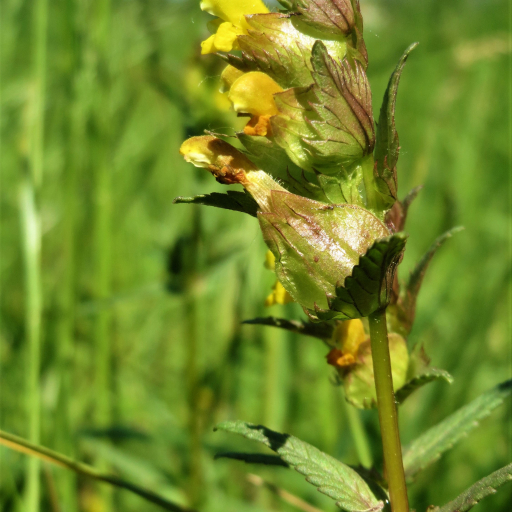
Plant Overview
Known famously as the "Yellow Rattle" or "Nature’s Meadow-Maker," this charming wildflower is the secret weapon of conservationists. It earns its nickname from the distinct rattling sound its ripe seeds make inside their papery pods when the wind blows. Beyond its sound, it plays a vital role in local ecosystems by acting as a "green thief," stealing nutrients from aggressive grasses to give other wildflowers a chance to shine.
🔍 How to Identify
- 🌼 The Bloom: Look for small, bright yellow flowers with a "hooded" upper lip and a tooth-like projection, resembling a tiny snapping dragon.
- 🍃 The Foliage: The leaves are stalkless, narrow, and have sharply serrated (saw-toothed) edges, appearing in opposite pairs along a stiff, square stem.
- 🪇 The Seed Pod: After blooming, the plant develops inflated, bladder-like green capsules that turn brown and papery, containing seeds that rattle audibly when shaken.
🏡 In Your Garden
- 🌱 The Meadow Architect: This plant is semi-parasitic. It attaches its roots to those of nearby grasses to suck out nutrients. By weakening the grass, it prevents the lawn from "choking out" more delicate wildflowers, making it essential for creating a diverse meadow.
- 🌾 Soil Preferences: It thrives in low-fertility soils. In fact, if your soil is too rich or highly fertilized, the grass will grow too fast for the Yellow Rattle to keep up. It is an annual plant, meaning it must drop its "rattling" seeds every year to return the next spring.
⚠️ Safety & Toxicity
- 🟢 Status: Generally considered non-toxic to touch, but contains mild compounds that should not be ingested.
- 🐄 Livestock Note: While safe for humans to handle, the plant contains rhinanthin, a glycoside that can be mildly toxic to livestock if consumed in very large quantities in hay. For the average gardener, pet owner, or hiker, it poses no significant risk.
✨ Fun Fact
In the old days, farmers used the "Yellow Rattle" as a natural calendar. When the seeds began to rattle in the wind, it was the traditional signal that the meadows were dry enough and the hay was ready to be cut!

Detailed Care Instructions
To grow Rhinanthus minor, also known as Yellow rattle or Hayrattle, follow these steps:
- Choose the right location: Rhinanthus minor thrives in full or partial sun. Select a well-drained area, preferably with loamy or sandy soil.
- Prepare the soil: Remove any weeds or grass from the planting area. Loosen the soil using a garden fork or tiller and add organic matter like compost to enhance fertility and drainage.
- Sow the seeds: Rhinanthus minor is typically grown from seeds. Sow the seeds directly into the prepared soil in early spring or late summer. Scatter the seeds thinly over the area and lightly rake them in, ensuring good soil contact.
- Watering and maintenance: Keep the soil consistently moist until the seeds germinate. After that, reduce watering, as the plant is drought-tolerant. Weed regularly to prevent competition for nutrients and space.
- Germination and growth: Rhinanthus minor seeds usually take 1-3 weeks to germinate. Once the plants have emerged, thin them out to allow proper spacing. Space the plants around 6-12 inches apart.
- Fertilization: Rhinanthus minor does not typically require additional fertilizer. If the soil is poor or lacking in nutrients, you can add a slow-release or organic fertilizer in early spring.
- Cut back: To encourage bushier growth and more flowers, you can cut back the plants after they have finished flowering. You can also collect the seeds for further propagation.
- Harvesting seeds: When the seedheads turn brown and dry, cut them from the plant. Hang the seedheads in a dry and well-ventilated area to allow them to fully dry. Once dry, gently crush the heads to extract the seeds.
Remember, Yellow rattle is a semi-parasitic plant that attaches its roots to nearby grasses, reducing their vigor. This makes it a useful plant for meadows or lawns to reduce competition from grasses and encourage the growth of other wildflowers.

Place in a bright room that is sun drenched almost all day. Or directly in a south-facing window.

To water this particular plant, you should start by assessing the soil moisture level around its roots. Use a soil moisture meter or stick your finger about an inch deep in the soil to check if it feels dry or moist. If the soil is moist, you can wait a few more days before watering it again.
When it's time to water, you should give the plant a deep soaking to help the water reach its roots. To do this effectively, water the plant slowly and evenly over the soil surface until you see water pooling around the base of the plant. You can also water it from the bottom by placing the pot in a tray of water and letting it soak up through the drainage holes.
Make sure not to overwater the plant as this can lead to root rot and other issues. Always let the soil dry out a bit between watering sessions and avoid watering the leaves or flowers directly.
Lastly, keep an eye out for signs of underwatering or overwatering, such as wilting or yellowing leaves, and adjust your watering schedule accordingly.
To fertilize this plant, mix a high-quality, balanced fertilizer into the soil around its base during the growing season. Use a slow-release fertilizer or add a liquid fertilizer every two weeks for best results. Follow manufacturer's instructions for the proper ratio and amount of fertilizer to apply. Avoid over-fertilizing, as it can damage the plant's roots and foliage.
Rhinanthus Minor plant prefers a well-draining soil that is fertile and slightly acidic. The soil should have good moisture retention capacity without being waterlogged to the point of restricting oxygen supply to the roots. It can tolerate some level of salinity and alkalinity, but these may impact growth and development negatively. An ideal soil type for Rhinanthus Minor plant would be a loamy or sandy soil mix with organic matter added to improve fertility and structure. The soil should also be able to support the root system of the plant, allowing it to anchor and draw water and nutrients efficiently from the ground. Finally, it is important to ensure that the soil is free from contaminants, such as heavy metals or pesticides, to avoid toxicity problems for the plant.
To propagate this plant, you will need to collect the seeds once the flowers have faded and the seed pods have turned brown. Remove the seeds from the pods and store them in a cool, dry place until you are ready to plant them. In the spring, prepare a seedbed by removing any weeds or other plants and loosening the soil. Sow the seeds thinly on the surface of the soil and cover them with a layer of fine soil or vermiculite. Water the seedbed gently and keep the soil moist until the seeds germinate. Once the seedlings are large enough to handle, transplant them into individual pots or into a well-prepared garden bed. Water the seedlings regularly and keep them protected from strong winds and direct sunlight until they are established.








