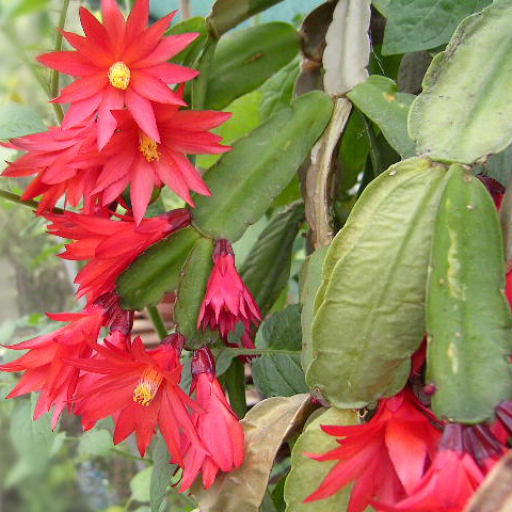
Plant Overview
Commonly known as the Easter Cactus, this vibrant succulent is the festive spring cousin of the more common Christmas and Thanksgiving cacti. Native to the high-altitude rainforests of Brazil, it doesn't live in the sand but perches gracefully on tree branches as an epiphyte. It is beloved for its dramatic "starburst" flowers that herald the arrival of warmer weather.
🔍 How to Identify
- 🌸 Star-Shaped Blooms: Unlike the tubular, tiered flowers of its winter cousins, the Easter Cactus produces perfectly symmetrical, funnel-shaped flowers with pointed petals.
- 🍃 Scalloped Segments: The flat, fleshy stem segments (cladodes) have rounded, wavy notches along the edges, lacking the sharp, "toothed" points found on the Thanksgiving cactus.
- 🌿 Growth Habit: It features a pendulous, branching form that starts upright but eventually arches downward as the segments multiply, making it ideal for hanging displays.
🏡 In Your Garden
- ☁️ The Jungle Vibe: Because it originates from misty forests, this plant despises dry air. It thrives in high humidity and bright, indirect light—direct scorching sun will actually turn the segments a stressed reddish-purple.
- 💤 The Winter Nap: To ensure a spectacular spring show, this plant requires a "cool down" period in late winter. It needs about 6-8 weeks of cooler temperatures and longer nights to trigger its bud development.
- 💧 Hydration Balance: Unlike desert cacti, the Easter Cactus should never bone-dry. However, its delicate roots are prone to rot, so it needs a very airy, bark-heavy potting mix that breathes.
⚠️ Safety & Toxicity
- 🐾 Pet Friendly: The Easter Cactus is non-toxic to cats, dogs, and horses, making it a "worry-free" addition to a pet-filled home.
- 👶 Safe for Kids: Since it lacks the sharp, piercing spines of traditional cacti, it is safe to keep on low tables or in reach of curious children.
✨ Fun Fact
The Easter Cactus is a master of timing; it is photoperiodic, meaning it measures the length of the night. It will only bloom once the days begin to lengthen significantly in early spring, acting as a living calendar for the equinox!

Detailed Care Instructions
To grow a Rhipsalidopsis Gaertneri plant, also known as the Easter cactus or spring cactus, follow these steps:
- Choose the right location: Place the plant in a spot that receives bright, indirect sunlight. Avoid direct sun as it can scorch the leaves.
- Provide optimal temperature: Rhipsalidopsis Gaertneri prefers moderate temperatures between 65-75°F (18-24°C). Avoid extreme hot or cold conditions.
- Potting: Use a well-draining potting mix specifically designed for succulents or cacti. Make sure the pot has drainage holes to prevent waterlogging.
- Watering: Water regularly but avoid overwatering. Allow the top inch of the soil to dry out before watering again. Ensure that excess water drains out of the pot completely.
- Humidity: The Easter cactus benefits from a slightly higher humidity level. You can increase humidity by placing a tray of water near the plant or misting it with water occasionally.
- Fertilization: Use a balanced houseplant fertilizer diluted to half strength during the active growing season (spring and summer) every 4-6 weeks. Do not fertilize during the dormant period (fall and winter).
- Pruning: Prune back any leggy or overgrown stems after flowering to maintain a compact shape. Pinching back the tips can encourage branching.
- Flowering: Rhipsalidopsis Gaertneri typically blooms in spring. To promote flowering, provide a cool (around 50-60°F or 10-15°C) resting period of 6-8 weeks in late fall or early winter. During this time, reduce watering and stop fertilizing.
- Propagation: You can propagate Easter cactus by taking stem cuttings in spring or summer. Allow the cut ends to callus for a day or two before planting them in well-draining soil.
- Avoiding stress: Unlike true cacti, Rhipsalidopsis Gaertneri is a forest-dwelling cactus and prefers slightly more water and less intense sunlight. Avoid exposing it to stressors like sudden temperature changes or prolonged drought.
By following these guidelines, you can successfully grow and care for your Rhipsalidopsis Gaertneri plant.

Place in a window with dappled sun or a spot in the middle of a room. Or directly in a window facing west or east.

To properly water Rhipsalidopsis Gaertneri plants, follow these guidelines:
1. Consider the plant's natural habitat: Rhipsalidopsis Gaertneri is an epiphytic cactus species native to Brazil. In its natural environment, it typically grows in the shady understory of tropical rainforests. Therefore, it prefers moist but well-draining conditions.
2. Timing and frequency: Water the plant when the top inch (2.5 cm) of its soil feels dry to the touch. Avoid excessive watering which can lead to root rot, as Rhipsalidopsis Gaertneri is susceptible to it. Typically, watering once every 7-10 days is sufficient, but make sure to adjust the frequency based on the environmental conditions and the plant's specific needs.
3. Watering technique: Use room temperature or lukewarm water to avoid shocking the plant's delicate roots. Slowly pour the water directly onto the soil, allowing it to seep through the entire root ball. Avoid getting water on the plant's leaves or body, as excess moisture can cause damage or invite pests.
4. Drainage: Ensure the container has drainage holes to prevent water from accumulating in the pot and causing root rot. If you notice excess water collecting in the saucer or container, remove it promptly.
5. Humidity: The Brazilian rainforest habitat of Rhipsalidopsis Gaertneri suggests it thrives in higher humidity levels. Enhance humidity around the plant by placing it in a tray with water and pebbles or using a humidifier nearby. This extra humidity mimics its natural conditions, promoting healthy growth.
6. Seasonal adjustments: During the active growing season in spring and summer, Rhipsalidopsis Gaertneri requires more frequent watering. However, during the dormant period in fall and winter, reduce the watering frequency to allow the plant to rest.
Remember, these guidelines should be used as a general reference, and it's essential to observe your specific plant's needs. Factors such as climate, container size, and sunlight exposure can influence the watering requirements of Rhipsalidopsis Gaertneri plants. Adjust your watering routine accordingly to maintain a healthy and thriving plant.
To fertilize Rhipsalidopsis Gaertneri, a type of flowering cactus:
- Choose a balanced water-soluble fertilizer suitable for cacti and succulents. Look for one with equal nitrogen (N), phosphorus (P), and potassium (K) ratios or slightly higher phosphorus levels.
- Dilute the fertilizer according to the manufacturer's instructions in water. It's typically recommended to use half the recommended dosage for cacti species.
- Water the soil thoroughly before applying the fertilizer to ensure the plant is hydrated.
- Pour the diluted fertilizer solution onto the soil around the base of the plant. Avoid getting the solution on the leaves or stems, as it may cause burns.
- Apply the fertilizer during the growing season, typically from spring to early fall, about once every month or as directed by the specific product instructions. Avoid fertilizing during the plant's dormant winter period.
- Monitor the plant for signs of nutrient deficiencies or excesses. If the leaves become discolored or show other symptoms such as yellowing or browning, adjust the fertilizer regimen accordingly.
- Always use caution when handling fertilizers and follow safety instructions on the product packaging.
Rhipsalidopsis Gaertneri plants commonly thrive in well-draining soil that is slightly acidic to slightly alkaline. It is recommended to use a specialized mix which consists of equal parts of peat moss, perlite, and potting soil. This mixture provides excellent drainage while retaining some moisture, preventing waterlogged roots.
Peat moss helps to create a light and airy texture in the soil, aiding in the root development of the plant. Perlite, on the other hand, adds additional drainage and prevents the soil from becoming compacted. Potting soil provides essential nutrients and organic matter that contribute to the overall health of the plant.
Furthermore, it is important to ensure that the soil is loose and porous to allow proper airflow around the roots. This helps prevent the risk of root rot or fungal diseases.
Additionally, adding some organic matter like compost or well-rotted manure can enhance the fertility of the soil and provide nutrients to the plant. However, it's crucial to avoid adding too much organic matter as it may result in the soil retaining excessive moisture.
Overall, using a well-draining, slightly acidic to slightly alkaline soil mixture with adequate organic matter will help provide optimal conditions for Rhipsalidopsis Gaertneri plants to thrive.
To propagate Rhipsalidopsis Gaertneri, you can follow these steps:
- Select a healthy and mature plant: Choose a well-established and disease-free Rhipsalidopsis Gaertneri as the parent plant for propagation.
- Prepare the propagation tools: Gather a clean and sharp pair of scissors or pruning shears, a clean container for planting, well-draining potting soil, and a small plastic bag or a propagation dome.
- Take a cutting: Carefully remove a healthy stem segment from the parent plant. Make a clean cut just below a leaf node, ensuring the cutting is approximately 3-6 inches long. Remove any lower leaves, leaving only a few at the top of the cutting.
- Allow the cutting to callous: Let the cutting sit in a dry and shaded area for a few days until the cut end forms a callus. This step helps prevent rotting when the cutting is planted.
- Prepare the propagation medium: Fill the clean planting container with well-draining potting soil. Avoid compacting the soil too much as it should maintain a loose and airy structure for root development.
- Plant the cutting: Create a small hole in the potting soil and gently place the calloused end of the cutting into it. Press the soil around the cutting to secure it in place, ensuring the remaining few leaves are above the soil surface.
- Provide the right environmental conditions: Place the container in a warm and bright location with indirect sunlight. It is crucial to maintain a temperature of around 70-75°F (21-24°C) and provide consistent moisture to the soil without overwatering.
- Encourage rooting: To promote root development, mist the cutting and surrounding soil lightly with water every few days to maintain humidity. Cover the cutting with a small plastic bag or use a propagation dome to create a mini greenhouse effect, trapping moisture and warmth.
- Monitor and care for the cutting: Regularly check the cutting for signs of root development by gently tugging on it. If you feel resistance and the cutting is in place, it indicates rooting has occurred. Avoid overwatering but ensure the soil stays slightly moist.
- Wait for new growth: Once the cutting establishes roots, it will start to develop new growth from the remaining top leaves. This is an indication that the cutting has successfully propagated into a new plant.
- Transplant into a bigger pot: After the new plant has grown sufficiently and developed a few sets of leaves, carefully transplant it into a larger, permanent pot with the appropriate well-draining soil mix for Rhipsalidopsis Gaertneri.
By following these steps, you can propagate Rhipsalidopsis Gaertneri and grow new plants from a healthy parent specimen.
Common pests of the easter cactus include Mealybugs, spider mites, thrips. Make a habit of checking your easter cactus frequently for pests so that any infestations can be caught and managed early.








