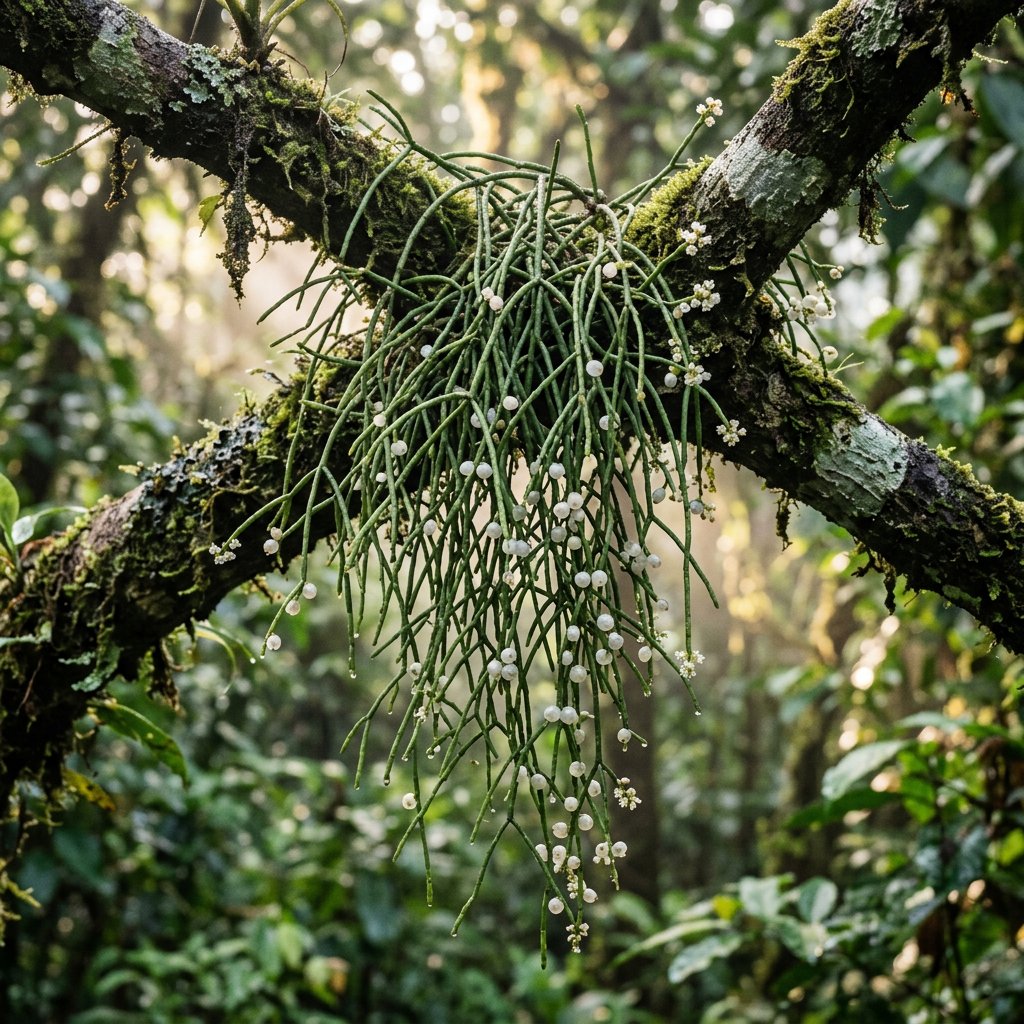
Plant Overview
Known affectionately as the "Mistletoe Cactus" or "Spaghetti Cactus," this unique succulent is a botanical mystery and a favorite for indoor gardeners. Unlike its prickly desert-dwelling cousins, this cactus is an epiphyte that lives in the humid canopies of tropical forests. It also holds the prestigious title of being the only cactus species naturally found outside the New World, spanning from South America all the way to Africa and Sri Lanka.
🔍 How to Identify
- 🌿 The Stems: Long, slender, and cylindrical green segments that lack traditional spines. Instead, they drape downwards like a lush, green waterfall or a bowl of living spaghetti.
- 🌸 The Bloom: Small, inconspicuous greenish-white flowers that emerge along the segments during the late winter or spring.
- ⚪ The Berries: Its most famous feature—small, translucent white fruits that look remarkably like the berries found on traditional Mistletoe.
🏡 In Your Garden
- ☁️ Filtered Sun Only: Because this plant evolved under the shade of massive jungle trees, it is highly sensitive to direct afternoon sun. If the stems start to turn red or yellow, it is likely getting too much light "stress."
- 💧 Humidity over Heat: This isn't a "set it and forget it" desert cactus. It thrives in high humidity and prefers its soil to stay slightly moist (but never soggy). It’s the perfect candidate for a bright bathroom or a kitchen window.
- 🧺 Trailing Habit: Due to its pendulous growth, it rarely looks its best in a standard pot. Place it in a hanging basket where the stems can cascade freely, reaching lengths of up to 3 to 6 feet over time.
⚠️ Safety & Toxicity
- ✅ Safe for Pets: Rhipsalis baccifera is generally considered non-toxic to cats and dogs, making it a "worry-free" choice for pet owners.
- 👶 Mild Irritation: While not poisonous, the berries can cause minor stomach upset if consumed in large quantities by small children. The sap may also cause slight skin irritation for those with sensitive skin.
✨ Fun Fact
🕊️ The Great Mystery: Botanists spent decades wondering how this one specific cactus crossed the Atlantic Ocean. The most popular theory is that migratory birds ate the white berries in South America and "deposited" the seeds in Africa during their long-distance flights!

Detailed Care Instructions
According to the ASPCA, the mistletoe cactus is non-toxic to dogs and cats.
My Mistletoe Cactus Is Covered In Small White Balls—What Are They?
Congratulations, your mistletoe cactus has produced fruit! While it can look a little alarming at first if your cactus has never fruited before, this is actually a great sign that your plant is happy and healthy.
When Should I Repot My Mistletoe Cactus?
Mistletoe cacti are quite happy to grow in the same container for a couple of years at a time, so you shouldn’t need to repot your plant very often. Once you find that your mistletoe cactus is running out of space in its pot (or roots are growing from the drainage hole) you can upsize its potting container and give it some fresh soil.
How Fast Does the Mistletoe Cactus Grow?
The mistletoe cactus is considered a slow-growing cactus, so it will take a few years for you to establish a large bushy plant. That being said, its growing conditions will influence its growth rate; so, a plant grown in bright indirect light and watered properly will grow faster than a plant grown in low light that is not watered often enough. Regularly propagating the plant will also help to create a fuller look over time.
| Color | White, Green |
| Soil Ph | Acidic |
| Humidity | Dry |
| Lighting | Part Sun |
| Soil Type | Moist But Well-Drained |
| Bloom Time | Spring, Summer |
| Difficulty | Easy |
| Plant Type | Succulent |
| Mature Size | 6 Ft. Long, 2 Ft. Spread (Indoors), 30 Ft. Long, 5 Ft. Spread (Outdoors) |
| Native Area | South America, Central America, Africa |
| Temperature | 18°C - 24°C |
| Sun Exposure | Partial, Shade |
| Hardiness Zones | 9-10 |
To grow Rhipsalis baccifera, also known as the mistletoe cactus, follow these steps:
- Light: Place the plant in a bright location, but away from direct sunlight. It prefers bright, indirect light or dappled shade.
- Temperature: Maintain temperatures between 65°F to 75°F (18°C to 24°C) during the day and slightly cooler temperatures at night.
- Watering: Water the plant when the top inch of soil feels dry. Rhipsalis prefers slightly moist soil but should not sit in waterlogged conditions. Be careful not to overwater, as it can lead to root rot.
- Humidity: Rhipsalis prefers high humidity. Mist the plant regularly or place it on a tray filled with moist pebbles to increase humidity levels.
- Soil: Use a well-draining potting mix specifically designed for cacti and succulents. Ensure the pot has drainage holes to prevent water accumulation.
- Fertilizer: Feed the plant with a diluted, balanced, water-soluble fertilizer once a month during the growing season (spring and summer). Follow the manufacturer's instructions for proper dilution and application.
- Pruning: Trim any damaged or leggy growth to maintain a tidy appearance. You can also propagate the trimmed stems by allowing them to callous over for a few days, then planting them in a well-draining soil mix.
- Repotting: Repot the plant every 2-3 years in a slightly larger pot if it becomes root bound. Spring is the best time to repot.
- Propagation: Rhipsalis baccifera can be propagated through stem cuttings. Simply take a healthy stem cutting and allow it to callous over for a few days. Plant the cutting in a well-draining soil mix and keep it slightly moist until new roots form.
By following these tips, you can successfully grow and care for Rhipsalis baccifera.

Place in a window with dappled sun or a spot in the middle of a room. Or directly in a window facing west or east.

To water this particular plant, you should first make sure that the top layer of soil is dry to the touch. Then, you can use a watering can or small pitcher to carefully pour water onto the soil, making sure to avoid getting water on the leaves or stem of the plant. Allow the water to soak in and drain out through the bottom of the pot before placing the plant back in its location. It is important not to overwater this plant, as it prefers well-draining soil and can be susceptible to root rot if left sitting in water for too long.
To fertilize this particular plant, you should do so sparingly. Use a balanced fertilizer that is diluted to half strength. It is best to fertilize during the plant's growing season, typically in the spring or summer. Be sure to water the soil thoroughly before applying the fertilizer and only apply to damp soil to prevent root burn. Follow the package instructions carefully to avoid over-fertilizing and damaging the plant.
The ideal soil for this plant is a well-draining, nutrient-rich mixture with high organic matter content. It should have a pH range of 5.5 to 6.5 and must not be too compacted or heavy, as this can prevent the roots from getting enough oxygen. A mix of peat moss, perlite, and sand is typically suitable for this plant. It is advised to avoid soil mixtures that are too acidic or alkaline, as this can negatively impact the plant's growth. Additionally, choosing a soil that is free of pests, diseases, and weeds is key to keeping the plant healthy and thriving.
There are different ways to propagate Rhipsalis Baccifera:
- Stem cuttings - Cut a stem from the mother plant, making sure it is at least 4-5 inches long. Allow the cutting to dry for a day or two, then plant it in well-draining soil. Keep the soil moist, but not waterlogged, and place the cutting in a spot with bright, indirect sunlight. The stem may take several weeks to root and establish.
- Division - Gently remove the plant from its pot and divide the roots into smaller sections. Re-pot each section in a new pot with well-draining soil. Water thoroughly and place in bright, indirect sunlight.
- Seed propagation - Collect mature fruits from the mother plant and remove the seeds. Sow the seeds in well-draining soil, burying them just beneath the surface. Keep the soil moist, but not waterlogged, and provide bright, indirect sunlight. The seeds may take several weeks to germinate.
In all cases, it's important to keep the soil moist and provide the plant with bright, indirect sunlight. Avoid direct sunlight, as it can scorch the plant's leaves. With proper care, your Rhipsalis Baccifera plant will thrive and potentially produce offspring for continued propagation.
Common pests of the mistletoe cactus include Scale insect, mealybugs, spider mites, thrips. Make a habit of checking your mistletoe cactus frequently for pests so that any infestations can be caught and managed early.








