Plant Overview
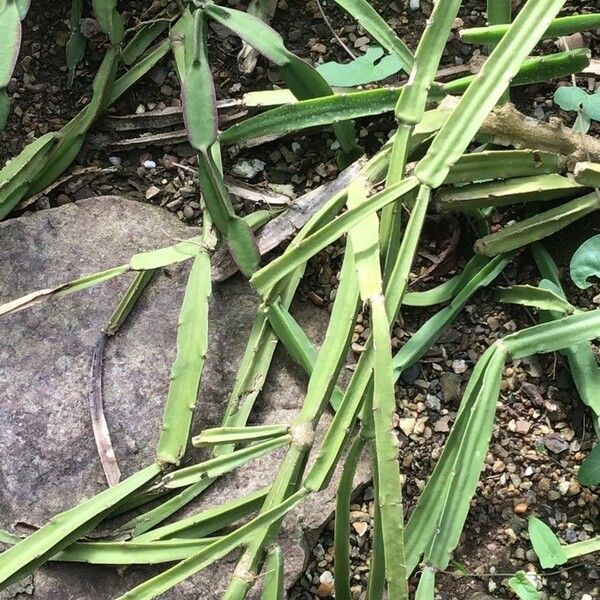
Often called the Coral Cactus or Cereus-like Rhipsalis, this Brazilian beauty is a tropical rebel that defies the "desert cactus" stereotype. Native to the rocky cliffs of Rio de Janeiro, it gets its name because its stiff, angled stems look like miniature versions of massive columnar cacti. It is a prized architectural plant for indoor gardeners, transitioning from an upright shrub to a cascading waterfall of green as it matures.
🔍 How to Identify
- 🌵 Angled Stems: Unlike many flat-leaved Rhipsalis, this species features thick, three-to-four-angled stems that feel rigid and fleshy to the touch.
- 🌸 Pearlescent Blooms: In late winter or spring, tiny, bell-shaped flowers in shades of white or creamy yellow emerge along the edges of the stems.
- 🔮 Translucent Berries: After flowering, the plant produces small, spherical white fruits that look like delicate glass beads clinging to the ribs.
🏡 In Your Garden
- 🪨 Lithophytic Roots: In the wild, this plant grows on rocks rather than in deep soil. To keep it happy at home, use an extremely airy mix—think orchid bark and perlite—to ensure the roots never sit in stagnant water.
- ☁️ Filtered Light: Because it hails from humid coastal regions, direct afternoon sun will scorch its stems. It thrives in "bright-indirect" light, mimicking the dappled sun of a forest canopy.
- 💧 Humidity Lover: While it is a cactus, it craves more moisture than its desert cousins. It appreciates high humidity and should be watered just as the top inch of soil feels dry.
⚠️ Safety & Toxicity
- ✅ Non-Toxic: Rhipsalis cereoides is generally considered safe and non-toxic for both cats and dogs, making it an excellent choice for pet-friendly households.
- 🧴 Mild Irritation: While not poisonous, the sap can occasionally cause very mild skin irritation for people with extreme sensitivities; it’s always a good idea to wash your hands after heavy pruning.
✨ Fun Fact
Unlike most cacti that use sharp spines for protection, Rhipsalis cereoides has almost entirely traded its "armor" for camouflage. In its natural habitat, it blends so perfectly with the shaded rocks and mosses that it is often invisible to herbivores until it blooms!

Detailed Care Instructions
To grow Rhipsalis Cereoides, also known as the Mistletoe Cactus or Coral Cactus, you can follow these steps:
- Choose the right location: Rhipsalis Cereoides prefers bright, indirect sunlight. Locate it near an east- or west-facing window where it receives bright, filtered light throughout the day. Avoid direct sunlight, as it can burn the leaves.
- Provide the right temperature: Rhipsalis Cereoides thrives in temperatures between 60°F and 80°F (15°C to 27°C). Keep it away from drafts and cold windows during winter.
- Water appropriately: Water your Rhipsalis Cereoides thoroughly when the top inch of soil is dry. Ensure that the pot has drainage holes to prevent excess moisture. Overwatering can lead to root rot, so allow the soil to dry out between waterings. Reduce watering during the winter months.
- Humidity needs: Rhipsalis Cereoides prefers higher humidity levels. Mist the plant with water occasionally to increase humidity. Placing a tray of water near the plant can also help raise humidity levels.
- Fertilize sparingly: Rhipsalis Cereoides doesn't require much fertilization. Feed it with a diluted, balanced houseplant fertilizer once a month during the growing season (spring and summer). Avoid fertilizing during winter.
- Repotting: As your Rhipsalis Cereoides grows, you may need to repot it to provide more space for the roots. Use a well-draining potting mix specifically designed for cacti and succulents. Repot in the spring when the plant starts actively growing.
- Pruning: Prune your Rhipsalis Cereoides if it becomes leggy or sprawling. You can trim back long, straggly stems to encourage a bushier and more compact growth habit.
- Propagation: You can propagate Rhipsalis Cereoides through stem cuttings. Simply cut healthy stems from the plant, allow the cut ends to dry out for a few days, and then plant them in well-draining soil. Keep the soil slightly moist until the cuttings establish roots.
With proper care and attention, your Rhipsalis Cereoides plant should thrive and grow into a beautiful and unique addition to your indoor plant collection.

Place in a window with dappled sun or a spot in the middle of a room. Or directly in a window facing west or east.

To water this particular plant, it is important to first check the soil moisture level. Insert a finger into the soil to determine if it is moist or dry. If it feels dry up to the first knuckle, it is time to water. When watering, do so slowly and evenly around the base of the plant. Use room temperature water, as cold water can shock the roots. Avoid overwatering, as this can lead to root rot and other issues. Allow the soil to dry slightly between each watering.
Fertilizing Instructions for Rhipsalis Cereoides:
- Choose a balanced fertilizer: Look for a well-balanced fertilizer with equal amounts of nitrogen (N), phosphorus (P), and potassium (K). This will ensure a healthy and steady growth for the plant.
- Dilute the fertilizer: Follow the manufacturer's instructions and dilute the fertilizer to half strength or the recommended concentration. Avoid using full-strength fertilizer as it may cause damage to the plant.
- Timing: Fertilize your Rhipsalis Cereoides during the growing season, which is typically in the spring and summer months. Avoid fertilizing during winter or when the plant is dormant.
- Frequency: Fertilize your plant once every four to six weeks during the active growing period. Avoid over-fertilizing, as it can lead to nutrient burn or other adverse effects.
- Application method: Apply the diluted fertilizer directly to the soil around the base of the plant. Avoid getting the fertilizer on the leaves or stems, as it can cause burns.
- Watering after fertilizing: After applying the fertilizer, thoroughly water the plant to ensure proper distribution of nutrients and to prevent any potential root burn.
- Adjusting the dosage: If you notice signs of over-fertilization like leaf burn or yellowing, reduce the amount of fertilizer or the frequency of application. Conversely, if the plant appears weak or lacks vigor, you may consider increasing the dosage slightly.
- Monitor the plant's response: Observe how the plant reacts to the fertilizer. If it shows signs of healthy growth, such as new shoots and vibrant leaves, continue with the fertilization routine. If the plant does not respond positively or shows signs of stress, adjust the fertilizer regimen accordingly.
Remember, each plant may have slightly different fertilizer needs, so it's essential to monitor your Rhipsalis Cereoides closely and adjust the fertilizer application as needed.
Rhipsalis Cereoides plant prefers well-draining soil that is rich in organic matter. The soil should have a slightly acidic to neutral pH range of 5.5 to 7.5. A mix of equal parts peat moss, perlite, and coarse sand or gravel is ideal for this plant. This type of soil will allow for proper drainage while retaining adequate moisture to prevent the roots from drying out. It is important to make sure the soil is not compacted and that there is room for air to circulate around the roots. Overwatering can lead to root rot, so it is important to water this plant only when the soil has dried out slightly. Fertilizing every two to four weeks during the growing season with a balanced, water-soluble fertilizer can also help to promote healthy growth.
Rhipsalis cereoides is a type of epiphytic cactus that grows naturally in the jungles of South America. Propagating this plant can be done through several methods, including stem cuttings and seed germination.
To propagate Rhipsalis cereoides using stem cuttings, follow these steps:
- Choose a healthy, mature stem from the existing plant. Look for a stem that is at least 4-6 inches long and free from any signs of disease or damage.
- Using a clean, sharp knife or shears, make a clean cut just below a leaf node (the point where the leaf emerges from the stem). This is where new roots will emerge.
- Allow the cutting to dry and callus over for a few days. Place it in a warm, dry location with indirect sunlight to facilitate the callusing process.
- Once the cutting has callused, prepare a well-draining potting mix. A mixture of cactus soil and perlite or sand works well.
- Dip the cut end of the stem into a rooting hormone powder to encourage root development.
- Place the cutting into the prepared potting mix, burying it about an inch deep. Firmly press the soil around the stem to ensure good contact.
- Water the cutting lightly, keeping the soil damp but not soggy. Avoid overwatering, as this can lead to root rot.
- Place the cutting in a warm location with bright, indirect light. Avoid exposing it to direct sunlight, as this can cause sunburn.
- After a few weeks, check for root development by gently tugging on the stem. If you feel resistance, roots have likely formed. At this point, you can gradually acclimate the new plant to slightly brighter conditions.
Alternatively, Rhipsalis cereoides can also be propagated from seeds. Here's how to do it:
- Collect ripe seeds from a mature Rhipsalis cereoides plant. The seeds are small and blackish-brown in color.
- Prepare a seed tray or small pots with a well-draining potting mix. A combination of peat moss and perlite will work well.
- Moisten the potting mix thoroughly before sowing the seeds. Ensure the soil is evenly moist but not waterlogged.
- Gently sprinkle the seeds on top of the soil and cover them lightly with a thin layer of additional potting mix. The seeds require light for germination, so avoid burying them too deep.
- Cover the tray or pots with a plastic dome or plastic wrap to create a humid and warm environment. This will help retain moisture during germination.
- Place the tray or pots in a warm location with bright, indirect light. Aim for a temperature range of 70-75°F (21-24°C).
- Mist the soil lightly as needed to keep it evenly moist but not waterlogged.
- Germination can take anywhere from a few weeks to a few months. Be patient and continue to provide the necessary care.
- Once the seedlings have developed a few sets of true leaves, they can be transplanted into individual pots filled with a well-draining cactus soil mix.
- Gradually acclimate the young plants to slightly brighter conditions over the course of a few weeks.
Common pests of the rhipsalis cereoides include Scale insect, mealybugs, spider mites. Make a habit of checking your rhipsalis cereoides frequently for pests so that any infestations can be caught and managed early.








