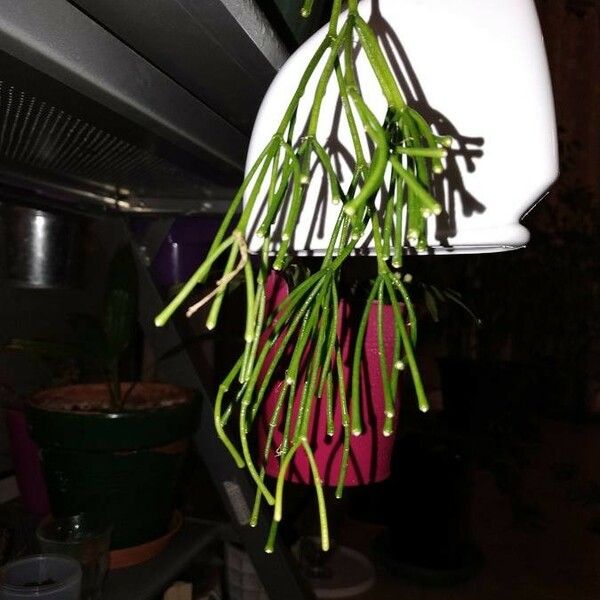
Plant Overview
Often called the Club-shaped Mistletoe Cactus, Rhipsalis clavata is a charming Brazilian native that ditches the desert for the humid rainforest. Unlike your typical prickly cactus, this species dangles gracefully from tree branches in the wild, looking more like a delicate sea creature than a succulent. It is a favorite for indoor "jungle" aesthetics due to its unique cascading stems and "shaggy" silhouette.
🔍 How to Identify
- 🌵 The "Clubs": The stems are made of thin, elongated segments that swell at the tips, resembling tiny wooden clubs or bowling pins (hence the name clavata).
- 🌿 Branching Pattern: It features a "whorled" growth habit where multiple new segments sprout from the end of a single branch, creating a dense, curtain-like appearance over time.
- 🌸 Bell Blooms: During late winter or spring, tiny, bell-shaped flowers in shades of white or pale yellow emerge from the very tips of the segments.
🏡 In Your Garden
- ☁️ Canopy Comfort: Because its ancestors lived tucked into the crotches of tropical trees, this plant craves bright, filtered light. Direct afternoon sun is its enemy and will quickly "bleach" or burn the stems.
- 💧 Thirsty but Airy: Unlike desert cacti, Rhipsalis doesn't want to bone-dry. It prefers consistent moisture and high humidity, but it must be planted in a chunky, "breathable" mix—like orchid bark or perlite—to prevent root rot.
⚠️ Safety & Toxicity
- ✅ Pet Friendly: Good news for pet parents! Rhipsalis clavata is generally considered non-toxic to cats, dogs, and horses, making it a safe choice for low-hanging baskets.
- 🧤 Fragile Limbs: While it isn't poisonous, the segments are quite brittle. Place it in a low-traffic area where it won't be bumped, as the "clubs" can snap off with even a light snag.
✨ Fun Fact
The name Rhipsalis comes from the Ancient Greek word for "wickerwork," referring to the way the tangled, flexible stems look like the intricate weaving of a wicker basket!

Detailed Care Instructions
| Humidity | Dry |
| Lighting | Part Sun |
| Difficulty | Medium |
| Temperature | 18°C - 28°C |
| Hardiness Zones | 10A - 11B |
To grow Rhipsalis clavata, also known as the Mistletoe Cactus, you can follow these steps:
- Light: Place the plant in a bright location with filtered sunlight. Rhipsalis clavata prefers indirect light rather than direct sunlight, as too much sun can damage the foliage. A north-facing window or an area with bright, indirect light is ideal.
- Temperature: This plant thrives in temperatures between 60°F to 80°F (15°C to 27°C). Protect it from temperature extremes and drafts, as it prefers stable and slightly warm conditions.
- Watering: Water the Rhipsalis clavata regularly, allowing the top inch of the soil to dry out between waterings. Ensure that the pot has good drainage to prevent waterlogging. Overwatering can lead to root rot, so it's important to find the right balance. During the winter months, reduce watering frequency to mimic its natural dormant period.
- Humidity: Misting the plant occasionally or placing a tray of water nearby can help increase humidity, as Rhipsalis clavata prefers slightly higher humidity levels. Avoid placing it near heating or cooling vents, which may result in low humidity levels.
- Soil: Use well-draining cactus or succulent potting mix. These soil mixes typically consist of a mixture of peat moss, perlite, and sand. The well-draining soil will prevent water accumulation around the roots.
- Fertilizer: Feed the plant with a balanced, diluted fertilizer solution every 3-4 weeks during the growing season (spring and summer). Avoid fertilizing during the winter when the plant is dormant.
- Repotting: Rhipsalis clavata generally does not require frequent repotting. However, when the plant outgrows its pot, you can transplant it into a slightly larger container with fresh potting soil during the spring or summer months.
- Pruning: Trim any dead or damaged growth to maintain the plant's health and appearance. You can also prune for shape and size if desired, but avoid excessive cutting as it may stress the plant.
Following these guidelines should help you successfully grow Rhipsalis clavata. Remember to observe your specific plant's needs and adjust care accordingly.

Place in a window with dappled sun or a spot in the middle of a room. Or directly in a window facing west or east.

To water this plant, it is important to take note of its specific care needs. First, check the soil moisture level before watering. Stick your finger about an inch into the soil to see if it is dry or moist. If the soil is dry, it is time to water the plant.
When watering, use room temperature water and pour slowly onto the soil around the base of the plant. Avoid getting water on the leaves or near the stem as this can cause rot. Let the water soak into the soil, and then drain any excess water from the saucer underneath the pot.
The frequency of watering will depend on the plant's environment and seasonal changes. In general, Rhipsalis Clavata prefers slightly moist soil but can tolerate short periods of drought. As a succulent, it is better to underwater than overwater.
Observing the plant's behavior and adjusting watering accordingly is the best way to ensure its health. If the leaves are soft or showing signs of discoloration, it may indicate overwatering, while drooping leaves may indicate underwatering.
To fertilize this plant, use a balanced liquid fertilizer and dilute it to half strength. Fertilize once a month during the growing season (spring and summer), and withhold fertilization during the dormant season (fall and winter). Apply the fertilizer directly to the soil, taking care not to get any on the leaves or stem. Water the plant thoroughly after fertilizing.
For optimal growth and health, Rhipsalis Clavata plant requires a soil mixture that is well-draining and nutrient-rich. A good soil mix consists of roughly equal parts of peat moss or coconut coir, perlite or pumice, and coarse sand or gravel.
It is important to avoid using soil that is heavy and prone to compacting, as this can lead to waterlogging and root rot. Additionally, overly rich soil can cause excessive growth and weak stems, making the plant more susceptible to damage or disease.
When potting Rhipsalis Clavata plant, it is recommended to use a container that allows for adequate drainage, such as a terracotta pot with drainage holes. It is also important to use a potting mix that is free of any pathogens or pests that can harm the plant.
Overall, providing a well-draining and nutrient-rich soil mix is essential for the healthy growth and development of Rhipsalis Clavata plant.
To propagate this plant, start by taking a cutting from the parent plant. Look for a stem that is at least 4 inches long with healthy leaves and no signs of disease or damage. Use clean, sharp pruning shears to cut the stem at a slight angle.
Next, remove the bottom 2-3 leaves from the stem cutting. This will expose a node, which is where the roots will form. Dip the cut end of the stem into rooting hormone powder, tapping off any excess.
Prepare a pot with well-draining soil and make a hole in the center with your finger. Insert the stem cutting into the hole and firm the soil around it. Water the cutting thoroughly and place it in a bright, but indirect light. Avoid direct sunlight as it can burn the cutting.
Keep the soil moist but not waterlogged and mist the leaves regularly to prevent them from drying out. Within a few weeks, roots should begin to form and new growth should start to appear.
Once the cutting has established roots and new growth, it can be transplanted into a larger pot with fresh potting soil.
Common pests of the sausage-chain cactus include Scale insect, mealybugs, spider mites. Make a habit of checking your sausage-chain cactus frequently for pests so that any infestations can be caught and managed early.








