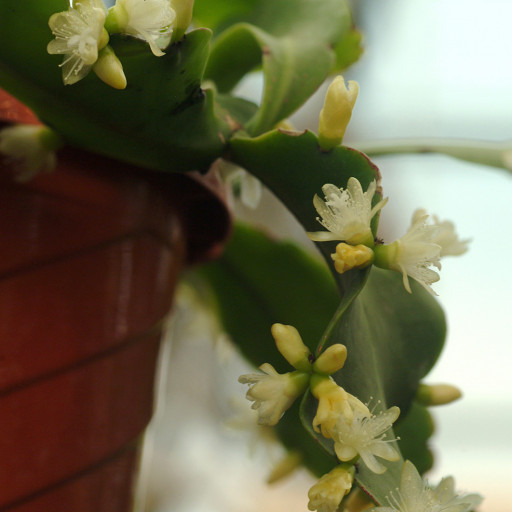
Plant Overview
Known as the "Wavy Mistletoe Cactus," this Brazilian beauty trades scorching desert sands for the lush, shaded canopies of the Atlantic Forest. Unlike its prickly cousins, it flows downward in elegant, crimped ribbons, making it a favorite for "living curtains" in modern homes. It is a true epiphyte, meaning it naturally lives on tree branches rather than in the soil.
🔍 How to Identify
- 🍃 Wavy Stems: The stems are flattened, leaf-like segments (cladodes) that are deep green and feature distinctly ruffled or "crisped" edges.
- 🌸 Delicate Blooms: Tiny, creamy-white or pale yellow flowers sprout directly from the notches along the margins of the stems.
- ⚪ Pearl Berries: After flowering, the plant produces small, translucent white berries that look like mistletoe, giving the genus its common name.
🏡 In Your Garden
- 🌳 The Jungle Vibe: Because it is a jungle cactus, it hates direct, midday sun. It thrives in bright, filtered light—think of the dappled sunlight hitting a forest floor.
- 💧 Thirst Quencher: Unlike desert cacti, Rhipsalis crispata shouldn't stay dry for weeks. It prefers to have its soil kept slightly moist (but never soggy) and loves frequent misting to mimic the humidity of the Brazilian rainforest.
- 🪴 Aery Roots: It has a relatively small root system. If you need to repot, use a very airy mix containing orchid bark or perlite to ensure the roots can "breathe."
⚠️ Safety & Toxicity
- 🐾 Pet Friendly: This plant is generally considered non-toxic to cats and dogs, making it a perfect choice for pet-filled households.
- 👶 Child Safe: Because it lacks the sharp, painful spines or irritating glochids found on many cacti, it is safe to touch and keep in low-reaching areas.
✨ Fun Fact
The name Rhipsalis is derived from the Ancient Greek word for "wickerwork," referring to the way the slender, flexible branches of these plants often look like they have been woven together into a basket.

Detailed Care Instructions

Place in a window with dappled sun or a spot in the middle of a room. Or directly in a window facing west or east.

To properly water this plant, you should first examine the soil for dryness. Stick your finger into the soil about one inch deep to feel for moisture. If the soil feels dry to the touch, it is time to water the plant. Use room temperature water that has been allowed to sit for a day or two to remove chlorine and other chemicals. Slowly pour water onto the soil until it runs out of the bottom of the pot, making sure not to water the leaves or stem. If using a saucer, pour out any excess water after a few minutes to prevent root rot. During winter months, reduce watering to once every two to three weeks.
These plants can thrive without taking help from any fertilizer. However, if the medium of growth is something other than soil for instance sand then you may need to add little fertilizer. The best way to know if your plants need fertilizer or not is to check for yellowing of leaves. If the leaves start to turn yellow it’s fertilizing time.
You may use Cactus Fertilizer for your Rhipsalis Crispata
Rhipsalis Crispata is an epiphytic plant that is commonly grown in a well-draining and nutrient-rich soil. The ideal soil for this plant should be porous and have good aeration to prevent waterlogging. It should be rich in organic matter, such as compost, and have a slightly acidic pH level between 5.5 and 6.5. Avoid using heavy clay or sandy soils that do not retain moisture well. Instead, opt for a light and airy mixture of peat moss, perlite, and vermiculite. The soil should be kept moist, but not soggy, and should be watered thoroughly but allowed to dry slightly before watering again. Regular fertilization with a balanced liquid or slow-release fertilizer will maximize growth and prevent nutrient deficiencies.
Common pests of the rhipsalis crispata include Scale insect, mealybugs, spider mites. Make a habit of checking your rhipsalis crispata frequently for pests so that any infestations can be caught and managed early.








