Plant Overview
Commonly known as the Large-flowered Mistletoe Cactus, Rhipsalis grandiflora is a stunning epiphytic cactus that trades desert dunes for the humid canopy of Brazilian rainforests. Instead of sharp spines and bulky pads, it features elegant, cylindrical stems that cascade downward like a living waterfall, making it a favorite for high-shelf displays and hanging baskets.
🔍 How to Identify
- 🌿 The Stems: Long, pendulous, and cylindrical. Unlike some of its flat-leaved cousins, these stems are robust and can reach over 3 feet in length, branching out into a dense, bushy curtain.
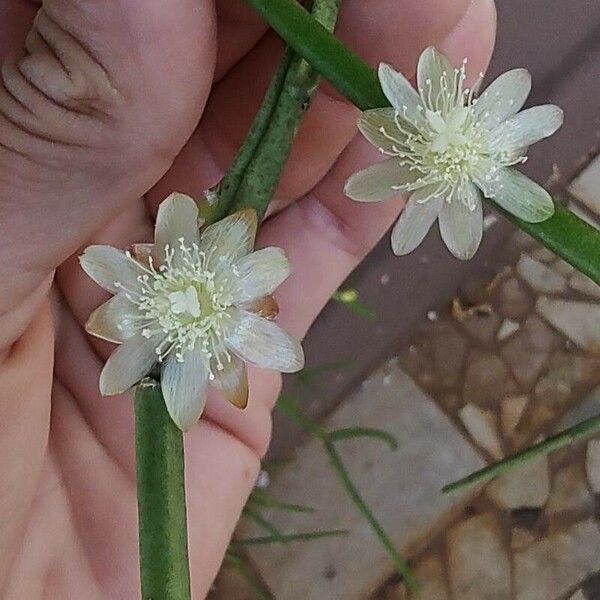
- 🌸 The Blooms: Living up to its name, this species produces creamy white to pale yellow flowers that are significantly larger than most other Rhipsalis. They appear along the sides of the stems, looking like delicate porcelain stars.
- 🍒 The Fruit: After flowering, it produces small, spherical berries that often turn a translucent reddish-purple, resembling the berries of a traditional mistletoe plant.
🏡 In Your Garden
- ☁️ Atmospheric Needs: Because its ancestors lived on tree branches, this plant "breathes" through its stems. It craves high humidity and will struggle in the dry, stagnant air found near heaters or air conditioners.
- 🪴 Soil & Drainage: Avoid standard cactus soil, which can be too sandy. It prefers a "chunky" mix—think orchid bark, perlite, and peat—to mimic the decaying organic matter found in tree crotches.
- 💧 Thirst Quenching: Unlike a desert cactus, it doesn't want to bone-dry. It appreciates being kept slightly moist, but "wet feet" will lead to rapid root rot. Think of it more like a fern in terms of watering rhythm.
⚠️ Safety & Toxicity
- ✅ Status: Generally considered non-toxic.
- 🐾 Details: This plant is a fantastic choice for pet owners and parents. It lacks the sharp, painful spines (glochids) found on many cacti and is not known to be poisonous to cats or dogs if accidentally nibbled.
✨ Fun Fact
While almost all cacti are native to the Americas, Rhipsalis is the only genus of cactus that has "escaped" the New World naturally. Long before humans moved plants around, birds likely carried Rhipsalis seeds across the ocean to Africa and Sri Lanka, making it the world's most traveled cactus!

Detailed Care Instructions
To grow Rhipsalis Grandiflora successfully, you can follow these steps:
- Environment: Rhipsalis Grandiflora is often grown as an indoor plant, as it prefers a warm and humid environment. It thrives at temperatures between 65-80°F (18-27°C). Place the plant in a bright location, but avoid direct sunlight as it can scorch the leaves.
- Potting: Use a well-draining potting mix, such as a combination of peat moss, perlite, and sand. Choose a pot that has drainage holes to prevent waterlogging.
- Watering: Rhipsalis Grandiflora prefers moist soil, but be careful not to overwater it. Water thoroughly when the soil feels slightly dry to the touch, ensuring that excess water drains out completely.
- Humidity: This plant appreciates higher humidity levels, so you can increase humidity by misting the plant with water regularly or placing a tray of water near the plant.
- Fertilizer: Feed your Rhipsalis Grandiflora with a balanced, water-soluble fertilizer every two to four weeks during the growing season (spring to fall). Follow the instructions on the fertilizer packaging for the correct dosage.
- Pruning: If your plant becomes leggy or overgrown, feel free to prune it back to encourage bushier growth. Take care to trim just above a leaf or joint. You can propagate the trimmed sections by allowing them to callus for a few days before planting them into fresh soil.
- Repotting: As Rhipsalis Grandiflora grows, you may need to repot it into a larger container. Spring is generally a good time for repotting. Choose a pot that is one or two sizes larger and use fresh potting mix.
- Pests: Keep an eye out for common houseplant pests like mealybugs, scale insects, or spider mites. If you notice any infestation, treat the plant with appropriate insecticidal soap or horticultural oil.
By following these guidelines, your Rhipsalis Grandiflora should grow and thrive, providing you with beautiful hanging branches and lovely pink flowers.

Place in a window with dappled sun or a spot in the middle of a room. Or directly in a window facing west or east.

Rhipsalis grandiflora, a member of the Cactaceae family, requires a specific watering regimen to ensure its optimal growth and health. Here are some guidelines to responsibly water this particular plant species:
1. Soil Evaluation: Before watering, check the moisture level of the soil by inserting your finger 1-2 inches deep. Only water if the soil feels dry at this depth.
2. Water Quality: Use room temperature, filtered water when watering Rhipsalis grandiflora. Avoid using hard water or water with high mineral content, as it can negatively affect the plant's health.
3. Watering Frequency: This plant thrives in humid environments, so regular watering is necessary to maintain adequate moisture levels. Generally, watering once a week during the growing season (spring and summer) should be sufficient, while reducing the frequency to every two weeks during the plant's dormant phase (fall and winter). Adjust the frequency based on your specific climate and the humidity levels in your home.
4. Adequate Drainage: Ensure that the pot or container holding the Rhipsalis grandiflora has adequate drainage holes. After watering, allow excess water to drain out freely to prevent waterlogging, which can lead to root rot.
5. Water Quantity: Water the plant until you see water draining out from the bottom of the pot. This ensures that the entire root system is sufficiently hydrated. However, avoid overwatering, as it can also cause root rot. Always aim for thorough watering rather than frequent light watering.
6. Watering Method: Use a watering can or a gentle stream of water to water the soil evenly. Avoid spraying water directly onto the foliage to prevent the risk of fungal diseases.
7. Environmental Factors: Adjust the watering frequency based on environmental factors such as temperature, humidity, and light exposure. For instance, increase the frequency during hot, dry weather or if the plant is exposed to direct sunlight for extended periods.
Remember, successful watering is about finding the right balance. Consistency, observation, and adjusting the watering routine according to the plant's needs will ensure the health and longevity of your Rhipsalis grandiflora plant.
- Begin by preparing a well-draining soil mixture suitable for tropical plants such as the Rhipsalis Grandiflora.
- Choose a fertilizer specifically formulated for cacti or succulents, as they have different nutritional requirements compared to most other houseplants.
- Dilute the recommended amount of fertilizer in water according to the package instructions. It's crucial not to exceed the suggested concentration to avoid burning the roots of the plant.
- During the growing season, which typically occurs in spring and summer, apply the diluted fertilizer to the soil every two to four weeks.
- Make sure the soil is moist before applying the fertilizer to prevent potential root damage caused by dry soil.
- Pour the prepared fertilizer solution evenly on the soil around the base of the Rhipsalis Grandiflora plant, ensuring that it reaches the root zone.
- Be cautious not to pour the fertilizer on the plant's foliage, as it can cause leaf burn.
- After applying the fertilizer, water the plant lightly to help the nutrients seep into the soil and reach the root system.
- During the plant's dormant period in fall and winter, reduce the frequency of fertilization to once every one to three months, if at all, as the plant's growth slows down.
- Observe the plant closely for any signs of nutrient deficiencies or excesses, such as yellowing or browning leaves. Adjust the fertilizer application accordingly, but avoid overfertilizing, as it can harm the plant.
- Regularly monitor the moisture levels in the soil and adjust watering and fertilization accordingly, as Rhipsalis Grandiflora prefers slightly moist but well-draining soil.
Rhipsalis Grandiflora is a type of plant that thrives in well-draining soil with a slightly acidic to neutral pH. It is typically recommended to use a loose and porous soil mixture for this plant to encourage proper air circulation and prevent waterlogging.
A suitable soil mix for Rhipsalis Grandiflora usually consists of a blend of organic materials such as peat moss, perlite, and coconut coir. These components help retain moisture while also ensuring that excess water drains freely, preventing the roots from rotting.
Peat moss provides moisture retention and improves soil texture, while perlite aids in drainage and aeration. Coconut coir is an environmentally friendly alternative to peat moss; it helps retain moisture and provides nutrients to the plant.
Amending the soil mixture with some sand can further enhance drainage, which is beneficial for Rhipsalis Grandiflora's overall health. Additionally, incorporating a small amount of well-decomposed compost or aged pine bark can provide essential nutrients and organic matter to support healthy growth.
Overall, the ideal soil for Rhipsalis Grandiflora should strike a balance between moisture-holding capacity and good drainage to prevent root rot and promote optimal growth.
Rhipsalis Grandiflora is a popular succulent plant that can be propagated through various methods. Here is a detailed guide on how to propagate this plant:
- Choose a healthy mother plant: Look for a mature Rhipsalis Grandiflora plant with strong, unblemished stems as the parent plant for propagation. Make sure it is free from diseases or pests.
- Stem cuttings: The most common propagation method for Rhipsalis Grandiflora is through stem cuttings. Select a stem that is long and healthy, without any signs of damage or disease. Using a clean and sharp pair of pruning shears or scissors, cut a piece of stem measuring around 4-6 inches in length.
- Remove lower leaves: Once you have the stem cutting, carefully remove the lower leaves, leaving a clean stem. This prevents the leaves from rotting when the cutting is planted.
- Allow the cutting to dry: After removing the leaves, let the cutting dry for a few days. Place it in a dry and well-ventilated area away from direct sunlight. This drying period helps to callus the cut end of the stem, which prevents rotting and promotes rooting.
- Prepare the rooting medium: Rhipsalis Grandiflora prefers a well-draining rooting medium. You can use a mixture of cactus/succulent soil and perlite or coarse sand to create an ideal rooting medium. Fill a small pot or container with this mix.
- Planting the cutting: Once the stem cutting has dried, prepare it for planting. Dip the cut end into a rooting hormone powder (optional but can enhance rooting success). Make a small hole in the rooting medium and gently place the cutting into the hole, making sure it stands upright. Gently pat the soil around the cutting to secure it in place.
- Creating a proper environment: After planting the cutting, place it in a warm and bright location, but away from direct sunlight. Rhipsalis Grandiflora enjoys temperatures between 65-80°F (18-26°C). Avoid exposing the cutting to cold drafts or temperature extremes.
- Watering and misting: Water the cutting lightly after planting, allowing the soil to slightly dry out between waterings. Avoid overwatering, as excess moisture can lead to root rot. Alternatively, you can mist the cutting regularly to maintain humidity around it.
- Root development: Over time, the stem cutting will start developing roots. You can gently tug on the cutting after a few weeks to check if there is resistance, indicating the presence of roots.
- Transplanting: Once the cutting has developed a substantial root system, you can transplant it into a larger pot or container filled with well-draining soil. Allow the newly propagated plant some time to acclimate to its new environment before providing normal care.
Remember to be patient during the propagation process, as it may take several weeks or even months for successful root development. With proper care and attention, your Rhipsalis Grandiflora cutting should grow into a healthy and thriving plant.
Common pests of the rhipsalis grandiflora include Scale insect, mealybugs, spider mites. Make a habit of checking your rhipsalis grandiflora frequently for pests so that any infestations can be caught and managed early.








