Plant Overview
Often called the Pendant Mistletoe Cactus, Rhipsalis neves-armondii is a Brazilian rainforest dweller that defies every "desert cactus" stereotype. Instead of prickly spines and scorching sand, it prefers the humid embrace of tropical trees, draping its succulent stems like living emerald curtains. It is a favorite for "urban jungle" enthusiasts who want an exotic, low-maintenance plant that looks spectacular in a hanging basket.
🔍 How to Identify
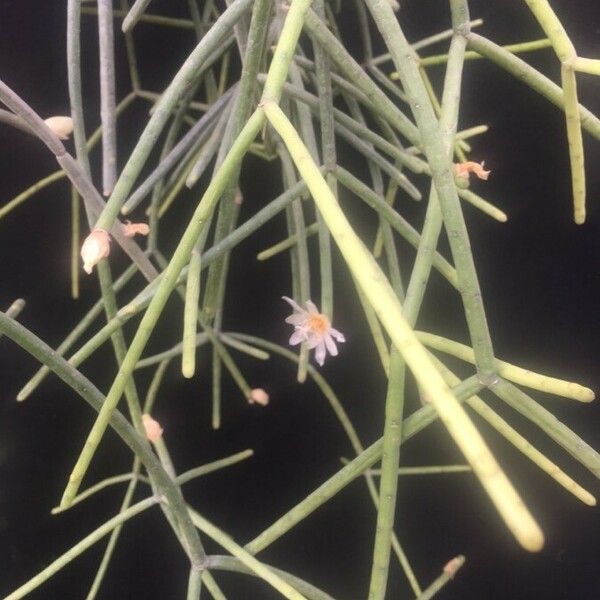
- 🌿 The Stems: Unlike the thin, hair-like stems of some relatives, this species features thicker, cylindrical, and segmented stems. They are deep green and tend to branch out primarily at the tips, creating a lush, fountain-like growth habit.
- 🌸 The Blooms: During the flowering season, small, star-shaped flowers appear. They are typically a delicate cream or pale yellow and emerge directly from the "areoles" along the sides of the stems.
- 🍒 The Berries: After flowering, the plant produces spherical, translucent fruits. These look remarkably like mistletoe berries, sometimes blushing with a hint of pink or purple when fully ripe.
🏡 In Your Garden
- ☁️ The Epiphyte Way: In the wild, this plant grows on tree branches, not in the ground. Because of this, it hates heavy, compacted soil. Use a "chunky" mix—like orchid bark, perlite, and peat—to ensure the roots can breathe.
- 🌤️ Dappled Sunlight: Think of the forest floor. This cactus thrives in bright, indirect light. If the stems start to turn a stressed reddish-brown, it’s likely getting too much direct sun; if it looks "leggy" and pale, it needs more light.
- 💧 Tropical Hydration: Unlike a prickly pear, Rhipsalis doesn't want to go bone-dry. It enjoys consistent moisture and high humidity. It’s the perfect candidate for a bright bathroom where it can soak up the steam from your shower.
⚠️ Safety & Toxicity
- ✅ Pet Friendly: Good news for animal lovers! Rhipsalis neves-armondii is generally considered non-toxic to cats and dogs.
- 🧤 Mild Irritation: While it lacks traditional spines, the sap can occasionally cause mild skin irritation for people with high sensitivity. It is always a good practice to wash your hands after pruning or taking cuttings.
✨ Fun Fact
- ✨ The genus Rhipsalis is the "Great Traveler" of the cactus world. It is the only type of cactus that occurs naturally outside of the New World (found in parts of Africa and Asia). Scientists believe migratory birds swallowed the sticky seeds in South America and "deposited" them across the ocean millions of years ago!

Detailed Care Instructions
To grow Rhipsalis Neves-armondii plant, here are some steps you can take:
- Choose the right location: Rhipsalis Neves-armondii prefers bright but indirect sunlight. It is best to place it near a window or in a spot with bright filtered light.
- Temperature and humidity: The plant thrives in temperatures between 60-75°F (15-24°C). It prefers moderate to high humidity levels, so you may need to mist it occasionally or place a humidifier nearby.
- Watering: This plant prefers slightly moist soil. Water it thoroughly and then allow the top inch of soil to dry out before watering again. Overwatering can lead to root rot, so be sure not to let the soil stay wet for prolonged periods.
- Soil mixture: Use a well-draining soil mix specifically for cacti or succulents. You can also make your own mix by combining regular potting soil with perlite or coarse sand to improve drainage.
- Fertilization: Feed your Rhipsalis Neves-armondii plant with a balanced liquid fertilizer diluted to half-strength during the growing season (spring and summer). However, avoid fertilizing during the winter months when the plant is relatively dormant.
- Pruning and propagation: Prune any dead or damaged growth to maintain a healthy appearance. Rhipsalis Neves-armondii plants are relatively easy to propagate. You can take stem cuttings and root them in well-draining soil or water until they develop roots.
- Repotting: As the plant grows, you may need to repot it every 1-2 years to provide it with fresh soil and to allow for additional space for growth. Choose a pot that is slightly larger than the current one.
Remember that every plant is unique, so closely observe your Rhipsalis Neves-armondii for any signs of stress or diseases, and adjust your care routine accordingly.

Place in a window with dappled sun or a spot in the middle of a room. Or directly in a window facing west or east.

To water Rhipsalis Neves-armondii, it is essential to consider a few key factors:
1. Soil moisture: Check the moisture levels of the soil before watering. Rhipsalis Neves-armondii prefers slightly moist but well-draining soil. Insert your finger into the soil about 1-2 inches deep and water if it feels dry.
2. Watering frequency: As Rhipsalis Neves-armondii is a tropical plant, it generally requires more frequent watering during the growing season, which is usually spring and summer. Aim to water the plant every 7-10 days, or when the soil starts to dry out.
3. Watering method: Use room temperature water to avoid shocking the plant. Pour water slowly and evenly onto the soil until it starts to drain out the bottom of the pot. Ensure that water reaches the entire root zone without causing excessive saturation.
4. Duration of watering: Avoid overwatering, as it can lead to root rot. Water the plant until the soil is evenly moist but not waterlogged. Discard any excess water that accumulates in the saucer or tray beneath the pot.
5. Humidity: Rhipsalis Neves-armondii appreciates higher humidity levels. To increase humidity, place a tray filled with water near the plant or use a humidifier to create a more favorable environment.
6. Temperature considerations: Take into account the temperature of the surrounding environment when watering. Adjust the watering frequency accordingly, as higher temperatures might result in faster moisture evaporation.
7. Seasonal adjustments: During the dormant period, typically in late fall and winter, reduce watering frequency to avoid waterlogged conditions. Only water when the soil feels dry to the touch.
Remember, it's important to observe the plant for any signs of over or under watering. Adjust your watering routine if you notice the foliage wilting or the soil staying consistently soggy. By adopting a balanced watering approach, you can help ensure the health and vitality of your Rhipsalis Neves-armondii plant.
To fertilize the Rhipsalis Neves-armondii plant, begin by choosing a balanced liquid fertilizer or a slow-release granular fertilizer specifically formulated for houseplants. Dilute or apply according to the manufacturer's instructions. It is generally recommended to fertilize this plant once a month during the growing season, which is typically spring and summer.
Before applying fertilizer, make sure the soil is moist. Gently water the plant, allowing water to drain properly. Then, apply the fertilizer to the soil around the base of the plant. Be careful not to fertilize the stems or leaves directly.
If you're using a liquid fertilizer, mix the appropriate amount with water as directed, then pour the solution into the soil. Ensure you evenly distribute the fertilizer around the plant, avoiding concentrated amounts in a single area.
For slow-release granular fertilizers, follow the package instructions regarding the amount to apply. Typically, you'll sprinkle the granular fertilizer on the soil surface around the plant, then gently work it into the top layer of soil using a hand fork or your fingers. Be sure to keep the fertilizer away from direct contact with the plant's sensitive parts.
After applying the fertilizer, water the plant lightly to help it absorb the nutrients. It's important not to over-fertilize, as this can lead to fertilizer burn and other adverse effects. Monitor the plant's response and adjust the fertilization schedule if needed.
Remember to read the specific instructions provided with your chosen fertilizer and consider the needs and stage of growth of your Rhipsalis Neves-armondii plant.
Rhipsalis neves-armondii is a type of epiphytic cactus that requires a specific type of soil to thrive. This plant is native to rainforest regions and is typically found growing on trees or rocks rather than in the ground.
To replicate its natural habitat, it is essential to provide Rhipsalis neves-armondii with a well-draining soil mixture. A suitable soil composition for this plant would include a combination of organic matter such as peat moss or coco coir, and inorganic material such as perlite or orchid bark. This mix allows for better air circulation and prevents waterlogging, which can be detrimental to the plant's root system.
Furthermore, Rhipsalis neves-armondii will benefit from a slightly acidic to neutral soil pH. A pH level ranging from 5.5 to 7.0 is considered ideal. This can be achieved by adding organic matter like leaf litter or compost to the soil mixture.
As an epiphytic plant, Rhipsalis neves-armondii does not require a heavy or nutrient-rich soil. Instead, it thrives in a soil mixture that is relatively low in nutrients. This is because it obtains most of its nutrients from the air and water, rather than from the soil itself. Therefore, using a soil that is too rich in nutrients can actually harm the plant by causing nutrient burn or excessive vegetative growth.
In summary, Rhipsalis neves-armondii requires a well-draining soil mixture that is slightly acidic to neutral. The soil should be relatively low in nutrients, but still provide a sufficient amount of organic matter to support the plant's growth.
Propagation of Rhipsalis neves-armondii can be done using various methods, including stem cuttings and seed propagation. Here's a step-by-step guide to propagating this plant:
- Select a healthy and mature Rhipsalis neves-armondii plant from which you want to take cuttings. Ensure it is free of any diseases or pests.
- Prepare a clean and sharp pair of pruning shears or scissors. Sterilize the blade with rubbing alcohol or a mixture of water and bleach to prevent the spread of any potential pathogens.
- Identify a stem that is at least four inches long and has several segments. The stem should be firm and healthy, not showing any signs of damage or rot.
- Make a clean cut just below a leaf node or joint using the sterilized shears. This is where new roots will form.
- Remove the lower leaves from the stem, leaving only a few at the top. This will reduce water loss and prevent rotting during the rooting process.
- Optionally, you can dip the cut end of the stem in a rooting hormone to promote faster root development. This step is not necessary but can enhance success rates.
- Prepare a well-draining propagation medium suitable for cacti and succulents. A mix of sandy soil and perlite or sand and peat moss will work well. Fill a small pot or container with the propagation medium.
- Create a small hole in the center of the container using a stick or finger. Insert the cut end of the stem into the hole, ensuring that at least one or two segments are buried in the propagation medium.
- Firmly press the soil around the cutting to provide support and establish good contact between the stem and propagation medium.
- Place the potted cutting in a warm and brightly lit location, away from direct sunlight. Rhipsalis neves-armondii prefers temperatures between 65-75°F (18-24°C).
- Water the cutting gently, ensuring the soil is moist but not waterlogged. Overwatering can cause root rot, so it's crucial to maintain proper soil moisture levels.
- Monitor the cutting regularly and mist it occasionally to increase humidity around the plant. This will help prevent excessive moisture loss from the foliage while the roots are developing.
- After a few weeks, you should start to see signs of new growth, indicating that roots have formed. At this point, you can gradually acclimate the cutting to normal watering routines for mature Rhipsalis plants.
Keep in mind that Rhipsalis neves-armondii can also be propagated from seeds, although it requires more patience and attention. Seeds should be sown in a well-draining soil mix and kept consistently moist until germination occurs.
By following these propagation steps, you can successfully propagate Rhipsalis neves-armondii and expand your collection or share the plant with others.
Common pests of the rhipsalis neves-armondii include Scale insect, mealybugs, spider mites. Make a habit of checking your rhipsalis neves-armondii frequently for pests so that any infestations can be caught and managed early.








