Plant Overview
Known as the Bold Leaf Rhipsalis, this Brazilian native is a "cactus in disguise." Unlike its prickly desert cousins, this epiphytic beauty hails from the humid Atlantic rainforests, where it grows tucked into the crooks of ancient trees. It is beloved by collectors for its dramatic, pendulous stems that look more like succulent seaweed than a traditional cactus.
🔍 How to Identify
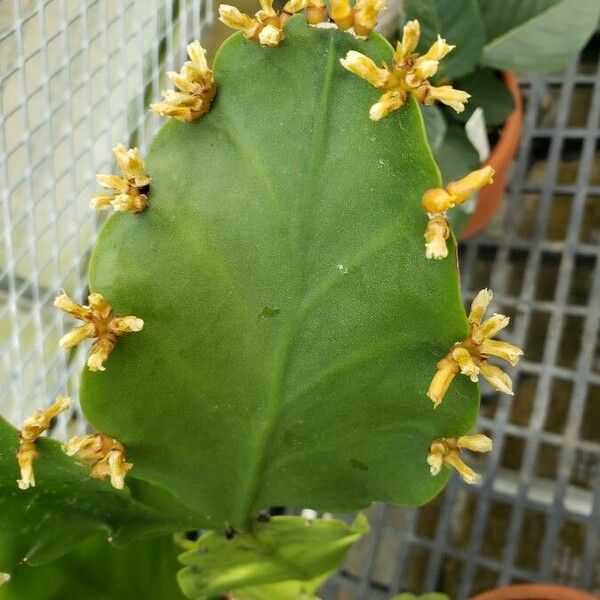
- 🍃 The "Leaves": These are actually flattened stems called cladodes. They are broad, elliptical, and have slightly wavy (crenate) edges that look like giant green paddles.
- 🎨 Sun-Kissed Colors: While typically deep green, the stems turn a stunning reddish-purple or bronze hue when exposed to bright, filtered sunlight—a process known as "sun-stressing."
- 🌸 Delicate Blooms: Tiny, fragrant, creamy-white or yellowish flowers sprout directly from the notches along the leaf margins, eventually turning into small, translucent berries.
🏡 In Your Garden
- 🌿 The Hanging Specialist: Because of its trailing growth habit, this plant is happiest in a hanging basket where its heavy stems can drape downward. It prefers a chunky, orchid-like potting mix rather than standard cactus soil to ensure its roots can breathe.
- 💧 Humidity over Heat: Unlike desert cacti, Rhipsalis pachyptera craves moisture in the air. It hates bone-dry soil and prefers a "soak and dry" method, thriving in bathrooms or kitchens where steam provides a tropical microclimate.
⚠️ Safety & Toxicity
- ✅ Pet Friendly: Good news for animal lovers! This plant is considered non-toxic to cats, dogs, and horses, making it a safe choice for low-hanging displays.
- 👶 Child Safe: It lacks the sharp, painful spines (glochids) found on many other cacti, so there is no risk of accidental pricks for curious little hands.
✨ Fun Fact
Even though it is a true cactus, Rhipsalis pachyptera has completely lost its leaves through evolution. The flattened green segments you see are actually modified branches that have taken over the job of photosynthesis!

Detailed Care Instructions
| Humidity | Normal |
| Lighting | Full Sun |
| Difficulty | Medium |
| Temperature | Min 18°C |
| Hardiness Zones | 10A - 11B |
To grow Rhipsalis Pachyptera plants, follow these steps:
- Purchase a healthy Rhipsalis Pachyptera plant from a nursery or garden center. Alternatively, you can propagate new plants from stem cuttings.
- Choose a suitable location for your plant. Rhipsalis Pachyptera prefers bright but indirect sunlight. Avoid placing it in direct sunlight as it can scorch the leaves.
- The plant thrives in temperatures between 60-80°F (15-27°C). Make sure to keep it away from drafts or extreme temperature changes.
- Rhipsalis Pachyptera prefers well-draining soil. Use a cactus or succulent potting mix that consists of sandy loam soil with added perlite or pumice for better drainage.
- Water the plant regularly when the top inch (2.5 cm) of the soil feels dry. Ensure that the excess water can drain out freely to prevent root rot. However, avoid overwatering, as these plants prefer slightly drier conditions.
- Fertilize the plant during the growing season (spring and summer) with a balanced liquid fertilizer diluted to half the recommended strength. Apply the fertilizer monthly.
- Prune your Rhipsalis Pachyptera plant to maintain its shape and promote healthy growth. Remove any dead, damaged, or overcrowded stems.
- Rhipsalis Pachyptera is not particularly prone to pests or diseases. However, monitor your plant regularly and address any issues promptly.
- Provide your plant with high humidity, especially during the winter months when central heating can dry out the air. Mist the leaves occasionally or place a tray of water nearby.
- Lastly, consider potting up or repotting your Rhipsalis Pachyptera every 2-3 years to refresh the soil and provide additional space for root growth.
With proper care and suitable conditions, your Rhipsalis Pachyptera plant should thrive and grow well.

Place in a window with dappled sun or a spot in the middle of a room. Or directly in a window facing west or east.

When caring for this particular plant, it is important to consider its watering needs. Firstly, ensure that the soil is well-draining. This will prevent over-watering and root rot. Water the plant thoroughly, allowing the water to seep through the soil and out of the drainage holes. Be careful not to water too frequently, as this plant prefers slightly drier conditions. It is best to allow the soil to dry out slightly between waterings. Finally, avoid getting water on the leaves or stem of the plant, as excess moisture can cause damage or disease.
For optimal growth and development of this plant, it is recommended to fertilize it every two weeks during the growing season and once a month during the winter months.
Choose a water-soluble fertilizer specifically formulated for cacti and succulents, and dilute it to half strength. Apply the fertilizer to the soil around the base of the plant, being careful not to get any on the leaves or stems.
Water the plant immediately after fertilizing to help the nutrients soak into the soil. Avoid fertilizing during periods of drought, as it can lead to root damage.
Additionally, it is important to follow standard care guidelines for this plant, such as providing it with bright, filtered sunlight, maintaining a consistent watering schedule, and ensuring proper drainage. With proper care, this plant should thrive and produce beautiful foliage year-round.
For the Rhipsalis Pachyptera plant, it is recommended to use a well-draining potting mix that consists of a combination of organic matter and a coarse material such as perlite or sand. The soil should be airy and able to retain moisture without becoming waterlogged. A mix of peat moss, pine bark, and perlite in equal parts can be a suitable option. Avoid using heavy soils or ones that retain too much water, as this can lead to root rot and other issues. It is also recommended to fertilize the plant during the growing season with a balanced fertilizer.
To propagate this plant, start by taking stem cuttings that are at least 4-6 inches in length. Remove any leaves or needles from the bottom third of the stem, leaving a few at the top for photosynthesis. Dip the cut end of the stem in rooting hormone and plant it in a well-draining potting mix.
Water the cutting sparingly to prevent rotting, and keep it in a warm, bright location with indirect sunlight. Cover the cutting with a plastic bag or cloche to create a humid environment.
After a few weeks, the cutting should start to form roots. Remove the plastic bag and continue to water the new plant sparingly until you see new growth. Once the plant has established itself, you can transplant it into a larger container or into the ground.
Remember to be patient with the propagation process and do not overwater the cutting. With the right care, your new plant will thrive and grow.
Common pests of the rhipsalis pachyptera include Scale insect, mealybugs, spider mites. Make a habit of checking your rhipsalis pachyptera frequently for pests so that any infestations can be caught and managed early.








