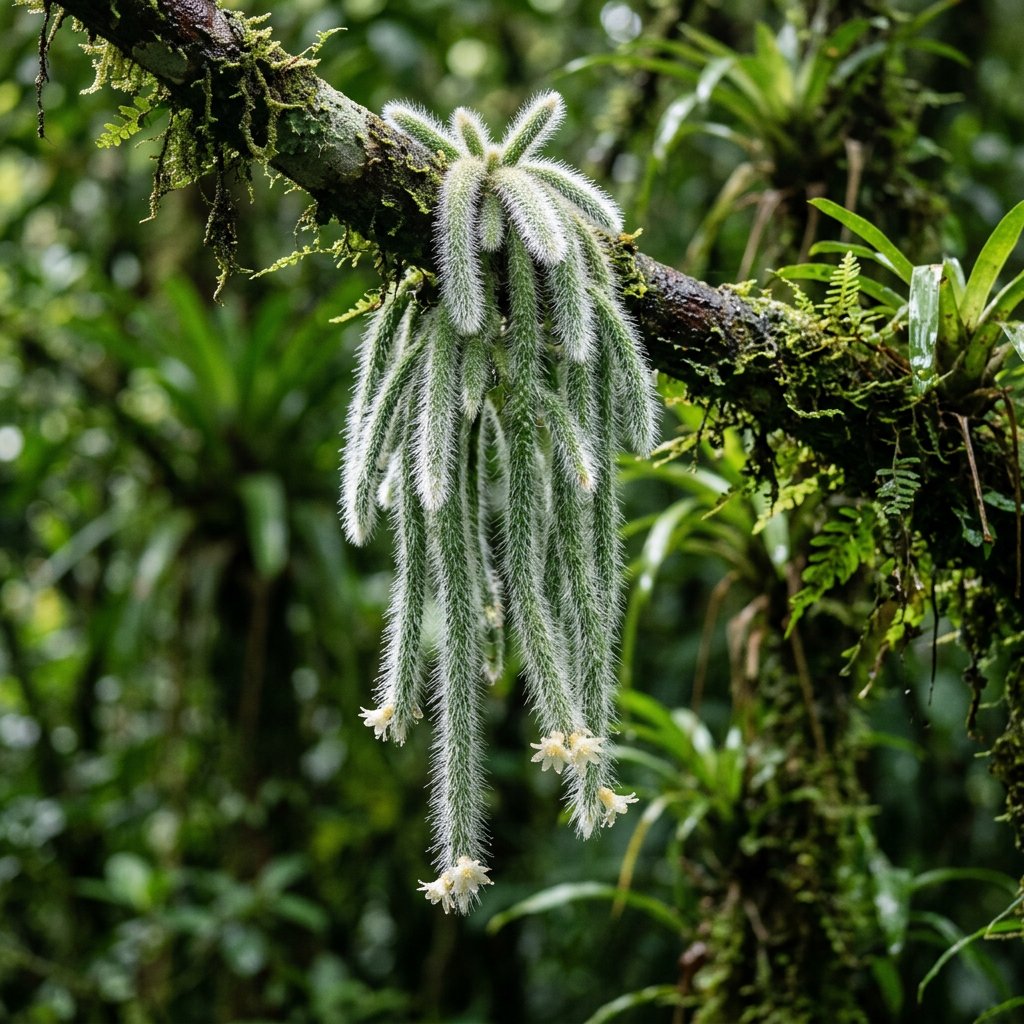
Plant Overview
Meet the Rhipsalis pilocarpa, affectionately known as the "Hairy-fruited Wickerware Cactus." Unlike the prickly desert dwellers you might expect, this Brazilian native is a lush, dangling epiphyte that thrives in the dappled shade of tropical forest canopies. It is a prized choice for indoor "urban jungles" due to its elegant, pendulous growth and its unique, frosted texture.
🔍 How to Identify
- 🌵 The Stems: Slender, cylindrical segments that branch out like a delicate, living chandelier.
- 🧶 The "Hair": The stems are covered in soft, white, bristle-like spines that give the plant a fuzzy appearance rather than a sharp, painful sting.
- 🌸 The Bloom: It produces fragrant, bell-shaped, creamy-white flowers at the tips of the stems, which eventually turn into striking red-to-purple spherical fruits.
🏡 In Your Garden
- ☁️ Epiphytic Roots: In the wild, this plant grows on tree branches rather than in the ground. Because of this, it hates heavy, compacted soil; it thrives best in an airy, porous mix (like an orchid or bark-heavy blend) to prevent root suffocation.
- 💧 Humidity over Aridity: Since it’s a jungle cactus, it craves more moisture than its Saharan cousins. While it shouldn't sit in soggy "wet feet," it prefers to be watered just as the top inch of soil feels dry, and it absolutely loves a humid bathroom or a regular misting.
- ⛅ Gentle Light: Direct midday sun will scorch and yellow its delicate stems. It performs best in bright, filtered light—mimicking the sunlight that filters through a leafy tree canopy.
⚠️ Safety & Toxicity
- ✅ Pet Friendly: Rhipsalis pilocarpa is generally considered non-toxic to cats, dogs, and horses, making it a safe choice for pet-filled households.
- 🌱 Mild Irritant: While the "hairs" are soft, they can still cause very minor mechanical irritation to the mouth or skin if a pet or child decides to chew on the stems. It is always best to hang it out of reach.
✨ Fun Fact
The specific epithet "pilocarpa" literally translates from Latin to "hairy fruit." After the plant finishes blooming, it produces bright berries that are covered in tiny white bristles, looking exactly like miniature, fuzzy Christmas ornaments hanging from the stems.

Detailed Care Instructions
To grow Rhipsalis pilocarpa, also known as hairy stemmed cactus, you can follow these steps:
- Choose the right location: Rhipsalis pilocarpa prefers bright indirect light, such as an east or west-facing window. Avoid direct sunlight, as it can scorch the plant.
- Planting medium: Use a well-draining soil mix composed of cactus soil or a combination of regular potting soil and perlite. Rhipsalis pilocarpa prefers slightly acidic to neutral soil.
- Pot selection: Select a pot with drainage holes to prevent waterlogged soil. Rhipsalis typically enjoys being slightly root-bound, so choose a size appropriate for the current plant size.
- Watering: Water the plant thoroughly when the top inch of soil is dry. Avoid overwatering, as Rhipsalis is more susceptible to rot. During winter, reduce watering to allow the soil to dry out more between waterings.
- Humidity: Rhipsalis pilocarpa appreciates higher humidity levels. You can increase humidity by placing a tray filled with water near the plant or by using a humidifier.
- Fertilizing: Apply a balanced liquid fertilizer diluted to half the recommended strength every one to two months during the spring and summer growing season. Avoid fertilizing during the winter months.
- Temperature: Rhipsalis pilocarpa prefers average room temperatures between 60-75°F (15-24°C). Protect it from drafts and sudden temperature changes.
- Pruning: Prune any leggy or overgrown stems to encourage bushier growth. You can propagate the pruned stems by allowing them to dry for a few days, then placing them in a well-draining potting mix.
- Repotting: Repot your Rhipsalis plant only when it becomes root-bound or outgrows its pot. Spring is an ideal time for repotting.
- Pest control: Inspect your plant regularly for common houseplant pests like mealybugs or spider mites. If you notice any pests, treat the infested areas with an appropriate insecticide or use natural remedies like neem oil or insecticidal soap.
Remember to research more specific care requirements for Rhipsalis pilocarpa, as each plant may have slightly different needs.

Place in a window with dappled sun or a spot in the middle of a room. Or directly in a window facing west or east.

To water this plant, you should first check the soil moisture level by inserting your finger about an inch into the soil. If it feels dry, it is time to water. Use room temperature or slightly warmer water and pour it over the soil until it starts to drain out of the bottom of the pot. Allow the excess water to drain away completely, and then do not water again until the top inch of soil is dry. Overwatering can be harmful to this plant, so make sure you allow the soil to dry out before watering again.
To fertilize this plant, mix a balanced liquid fertilizer according to the instructions on the label. Apply the fertilizer every month during the growing season (spring and summer) and every two months during the dormant season (fall and winter). Dilute the fertilizer to half strength to avoid root burn. Water the plant thoroughly before and after applying the fertilizer. Avoid fertilizing a dry plant or in extreme temperatures.
The ideal soil for Rhipsalis Pilocarpa is one that is well-draining, aerated, and slightly acidic. It should be a mix of organic and inorganic materials, such as peat moss, perlite, and sand. The soil should be moist but not waterlogged, and the plant should not be allowed to sit in standing water. It is important to use a soil that is free of fungi and pests. The plant prefers a soil that is nutrient-rich, but it should not be over-fertilized. It is recommended to repot the plant every 1-2 years to refresh the soil and provide additional nutrients.
To propagate this plant, you will need to follow these steps:
- First, select a healthy and mature plant from which you want to take cuttings.
- Take a clean and sharp pruning shear or knife and cut the stem of the plant just below the node.
- Remove any leaves or flowers from the bottom of the stem cutting.
- Dip the cut end of the stem into rooting hormone powder. This will encourage root growth.
- Plant the stem cutting in well-draining soil in a container. Make sure the soil is moist but not waterlogged.
- Cover the container with a plastic bag or a plastic wrap to create a humid environment. This will help the cutting to root.
- Place the container in a warm and bright location, but avoid direct sunlight. Keep the soil moist and mist the plant regularly.
- After a few weeks, check to see if the cutting has rooted by gently tugging on the stem. If there is resistance, then roots have formed.
- Once the plant has established roots, remove the plastic covering and gradually expose it to more light and less humidity.
- Finally, once the plant has grown and become established, transplant it into a larger pot or into your garden.
Common pests of the hairy-fruited wickerware cactus include Scale insect, mealybugs, spider mites. Make a habit of checking your hairy-fruited wickerware cactus frequently for pests so that any infestations can be caught and managed early.








