Plant Overview
Known as the Russell's Mistletoe Cactus, this Brazilian beauty is a far cry from the prickly desert dwellers most people imagine. Native to the rocky outcrops and forest canopies of Minas Gerais, it grows as a "lithophyte," clinging to stones with a graceful, weeping habit. It is most celebrated for its jewel-like purple berries that line its flat, leaf-like stems like a string of tiny amethysts.
🔍 How to Identify
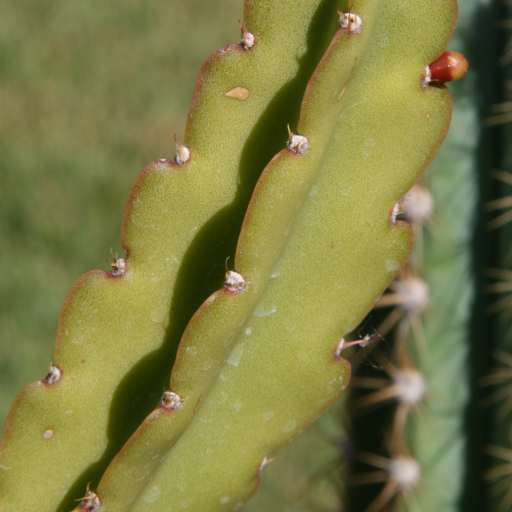
- 🌿 Flattened Segments: The plant is made up of broad, flat, leaf-like stem segments (phylloclades) with notched or "scalloped" edges.
- 🎨 Sun-Kissed Hues: While deep green in the shade, the foliage turns a stunning bronze or reddish-purple when exposed to bright, indirect light.
- 🔮 Ornamental Fruit: Small, creamy flowers give way to spherical, translucent reddish-purple berries that grow directly from the notches along the sides of the stems.
🏡 In Your Garden
- ☁️ Atmospheric Needs: Because it is an epiphytic cactus, it craves humidity rather than heat. It thrives in "chunky" soil mixes—think orchid bark, perlite, and peat—which allow its delicate roots to breathe.
- 💧 Thirst Quencher: Unlike desert cacti, Rhipsalis russellii does not like to stay bone-dry for weeks. It prefers to be watered once the top inch of soil feels dry, mimicking the frequent tropical rains of its homeland.
⚠️ Safety & Toxicity
- ✅ Pet Friendly: Good news for animal lovers! This plant is generally considered non-toxic to cats, dogs, and horses.
- 👶 Child Safe: It lacks the sharp spines or "glochids" found on many other cacti, making it a much safer choice for households with curious toddlers.
✨ Fun Fact
While almost all cacti are native only to the Americas, the Rhipsalis genus contains the only cactus species found naturally in the wild in the Old World (Africa and Asia). However, Rhipsalis russellii remains a specialized treasure primarily found in its original Brazilian mountain haunts!

Detailed Care Instructions
To grow Rhipsalis russellii, also known as the coral cactus or mistletoe cactus, follow these steps:
- Lighting: Place the plant in bright, indirect sunlight. Rhipsalis russellii prefers bright but diffused light, so avoid direct sunlight as it can scorch the leaves.
- Temperature: These plants prefer average to warm temperatures, ideally between 65-80°F (18-27°C). Avoid placing them in drafty locations or near heating or cooling vents.
- Watering: Water the plant thoroughly but allow the soil to dry out slightly between waterings. Rhipsalis russellii prefers slightly moist soil but can tolerate brief periods of drought. Avoid overwatering, as it can lead to root rot.
- Humidity: These plants appreciate higher humidity levels. You can increase humidity by placing the pot on a tray filled with water and pebbles, misting the leaves, or using a humidifier.
- Soil: Provide well-draining soil that retains some moisture. A mix of peat moss, perlite, and coarse sand or orchid mix works well.
- Fertilizer: Feed only during the growing season (spring and summer) with a balanced, water-soluble houseplant fertilizer diluted to half strength. Apply every 2-4 weeks.
- Propagation: Rhipsalis russellii can be propagated through stem cuttings. Take a cutting at least 4-5 inches long and allow it to callus for a few days before planting it in a well-draining soil mix. Keep the soil slightly moist until roots develop.
- Pruning: Prune your coral cactus as needed to maintain its desired size and shape. You can trim back any leggy or overly long stems.
- Repotting: Repot the plant every 2-3 years or when it becomes root-bound. Choose a pot that provides enough room for root growth but not excessively larger than the current pot.
Remember to monitor your plant regularly for signs of pests or diseases and take appropriate action if needed. With proper care, your Rhipsalis russellii should grow and thrive.
To properly water this plant, wait until the soil is completely dry to the touch before giving it a thorough watering. Make sure to use room temperature water and water the base of the plant, avoiding getting water on the leaves. Allow any excess water to drain out of the bottom of the pot and do not allow the plant to sit in standing water. During the winter months, reduce watering frequency as the plant enters a dormant period.
To fertilize this plant, use a balanced liquid fertilizer once a month during the growing season (spring and summer). Dilute the fertilizer to half strength and apply it to the soil around the base of the plant. Do not fertilize during the dormant season (fall and winter).
The ideal soil for Rhipsalis Russellii plant is a well-draining mixture that contains a blend of organic and inorganic materials. It should not be heavy or compacted, which would impede drainage and potentially cause the roots to rot. A mixture of coarse sand, perlite, and peat moss is often recommended, with the addition of vermiculite or bark chips to provide additional aeration. It is important to avoid using soil that is too rich in nutrients, as this can cause the plant to grow too quickly and become leggy. Instead, a relatively low-nutrient soil will encourage slow, steady growth and help to prevent the plant from becoming too large or sprawling. Additionally, the soil should be slightly acidic, with a pH level between 5.5 and 6.5.
Rhipsalis Russellii is commonly propagated through stem cuttings. To propagate the plant, take a cutting from the stem. Ensure that the cutting is at least 4-6 inches long and has a few healthy leaves. Remove any lower leaves or spines from the cutting.
Next, prepare a pot with well-draining soil and water it thoroughly. Once the soil has drained, create a small hole in the soil with your finger and insert the cutting into it. Firmly pack the soil around the cutting to secure it in place.
Place the potted cutting in a bright, indirect location with temperatures between 65-75°F. Water the cutting when the soil feels dry to the touch. Within a few weeks, you should see new growth from the cutting, indicating that it has successfully rooted.
As the plant grows, continue to care for it by providing adequate water, light, and fertilizer. Over time, the plant will mature and produce its own cuttings, allowing you to propagate more and expand your collection.








