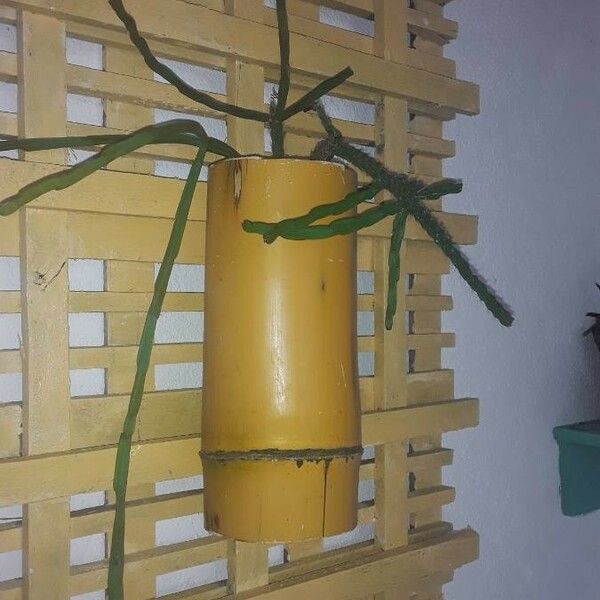
Plant Overview
Often called the Triangle Chain Cactus, Rhipsalis trigona is a sculptural wonder hailing from the humid Atlantic forests of Brazil. Unlike its prickly desert cousins, this "mistletoe cactus" lives high in the canopy, dangling from tree branches like living geometric chandeliers. It is a favorite for modern interiors because of its architectural, three-sided stems and its relaxed, jungle-dwelling nature.
🔍 How to Identify
- 📐 Triangular Stems: The most defining feature is the three-angled (triquetrous) segments. While many Rhipsalis are round or flat, this one maintains a distinct, sharp-edged geometric shape.
- 🧶 Segmented Habit: The plant grows in distinct sections or "joints," branching out repeatedly to create a dense, cascading curtain of greenery that can reach several feet in length.
- 🌸 Delicate Blooms: In late winter or early spring, tiny, translucent white or pale pink flowers appear along the edges of the segments, eventually turning into small, berry-like fruits.
🏡 In Your Garden
- 🌳 The Epiphytic Way: Because it naturally grows on trees (epiphytic), this cactus hates heavy, "mucky" soil. Use a chunky mix of orchid bark, perlite, and potting soil to ensure the roots stay airy and never sit in stagnant water.
- 🌥️ Shadow Play: Think of the rainforest floor. This plant thrives in bright, filtered light. Avoid the harsh afternoon sun, which can "bleach" the stems or cause them to turn a stressed, reddish-purple hue.
- 💧 Thirsty Cactus: Unlike a Round Barrel Cactus, Rhipsalis trigona doesn't like to bone-dry for long periods. It prefers to stay slightly moist; if the stems start to look wrinkled or limp, it’s a cry for a deep drink and a boost in humidity.
⚠️ Safety & Toxicity
- 🐾 Pet Friendly: Good news for furry friends! Rhipsalis trigona is generally considered non-toxic to cats and dogs.
- 👶 Child Safe: Because it lacks the sharp, piercing spines of desert cacti, it is a much safer option for households with curious children or in high-traffic areas where people might brush against it.
✨ Fun Fact
Despite being a true member of the cactus family, Rhipsalis is the only genus of cactus found naturally in the wild outside of the New World (the Americas), with some species appearing in Africa and Sri Lanka!

Detailed Care Instructions
To grow Rhipsalis Trigona plant, follow these steps:
- Choose a suitable location: Rhipsalis Trigona prefers bright, indirect light. Find a spot near a window with filtered sunlight or a shaded corner of your home.
- Potting soil: Use a well-draining soil mix for cacti or succulents. You can also create your own mix by combining regular potting soil, perlite, and coarse sand in equal parts.
- Container: Select a pot or container with drainage holes to prevent waterlogging. Ensure the pot is large enough to accommodate the root system and has room for growth.
- Watering: Rhipsalis Trigona prefers slightly moist soil but is susceptible to overwatering. Allow the top inch of soil to dry out before watering again. Water thoroughly and then allow excess water to drain away.
- Humidity: This plant thrives in humid environments. To increase humidity, you can use a humidifier, place a water-filled tray near the plant, or mist the leaves regularly.
- Temperature and humidity: Rhipsalis Trigona prefers average room temperatures between 60-75°F (15-24°C). Keep the plant away from cold drafts or excessively high temperatures.
- Fertilization: Feed the plant with a balanced, water-soluble fertilizer during the growing season (spring and summer) following the instructions on the package. Do not fertilize during the dormant period (fall and winter).
- Pruning: Prune Rhipsalis Trigona to remove sparse or leggy growth. You can also propagate cuttings taken during pruning.
- Propagation: Rhipsalis Trigona can be propagated from stem cuttings. Simply cut a healthy stem section, allow it to callus for a few days, and then place it in a well-draining soil mix. Keep the soil slightly moist until new growth develops.
- Pests and diseases: Regularly inspect the plant for pests like spider mites or mealybugs. Treat any infestations promptly using horticultural soap or neem oil. Ensure proper airflow around the plant to prevent fungal issues.
Remember that each plant is unique, so monitor its specific needs and adjust care accordingly. With proper attention to light, watering, humidity, and temperature, your Rhipsalis Trigona plant should thrive and grow beautiful.

Place in a window with dappled sun or a spot in the middle of a room. Or directly in a window facing west or east.

The watering needs of Rhipsalis Trigona plants will vary depending on several factors, including the environmental conditions and the stage of growth. Here are some guidelines to help you water this particular plant:
1. Assess the soil: Before watering, always check the moisture level of the soil. Insert your finger about an inch deep into the soil near the base of the plant. If it feels dry, it's an indication that watering is needed. If it is still moist, hold off on watering.
2. Watering frequency: Rhipsalis Trigona plants prefer slightly moist soil, but they don't tolerate excessive waterlogged conditions. As a general rule, water the plant when the top inch of soil feels dry, but avoid letting it completely dry out between watering sessions.
3. Watering technique: When watering, use a gentle and steady stream of water to moisten the soil evenly. Avoid splashing the water directly onto the leaves, as it can lead to fungal diseases.
4. Amount of water: The amount of water required depends on factors such as the size of the pot, temperature, humidity, and the plant's overall health and growth stage. Typically, thoroughly moistening the soil until water drains out from the bottom of the pot is sufficient. However, be careful not to oversaturate the soil as it may lead to root rot.
5. Drainage requirements: Good drainage is crucial for Rhipsalis Trigona plants. Ensure that the pot has drainage holes to prevent water from accumulating, otherwise, the plant's roots may become waterlogged and cause damage.
6. Adjusting watering frequency: Pay close attention to the plant's response to watering. If the lower leaves appear yellow or soggy, it may indicate overwatering. Conversely, if the leaves become wrinkled and start dropping, it might suggest underwatering. Adjust the watering frequency accordingly to restore a healthy balance.
Remember, these are general guidelines, and it's essential to observe your plant's specific needs, considering its unique conditions and the surrounding environment. Regularly monitoring the soil moisture and adjusting the watering routine accordingly will help maintain a healthy and thriving Rhipsalis Trigona plant.
To provide optimal fertilizing instructions for the Rhipsalis Trigona plant, also known as its scientific name, you should follow these steps:
- Choose a balanced liquid fertilizer: Select a fertilizer specifically formulated for indoor plants or cacti and succulents. Ensure it has an equal or balanced ratio of nitrogen (N), phosphorus (P), and potassium (K).
- Dilute the fertilizer: Follow the manufacturer's instructions to dilute the fertilizer in water. Usually, a dilution ratio of 1:2 or 1:4 (fertilizer:water) is recommended.
- Apply the fertilizer: Pour the diluted fertilizer mixture directly into the soil around the base of the Rhipsalis Trigona plant. Take care not to splash the fertilizer on the leaves, as it may cause burning or damage.
- Timing and frequency: During the active growth period, typically spring and summer, fertilize the Rhipsalis Trigona plant once every four to six weeks. During its dormant period in fall and winter, reduce the frequency to once every two to three months.
- Water after fertilizing: After applying the fertilizer, water the plant thoroughly. This helps to prevent any potential fertilizer burn and allows the nutrients to be absorbed properly.
- Monitor for signs of over-fertilization: Keep an eye on the plant for any signs of excess fertilizer, such as wilting, discoloration, or burning of the leaves. If this occurs, flush the soil with water to leach out any excess salts and adjust your fertilization schedule or dilution strength accordingly.
Remember to always follow the specific care requirements of your Rhipsalis Trigona plant, as different plants may have slightly different needs.
When selecting soil for Rhipsalis Trigona, it is essential to consider its natural habitat and growth requirements. Rhipsalis Trigona is an epiphytic cactus native to tropical rainforests, where it typically grows on tree branches or rocks.
To replicate its natural environment, it is best to use a well-draining soil mixture that allows excess water to flow freely. A recommended soil composition would include a combination of organic matter and inorganic material. A suitable mixture might consist of well-rotted leaf mold, coco coir, perlite, and coarse sand.
Organic matter, such as leaf mold, aids in moisture retention and nutrient availability for the plant's roots. Coco coir is fibrous and promotes good aeration and drainage, preventing waterlogged conditions. Perlite is a lightweight, porous substance that enhances drainage and prevents soil compaction. Coarse sand helps to increase drainage and prevents the soil from becoming too compacted.
It is important to note that using a standard potting mix alone may not provide the required drainage for Rhipsalis Trigona. Avoid heavy, clay-based soils or any mixture that retains excessive moisture, as this may lead to root rot and other plant health issues.
To ensure the health and vitality of Rhipsalis Trigona, regular watering and allowing the soil to slightly dry between waterings is recommended. Additionally, providing adequate indirect or filtered sunlight, along with proper soil conditions, will facilitate the plant's growth and overall well-being.
To propagate Rhipsalis Trigona, also known by its common names, you can follow these steps:
- Start by selecting a healthy and mature Rhipsalis Trigona plant. Look for a plant with strong stems and plenty of new growth.
- Prepare a pot or container for the new plant. Use a well-draining potting mix suitable for succulent plants. Make sure the pot has drainage holes to prevent waterlogging.
- Take a cutting from the Rhipsalis Trigona plant. Locate a stem that has at least two segments or sections. Using a clean and sharp pair of scissors or pruning shears, carefully cut the stem from the parent plant.
- Allow the cutting to dry for a few days. Place it in a warm location away from direct sunlight to prevent sunburn. This step helps to callus the cut end, reducing the risk of rotting.
- Once the cutting has callused, it is ready for planting. Fill the prepared pot with the well-draining potting mix and create a small hole in the center.
- Gently insert the callused end of the cutting into the hole. Ensure that at least one segment is buried in the soil, as this is where the new roots will emerge. Firmly press the soil around the base of the cutting for stability.
- After planting, water the cutting lightly to moisten the soil. Avoid overwatering, as this can lead to root rot. Allow the soil to dry slightly between watering sessions.
- Place the potted cutting in a warm, bright location. Rhipsalis Trigona prefers indirect sunlight or partial shade. Avoid exposing it to direct sunlight, as it can damage the tender foliage.
- Provide regular misting to maintain a humid environment around the cutting. This mimics the plant's natural habitat and helps to promote root development.
- After a few weeks, check for signs of root growth by gently tugging on the cutting. If you feel resistance, it indicates that the roots have started to develop.
- Once the cutting has established roots, treat it like a mature Rhipsalis Trigona plant. Gradually increase the frequency and amount of water provided, and begin a regular fertilization routine using a balanced, water-soluble fertilizer suitable for succulent plants.
With proper care and patience, your propagated Rhipsalis Trigona plant will continue to grow and thrive, eventually creating a unique and attractive addition to your plant collection.
Common pests of the rhipsalis trigona include Scale insect, mealybugs, spider mites, thrips. Make a habit of checking your rhipsalis trigona frequently for pests so that any infestations can be caught and managed early.








