Plant Overview
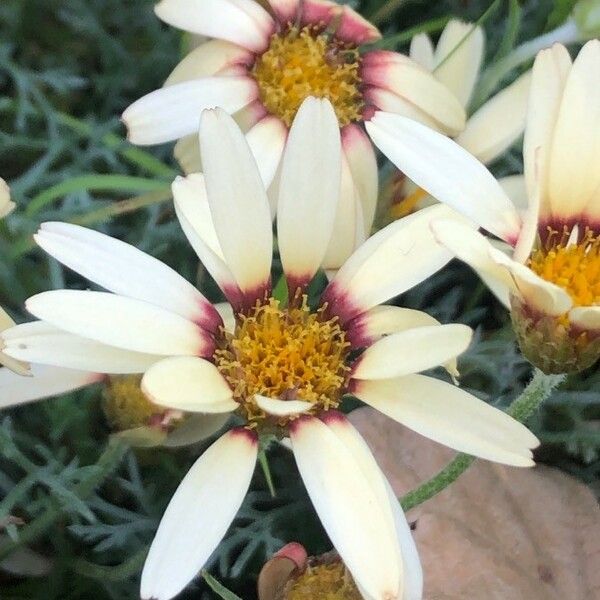
Often called the Atlas Daisy, this resilient beauty hails from the high, rocky slopes of Morocco’s Atlas Mountains. It is a master of contrast, pairing delicate, shimmering silver foliage with bold, sophisticated blooms that look like they’ve been hand-painted with a deep, velvet eye. It is the perfect choice for gardeners who want a Mediterranean or "alpine" aesthetic that feels both wild and elegantly refined.
🔍 How to Identify
- 🌿 Silvery Foliage: The leaves are deeply lobed and feathery, appearing almost like frosted ferns. They form a low, dense mat that remains attractive even when the plant isn't blooming.
- 🎨 The "Eye": Each flower features a striking central disc of deep maroon or reddish-brown, which creates a sharp, "bullseye" contrast against the lighter petals.
- 🌼 Creamy Petals: The ray florets (petals) are typically a soft cream or pale buff-yellow, often showing a subtle pinkish tint on the undersides before they fully unfurl.
🏡 In Your Garden
- ☀️ Sun Seeker: This plant is a true child of the sun; it requires a bright, open position to keep its foliage tight and silvery. In too much shade, the plant becomes "leggy" and the metallic luster of the leaves will fade to a dull green.
- 🏜️ Drainage is King: Because it evolved in rocky mountain crevices, it absolutely loathes "wet feet." It is highly drought-tolerant once established but must be planted in gritty, free-draining soil. It is a star performer in rock gardens, gravel beds, or terracotta pots where water can escape easily.
⚠️ Safety & Toxicity
- 🐾 Pet Safety: The Atlas Daisy is generally considered non-toxic to cats, dogs, and horses, making it a "worry-free" addition to a pet-friendly landscape.
- 🧤 Skin Sensitivity: Like many members of the Asteraceae (Daisy) family, the plant contains sesquiterpene lactones which can cause mild skin irritation or "daisy dermatitis" in sensitive individuals. It is best to wear gloves when deadheading or pruning large patches.
✨ Fun Fact
🏔️ Built-in Sunscreen: The silvery "fuzz" on the leaves isn't just for decoration; those tiny hairs (trichomes) reflect intense high-altitude sunlight and trap a layer of moisture against the leaf surface, acting as a natural cooling system and sunscreen for the plant!

Detailed Care Instructions







