Plant Overview
Known as "Golden Root" or "Arctic Root," Rhodiola rosea is a true survivor of the world’s coldest mountain peaks and sea cliffs. This hardy perennial has been a staple of folk medicine for centuries; Viking warriors reportedly used it to enhance their physical strength, and it was once a closely guarded secret in Soviet-era endurance research. Its most enchanting trait is hidden within its thick rootstock, which releases a delicate fragrance of roses when cut or bruised.
🔍 How to Identify
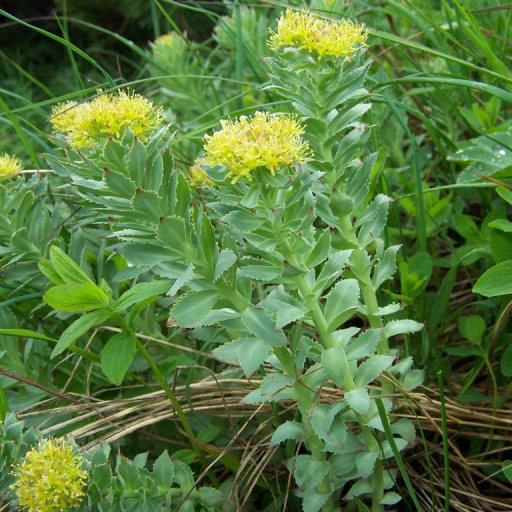
- 🍃 Succulent Foliage: The leaves are thick, fleshy, and blue-green, arranged in a spiraling pattern along the stem. They often have tiny, jagged "teeth" near the tips.
- 🌼 Clustered Blooms: In late spring and summer, the plant produces dense, flat-topped clusters of tiny, star-shaped flowers. These are usually bright yellow, though they can sometimes show hints of red or orange as they age.
- 🏔️ Mound-Like Growth: It grows in low, compact clumps that rarely exceed 12 inches in height, giving it a sturdy, ground-hugging appearance perfect for resisting high winds.
🏡 In Your Garden
- 🏜️ The Need for Grit: Because it naturally lives in rocky crevices, this plant cannot tolerate "wet feet." It requires exceptionally well-draining, sandy, or gravelly soil. If the soil stays soggy, the precious "Golden Root" will quickly rot.
- ❄️ Arctic Resilience: This is not a plant for the tropics. It thrives in cooler climates and actually requires a cold winter dormancy period to remain healthy and bloom the following year. It is one of the few decorative plants that can withstand sub-zero temperatures with ease.
⚠️ Safety & Toxicity
- ✅ Safe for Humans: Rhodiola rosea is widely utilized as a medicinal adaptogen. It is non-toxic to touch and generally safe for humans, though you should always consult a professional before using any plant for medicinal purposes.
- 🐾 Pet Caution: While not specifically listed as a high-hazard plant by the ASPCA, the thick, fibrous leaves can cause mild gastrointestinal upset (vomiting or drooling) if consumed in large quantities by cats or dogs.
✨ Fun Fact
Ancient Chinese Emperors were so convinced of this plant's power to grant longevity that they sent special expeditions into the wilds of Siberia to harvest and bring back the "Golden Root" for the royal family's exclusive use!

Detailed Care Instructions
To grow Rhodiola Rosea, also known as golden root or roseroot, follow these steps:
- Climate: Rhodiola Rosea thrives in cold climates and requires a winter dormancy period for successful growth. It can tolerate temperatures as low as -40°C (-40°F) and as high as 26°C (79°F).
- Soil: The plant prefers well-draining soil that is slightly acidic to neutral (pH 5.5-7.0). Sandy or loamy soil mixes with good organic matter are ideal. The soil should be loose and not compacted to ensure healthy root growth.
- Sunlight: Rhodiola Rosea requires full sun to partial shade, depending on your climate. In warmer areas, partial shade during the hottest part of the day is recommended.
- Planting: Rhodiola Rosea can be grown from seeds or transplants. If using seeds, sow them in early spring or late summer. The seeds are very small, so sprinkle them on the soil surface and lightly press them into the soil without covering them. Keep the soil moist but not waterlogged until germination occurs.
- Watering: Rhodiola Rosea prefers moderate moisture levels. Water the plant regularly, ensuring the soil remains evenly moist but not waterlogged. During the dormant period, reduce watering but do not let the roots dry out completely.
- Fertilizer: Rhodiola Rosea does not require heavy fertilization. However, adding organic matter, such as compost or well-rotted manure, to the planting hole or as a top dressing once per year can be beneficial.
- Mulching: Apply a layer of organic mulch around the base of the plant to help conserve moisture, suppress weeds, and insulate the roots during the winter.
- Maintenance: Trim off any dead or damaged foliage during the growing season to promote new growth. Divide overcrowded clumps every few years, usually during the dormant period, to stimulate healthier root growth.
- Harvesting: Rhodiola Rosea can be harvested for its medicinal qualities. Wait until the plant is at least three years old before harvesting the roots. Dig up the root, clean it thoroughly, and dry it in a cool, dry place before use.
Remember, growing plants successfully also depends on your specific climate and conditions, so adjusting the care instructions accordingly is advisable.

Place in a bright room that is sun drenched almost all day. Or directly in a south-facing window.

Rhodiola Rosea plants thrive in well-drained soil that is kept moist to the touch. It is important not to overwater the plant as this can lead to root rot. One way to water the plant properly is to apply water slowly at the base of the plant until the soil is moist but not saturated. You can either use a watering can or a garden hose set on a gentle setting to achieve this. Watering the plant early in the morning or late in the evening when the sun is not too strong will allow the plant to absorb the water more efficiently. It is also a good idea to check the soil moisture regularly by sticking your finger in the soil to the depth of the plant's roots. If the soil feels dry, it's time to water again. Proper watering will help your Rhodiola Rosea plant to grow healthy and strong.
To fertilize this plant, use a balanced fertilizer with equal amounts of nitrogen (N), phosphorus (P), and potassium (K). Use the specific fertilizer during the plant's growing season and dilute it to half strength. Ensure the soil is moist before application; avoid fertilizing dry soil. Water the plant after fertilizing to avoid burning. Apply the fertilizer every four to six weeks.
Rhodiola Rosea plant prefers well-drained and sandy soil with a pH ranging between 4.0 and 7.0. The soil should be rich in organic matter and have good water retention properties. It should not be too compact or waterlogged, as the roots need to breathe. A mixture of mineral soil, sand, and peat moss or compost is recommended for optimal growth. Fertilizer should be applied sparingly, as this plant can be sensitive to excess nutrients. It is also important to ensure that the soil is not contaminated with heavy metals, as this can negatively impact the plant's growth and quality.
To propagate this medicinal plant, you can collect the seeds after the flowers have bloomed and the seed pods have turned brown. Alternatively, you can take stem cuttings in the early spring before the plant has fully developed. Take cuttings from the strongest stems and remove all of the leaves except for a few at the top. Dip the cut end in rooting hormone and plant in a well-draining soil mix. Keep the soil moist and place in a warm, bright area. After a few weeks, new roots should develop. Transplant the new plants to their permanent locations once they have developed a few new leaves.








