Plant Overview
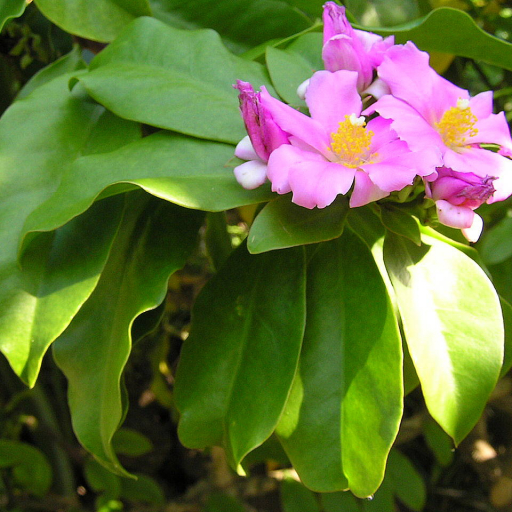
Often called the Rose Cactus or Wax Rose, Rhodocactus grandifolius is a botanical marvel that challenges everything you thought you knew about cacti. Unlike its prickly desert cousins, this Brazilian native is a "living fossil" that proudly displays large, lush green leaves alongside its formidable spines. It offers a rare glimpse into the evolutionary history of the cactus family, looking more like a tropical shrub than a succulent until you get close enough to see its defensive armor.
🔍 How to Identify
- 🍃 The Leaves: Features large, fleshy, bright green leaves that are elliptical in shape. Unlike most cacti, these leaves are persistent and perform photosynthesis just like a standard garden tree.
- 🌸 The Blooms: Produces stunning clusters of pink to purplish flowers at the ends of the branches. These blooms look remarkably like wild roses, complete with a center of yellow stamens.
- 🌵 The Spines: Look closely at the woody trunk and stems; they are armed with clusters of long, needle-like black or brown spines that emerge from fuzzy cushions called areoles.
🏡 In Your Garden
- ☀️ Light & Warmth: This plant craves "bright and bold" light. To see those famous rose-like flowers, it needs plenty of direct sunlight. However, because it has leaves, it is less drought-tolerant than a barrel cactus and will wilt if left bone-dry for too long.
- 🪴 Growth Habit: This isn't a windowsill plant for long! It is a vigorous grower that can reach the height of a small tree. It is best suited for large containers or as a dramatic "living fence" in frost-free climates.
- ✂️ Pruning Nuance: It handles pruning exceptionally well. If it gets too leggy, you can cut it back to encourage a bushier shape, and the cuttings root very easily in well-draining soil.
⚠️ Safety & Toxicity
- 🟢 Toxicity Status: This plant is generally considered non-toxic to humans and common household pets like cats and dogs.
- ⚔️ Physical Hazard: The real danger lies in its spines. They are exceptionally long, sharp, and can easily puncture skin or clothing. It should be planted away from walkways or areas where children and pets play.
✨ Fun Fact
The Rhodocactus grandifolius is considered one of the most primitive cacti in existence. It provides a "missing link" for botanists, showing how ancient cacti looked before they evolved to lose their leaves and turn their stems into water-storage tanks to survive the harshest deserts on Earth.

Detailed Care Instructions
To grow Rhodocactus grandifolius (also known as the Easter Lily Cactus), you can follow these steps:
- Climate: Ensure the plant is grown in a suitable climate. Rhodocactus grandifolius prefers warm and dry conditions, similar to its native habitat in Mexico. It cannot tolerate frost or extremely cold temperatures.
- Light: Provide bright, indirect light to the plant. Place it near a window where it can receive several hours of sunlight each day. However, avoid direct sunlight during the hottest parts of the day, as it may damage the plant.
- Temperature: Keep the plant in temperatures ranging from 65°F to 80°F (18°C to 27°C). Avoid exposing it to temperatures below 50°F (10°C) as it may cause damage.
- Soil: Use well-draining soil. A cactus or succulent potting mix will work well. Ensure the container has drainage holes at the bottom to prevent waterlogging.
- Watering: Water the plant deeply but infrequently. Allow the soil to dry out completely between waterings, as excessive moisture can lead to root rot. During the growing season (spring to fall), water thoroughly when the top 1-2 inches of soil feel dry, and reduce watering during the dormant period (winter).
- Fertilizer: Feed with a balanced, water-soluble cactus or succulent fertilizer diluted to half the recommended strength. Apply monthly during the growing season.
- Humidity: Rhodocactus grandifolius prefers low humidity.
- Repotting: Repot the plant every 2-3 years in a slightly larger container with fresh soil. This allows the roots to have more space to grow.
- Pruning: Minimal pruning is required. Remove any dead or damaged growth as needed.
- Propagation: Rhodocactus grandifolius can be propagated through stem or leaf cuttings. Allow the cuttings to dry for a few days before planting them in well-draining soil.
By following these guidelines, you can successfully grow and care for your Rhodocactus grandifolius plant.

Place in a window with dappled sun or a spot in the middle of a room. Or directly in a window facing west or east.

To properly water this particular plant, it is important to ensure that the soil is evenly moist during its growing season. The amount of water required will depend on the size of the plant, the size of its pot or container, and the conditions of the environment where it is being grown. It is recommended to monitor the soil moisture levels by checking the top inch of soil with your fingers, and watering only when the soil feels dry to the touch. When watering, it is important to avoid getting water on the leaves or stem of the plant, as it may lead to fungal growth or rot. Additionally, the use of a well-draining soil and pot with drainage holes is essential to prevent the accumulation of excess water around the roots. During the winter months, when the plant is dormant, watering should be reduced to once every two weeks or when the soil feels dry to the touch.
To fertilize this plant, begin by selecting a high-quality fertilizer that is specifically formulated for cacti and succulents. Mix the fertilizer according to the instructions on the package, being careful not to over-fertilize the plant. Apply the fertilizer to the soil around the plant, taking care not to get any on the leaves or stems. Water the plant immediately after fertilizing to help distribute the nutrients throughout the soil. Repeat this process every 2 to 4 weeks during the growing season, adjusting the frequency and amount of fertilizer as needed based on the plant's growth and health. Avoid fertilizing during the winter months or when the plant is dormant.
There are various types of soil that can be used for the Rhodocactus Grandifolius plant, but the most suitable one is a well-draining, sandy soil. This type of soil is essential for the plant to thrive because it allows for adequate drainage and prevents the accumulation of excess moisture, which can lead to root rot.
Additionally, the soil should be slightly acidic, with a pH range between 6.0 to 7.0, to provide an optimal growing environment for the plant. Adding sand to the soil mixture can improve its drainage and aeration properties while also reducing the soil's tendency to compact.
Finally, it is essential to avoid heavy clay soils or those with high organic matter since these types of soils can retain too much moisture and cause the plant's roots to rot. It is best to mix in a well-draining, gritty material such as coarse sand or gravel to aid drainage in heavy soils.
To propagate this plant, you will need to obtain a healthy mother plant with mature stems that are at least a few inches long. Cut a stem of the mother plant using a sterile and sharp blade or scissors. Ensure that your cutting is at least 3-4 inches long and has some healthy leaves on it.
Then, prepare a suitable planting medium by combining equal parts of soil, sand, and perlite in a pot. Moisten the soil mixture slightly before planting to provide a suitable environment for the cuttings to develop roots.
Remove the bottom leaves from the stem cutting, leaving only a few healthy leaves at the top. Dip the cut end of the stem into rooting hormone powder, and gently tap off any excess. Insert the cutting into the soil mixture, ensuring that at least 1-2 inches of the stem is buried in the soil.
Cover the pot with plastic wrap or a plastic bag to maintain the humidity level around the cutting. Put the pot in a warm and brightly lit area, but not in direct sunlight. Mist the soil and the cutting occasionally to keep the humidity level high.
Check the cutting after 2-3 weeks for any signs of roots or new growth. Once the roots have developed, usually after 4-6 weeks, you can remove the plastic covering and place it in a brighter location. Transplant the new plant to a well-draining pot or garden bed after it has grown to a suitable size.
Common pests of the rose cactus include Scale insect, mealybugs, spider mites. Make a habit of checking your rose cactus frequently for pests so that any infestations can be caught and managed early.








