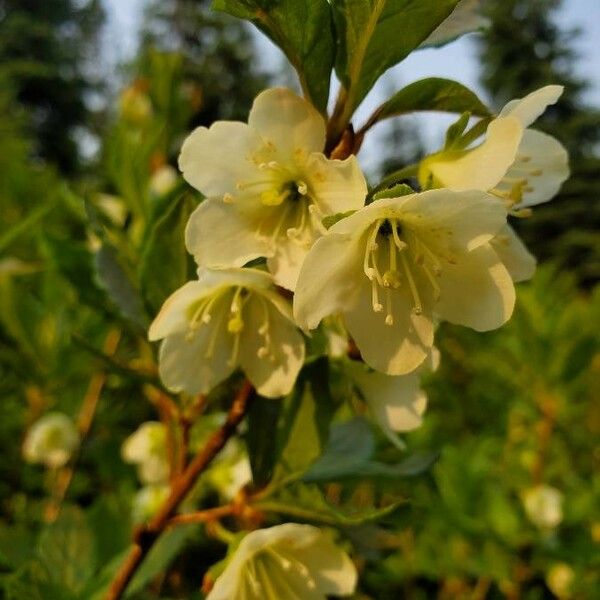
Plant Overview
Often called the Cascade Azalea, this high-altitude beauty is a shy and elegant member of the heath family. Unlike its flashy, tropical-looking cousins, it prefers the rugged, snow-dusted slopes of the Pacific Northwest and the Rockies. It is sometimes referred to as the "Ghost of the Mountains" because its delicate white bells are often tucked away, hiding beneath a canopy of green leaves.
🔍 How to Identify
- 🌸 Hidden Blooms: The cream-white, bell-shaped flowers grow in small clusters underneath the leaves along the sides of the stems, rather than in large bundles at the branch tips.
- 🍃 Textured Foliage: Its oval leaves are a soft, light green with slightly wavy edges. They are covered in fine, rusty-colored hairs that can feel slightly sticky to the touch.
- 🍂 Deciduous Habit: Unlike many common evergreen rhododendrons, this species is deciduous, meaning it sheds its leaves every autumn after turning a subtle yellow or bronze.
🏡 In Your Garden
- 🏔️ Subalpine Specialist: This plant is a specialist of cool, high-elevation forests. In a garden setting, it demands "cool feet"—it struggles in intense summer heat and requires acidic, well-draining soil that mimics rocky mountain slopes.
- 💧 The Snowmelt Mimic: Because it naturally grows near snowmelt lines, it is very sensitive to drought. It thrives in dappled shade where the soil remains consistently moist but never waterlogged or swampy.
⚠️ Safety & Toxicity
- 🚫 Toxic Status: Highly toxic to humans and animals if ingested.
- 🐾 The Danger: Like all members of the Rhododendron genus, it contains grayanotoxins. It is dangerous for dogs, cats, and horses, potentially causing digestive distress, weakness, or heart issues if leaves or flowers are consumed.
- 🧤 Skin Sensitivity: Some gardeners find the sticky, hairy leaves can cause mild skin irritation, so wearing gloves during pruning is recommended.
✨ Fun Fact
🍯 "Mad Honey": Nectar from the Rhododendron family has been known since ancient times to produce "Mad Honey." If bees forage heavily on these plants, the resulting honey can contain neurotoxins that cause hallucinations or even temporary paralysis in humans!

Detailed Care Instructions
To grow Rhododendron albiflorum (also known as White-flowered Rhododendron or Cascade Azalea), you can follow these steps:
- Climate: Rhododendron albiflorum is native to cool, mountainous regions in North America. It thrives in temperate climates with cool summers and cold winters. Make sure your climate is suitable for this plant.
- Location: Choose a location with partial shade or filtered sunlight. Rhododendron albiflorum prefers dappled sunlight or morning sun with some shade during the hotter parts of the day. Avoid placing it in direct, intense sunlight as it can scorch the leaves.
- Soil: Rhododendrons prefer acidic soil with a pH between 4.5 and 6.0. Test your soil's pH and amend it if necessary. Use well-draining, loamy soil rich in organic matter. If your soil is alkaline, consider growing the plant in a container with acidic potting mix.
- Planting: Dig a hole that is twice as wide and as deep as the root ball of the plant. Gently remove the plant from its container and loosen the roots before placing it in the hole. Backfill the hole with soil, ensuring that the top of the root ball is level with the ground. Tamp down the soil lightly to remove any air pockets.
- Watering: Keep the soil consistently moist but not waterlogged. Rhododendrons are susceptible to root rot, so make sure the soil drains well. Water deeply and thoroughly, especially during dry periods. Avoid overwatering, as it can lead to fungal diseases.
- Mulching: Apply a layer of organic mulch, such as pine needles or bark chips, around the base of the plant. Mulch helps conserve moisture, insulate the roots, and suppress weeds. Leave a gap around the stem to prevent rotting.
- Fertilizing: Rhododendrons benefit from an annual feeding in early spring. Use a slow-release, balanced fertilizer specifically formulated for acid-loving plants. Follow the package instructions for dosage and application method.
- Pruning: Prune Rhododendron albiflorum after flowering to shape the plant, remove dead or diseased branches, and encourage new growth. Remove spent flowers to promote better blooming the following year.
- Protection: If you live in a region with cold winters, protect your Rhododendron albiflorum from extreme frost and freezing temperatures. Use burlap or horticultural fleece to cover the plant during winter.
Remember to regularly monitor the plant for signs of diseases or pests, such as leaf spot, powdery mildew, aphids, or lace bugs. Promptly address any issues you observe to maintain the health and vitality of your Rhododendron albiflorum plant.

Place in a window with dappled sun or a spot in the middle of a room. Or directly in a window facing west or east.

To properly water this plant, it is important to first consider its location and the soil it is planted in. The Rhododendron Albiflorum plant prefers moist, well-draining soil and partial shade.
When watering, it is best to avoid getting the leaves wet as this can lead to fungal diseases. Instead, water at the base of the plant and allow the water to soak into the soil slowly.
During dry periods, it is important to keep the soil consistently moist but not waterlogged. Overwatering can cause root rot and other issues.
To help retain moisture in the soil, consider adding a layer of mulch around the base of the plant. This will also help to regulate soil temperature and prevent weeds.
Overall, the key to watering this plant is to provide consistent moisture without overdoing it. By taking care to water properly and maintain optimal growing conditions, this plant can thrive and produce beautiful blooms.
To fertilize this plant, use a slow-release fertilizer with a low nitrogen content in early spring before new growth appears. Avoid applying fertilizer directly onto the stems or foliage and water thoroughly after applying. Do not fertilize in late summer or fall.
Rhododendron Albiflorum plant prefers a specific pH level of soil, which is slightly acidic, ranging from 4.5 to 6.0. It thrives in well-draining soil that is rich in organic materials, such as peat moss and leaf mold. The texture of the soil is also important, as the plant prefers a loamy soil that retains moisture well without getting waterlogged. Sandy soils should be avoided as they drain too quickly, while heavy clay soils hold too much water and can cause root rot. A good soil mixture for Rhododendron Albiflorum plant is a combination of peat moss, compost, and coarse sand. It is important to test the soil periodically to ensure that the pH level stays within the preferred range.
Here is the step-by-step guide on how to propagate Rhododendron alibiflorum plant:
- Choose a healthy Rhododendron alibiflorum plant: Look for a healthy Rhododendron alibiflorum plant with no pest or disease issues.
- Collect cuttings: Choose a stem that is about 4-6 inches in length. Cut the stem at a 45-degree angle with a sharp, sterilized knife.
- Remove the leaves: Carefully remove the bottom leaves from the stem, leaving only the top two leaves.
- Prepare the cutting: To enhance rooting, dip the cut end of the stem in rooting hormone solution.
- Plant the cuttings: You can plant the cutting in a pot filled with a mixture of potting soil and peat moss. Make a hole in the soil with a pencil, insert the cutting, and press the soil around the stem to ensure good contact.
- Water the cutting: Water the cutting thoroughly, and place it in a bright, shaded area. Keep the soil moist but not waterlogged.
- Wait for rooting: It may take 4-6 weeks for the cutting to develop roots.
- Transplant the cutting: Once the cutting has rooted, you can transplant it into a larger pot or into your garden.
- Care for the new plant: After transplanting, keep the plant well-watered and fertilize it regularly. Watch for signs of stress or disease, and treat appropriately.








