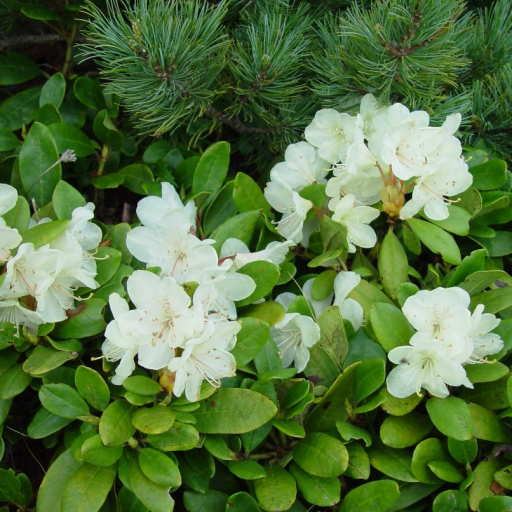
Plant Overview
Known as the Golden Rhododendron, this hardy evergreen is a crown jewel of the Siberian and Mongolian peaks. While most wild rhododendrons favor shades of rose and violet, this high-altitude specialist illuminates rocky slopes with its distinct buttery-yellow bells. It is a "prostrate" shrub, meaning it hugs the ground to escape the biting winds of the Altai mountains, making it a favorite for northern rock gardeners.
🔍 How to Identify
- 🍋 The Blooms: Clusters of 5 to 10 bell-shaped flowers that range from pale cream to a rich lemon yellow, appearing in late spring.
- 🍃 The Foliage: Thick, leathery, oval leaves with a glossy top and a slightly paler underside; they are remarkably tough to withstand freezing temperatures.
- 🏔️ Growth Habit: A low-slung, creeping shrub that rarely exceeds one foot in height, spreading outward to form dense, protective mats.
🏡 In Your Garden
- 🧊 Alpine Soul: This plant craves the "cool and crisp." It thrives in rock gardens or alpine troughs where its roots can stay cool under stones while the foliage enjoys the light.
- 💧 Drainage is Key: Because it originates from rocky slopes, it requires acidic, gritty soil. It hates "wet feet" and will suffer quickly if the soil becomes boggy or compacted.
⚠️ Safety & Toxicity
- 🚫 Toxic Assessment: Dangerous if ingested. Like most members of the Rhododendron family, this species contains grayanotoxins.
- 🐾 Pets & Kids: All parts of the plant—leaves, flowers, and even pollen—are toxic to humans, dogs, cats, and livestock. Ingestion can lead to nausea, vomiting, and in severe cases, heart rhythm issues.
✨ Fun Fact
In its native Siberia, this plant is sometimes called "Kashkara." While it is toxic, historical records show it was used in very specific, minute amounts in local folk medicine to treat exhaustion—a testament to its survivalist reputation in the harshest climates on Earth!

Detailed Care Instructions
To grow Rhododendron aureum (also known as Golden Rhododendron), you need to provide the right growing conditions and follow these steps:
- Choose the right location: Rhododendrons prefer partial shade or dappled sunlight, as direct sunlight can scorch their leaves. Make sure the location also has good air circulation.
- Soil preparation: Rhododendrons thrive in well-draining, acidic soil. Amend the soil with organic matter like compost or peat moss to improve drainage and acidity. Avoid using lime or alkaline soil amendments.
- Planting: Dig a hole that is slightly larger than the plant's root ball. Place the plant in the hole so that the top of the root ball is level with the soil surface. Backfill the hole with amended soil, gently firming it around the roots.
- Watering: Rhododendrons have shallow root systems, so they require regular watering. Keep the soil consistently moist, but not waterlogged. Use drip irrigation or soaker hoses to provide a slow, deep watering.
- Mulching: Apply a layer of organic mulch, such as bark or wood chips, around the base of the plant. This helps to retain moisture, suppresses weeds, and insulates the roots.
- Fertilizing: Rhododendrons benefit from regular fertilization. Use a slow-release fertilizer formulated specifically for acid-loving plants. Apply it according to the package instructions, typically once or twice a year.
- Pruning: Prune Rhododendron aureum after flowering to shape the shrub and remove any dead or damaged branches. Avoid heavy pruning, as this can affect the next year's blooming.
- Winter protection: In colder regions, provide winter protection for the plant. Apply a thick layer of mulch around the base and cover the plant with burlap or cloth to protect it from freezing temperatures and drying winds.
Remember to research any specific requirements or tips for your particular variety of Rhododendron aureum, as different varieties may have specific needs.

Place in a window with dappled sun or a spot in the middle of a room. Or directly in a window facing west or east.

Rhododendron Aureum is a plant that requires regular watering to maintain its health and growth. When watering this plant, it is essential to keep the soil consistently moist. However, it is equally important to avoid overwatering as this can lead to root rot.
To water Rhododendron Aureum, one should first check the soil moisture level by digging a few inches into the soil. If the soil feels dry, it is time to water. Use a watering can or hose with a gentle flow to water the base of the plant, directly onto the soil. Water slowly and thoroughly, allowing the water to soak in deeply.
In hot and dry weather conditions, Rhododendron Aureum plant may require more frequent watering to prevent the soil from drying out. During rainy periods, it is best to reduce the frequency of watering to avoid waterlogging the soil.
Finally, it is important to monitor the plant's response to watering and adjust accordingly. If the leaves are turning yellow or brown and drooping, it may be a sign of overwatering. On the other hand, if the leaves are wilting and drooping despite regular watering, the plant may require more water.
To fertilize this plant, use a fertilizer that is specifically formulated for acid-loving plants. Apply the fertilizer in the early spring before new growth appears, as well as after the plant has finished flowering. Be sure to water the plant before and after applying the fertilizer to help it absorb the nutrients. Avoid fertilizing during hot, dry weather as this can damage the plant. Always follow the instructions on the fertilizer package for specific dosages and application methods.
The ideal soil for this plant is a well-draining, humus-rich soil that is acidic and has a pH between 4.5 and 6.0. It should be moist but not waterlogged, and have good aeration to prevent the roots from becoming waterlogged. Adding peat moss or composted pine bark to the soil is beneficial, as it can help keep the soil moist and maintain its acidity. Additionally, it is recommended to avoid using alkaline soils, as this can cause the plant's leaves to yellow and decrease its overall health.
Rhododendron Aureum is a popular ornamental plant that can be propagated through several methods, including seeds, cuttings and layering.
To propagate Rhododendron Aureum from seeds, collect fresh seeds from the mature plant during the fall season. Sow the seeds in a potting mix of peat moss, perlite and vermiculite in a well-drained container. Water the seeds and keep them in a cool, dark room until they germinate, which usually takes about 2 to 3 weeks. Once the seedlings have developed a few sets of true leaves, transplant them to individual containers filled with a well-draining soil mix.
To propagate Rhododendron Aureum from cuttings, select a healthy stem that is about 4 to 6 inches long and free from any diseases or pests. Use a sharp pruning clipper to cut the stem at a 45-degree angle. Remove any leaves from the bottom half of the stem and dip the cut end in rooting hormone. Insert the cutting in a container filled with a well-draining soil mix, cover the container with a plastic bag and keep it at a warm and humid place until the cutting roots, which usually takes 4 to 6 weeks. Once rooted, remove the plastic bag and transplant the cutting to its permanent location.
To propagate Rhododendron Aureum through layering, select a low-hanging branch and make a small incision in the bark of the branch where it touches the ground. Insert a wooden stake in the incision and cover the stem with soil or compost. Keep the soil moist and wait for the roots to develop, which usually takes several months. Once the roots have developed, cut the stem from the parent plant and transplant the new plant to a permanent location.








