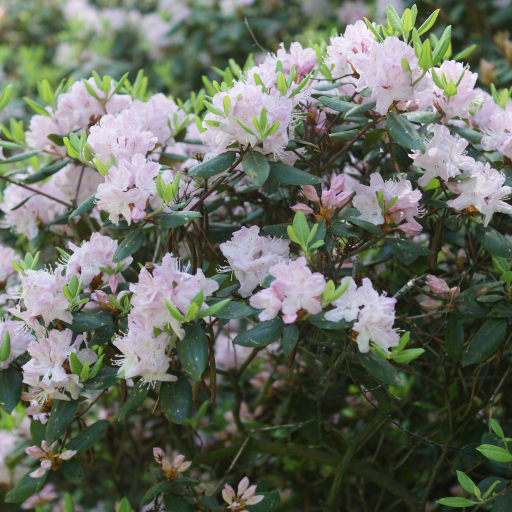
Plant Overview
Often called the "Carolina Rhododendron," this Appalachian treasure is one of the most beloved native shrubs of the Eastern United States. Known for its early spring blooms that signal the end of winter, it brings a delicate, airy elegance to woodland gardens that few other shrubs can match. It is particularly prized by home gardeners for its compact, mounded shape, making it far more manageable than its massive, wild-growing mountain cousins.
🔍 How to Identify
- 🌸 Early Blooms: It produces clusters of 5 to 10 bell-shaped flowers, typically appearing in shades of pale pink, soft lavender, or occasionally pure white.
- 🍃 Scaly Leaves: The leaves are relatively small, leathery, and elliptic. If you flip a leaf over, you’ll notice tiny, rusty-colored scales on the underside—a key feature that distinguishes it from other species.
- 🌿 Compact Stature: Unlike the towering Rhododendron maximum, the Carolina variety usually stays between 3 to 6 feet tall, maintaining a dense, rounded silhouette.
🏡 In Your Garden
- 💧 The Drainage Dilemma: This plant is famous for hating "wet feet." It requires highly acidic, organic soil that drains rapidly; if planted in heavy clay or boggy spots, it will succumb to root rot almost overnight.
- ⛅ Dappled Sunlight: As a woodland native, it thrives in "bright shade." While it can handle some morning sun, harsh afternoon rays can scorch its evergreen leaves, so tucking it under the canopy of larger deciduous trees is ideal.
⚠️ Safety & Toxicity
- 🚫 Status: Toxic to humans and animals.
- 🐶 Details: Like all members of the Rhododendron genus, this plant contains grayanotoxins. Ingestion of any part—leaves, stems, or flowers—can lead to vomiting, drooling, and in severe cases, heart rhythm issues. Keep it away from curious pets and ensure children do not play with the blossoms.
✨ Fun Fact
The Carolina Rhododendron is one of the "early birds" of the mountain world; it often begins flowering in mid-to-late April, several weeks before most other native rhododendrons even think about opening their buds!

Detailed Care Instructions
Rhododendron carolinianum, also known as the Carolina rhododendron, is a native plant to the southeastern United States and is known for its beautiful pink flowers. Here are some tips on how to grow this plant:
- Location: Rhododendron carolinianum thrives in partial shade to full sun. Choose a location in your garden that receives morning sun and afternoon shade to protect the plant from the intense midday sun.
- Soil: These plants prefer acidic, well-draining soil enriched with organic matter. Avoid planting them in heavy clay soil or soil that stays waterlogged.
- Watering: Keep the soil consistently moist but not waterlogged. Water deeply once or twice a week, depending on the weather and soil drainage.
- Mulching: Mulch around the base of the plant with organic material like pine needles, bark, or compost to help retain moisture and keep weeds at bay.
- Fertilizing: Rhododendron carolinianum benefits from a balanced fertilizer formulated for acid-loving plants. Apply a slow-release fertilizer in the spring before new growth begins.
- Pruning: Prune lightly after flowering to shape the plant and remove dead or damaged branches. Avoid heavy pruning, as these plants form flower buds in the previous year's growth.
- Pests and diseases: Keep an eye out for common pests like aphids, spider mites, and lace bugs. Treat any infestations promptly to prevent damage to the plant. Rhododendron carolinianum is also susceptible to root rot in poorly drained soil, so ensure proper drainage.
By following these tips, you can successfully grow and care for Rhododendron carolinianum in your garden and enjoy its vibrant blooms each spring.
- Watering the Rhododendron Carolinianum plant is essential for its overall health and maintenance.
- It is important to water the plant regularly, ensuring that the soil is consistently moist but not waterlogged.
- When watering, aim to keep the soil evenly moist, as fluctuations in soil moisture levels can stress the plant.
- Watering frequency will depend on various factors such as climate, soil type, and sunlight exposure.
- Be mindful of the plant's water needs during periods of hot weather or drought, as it may require more frequent watering.
- Avoid allowing water to sit on the plant's foliage, as this can lead to rot and other diseases.
- Consider using a soaker hose or drip irrigation system to water the plant at the root level, ensuring efficient water distribution.
- Monitor the plant regularly for signs of underwatering or overwatering, such as wilted or yellowing leaves. Adjust your watering schedule accordingly.
To fertilize the Rhododendron Carolinianum plant, apply a balanced fertilizer specifically formulated for acid-loving plants in early spring before new growth begins. Avoid fertilizing late in the growing season as it may encourage tender new growth that can be damaged by cold weather. Follow the manufacturer's instructions for application rates and frequency, and water the plant thoroughly after fertilizing to help distribute the nutrients into the root system. It is also a good practice to mulch around the base of the plant to help retain moisture and protect the shallow roots. Avoid over-fertilizing as this can lead to nutrient imbalances and potentially harm the plant.
Rhododendron carolinianum plants thrive in well-draining soil that is rich in organic matter. A suitable soil mix for this plant would consist of a blend of peat moss, pine bark, and perlite or sand to ensure proper drainage. The acidic nature of the soil should be maintained, with a pH level of around 4.5-6.0. This type of soil provides the necessary nutrients for the plant to grow and flourish, while also preventing waterlogging and root rot. Regularly amending the soil with organic matter such as leaf mold or compost can further support the overall health and vigor of the Rhododendron carolinianum plant.
Rhododendron Carolinianum can be propagated through several methods including seed propagation, cutting propagation, and layering propagation.
Seed propagation involves collecting seeds from mature plants and sowing them in a well-draining soil mix. Seeds should be kept moist and warm until they germinate.
Cutting propagation involves taking stem cuttings from a healthy mother plant and rooting them in a moist soil mix or water. Cuttings should be taken in the spring or early summer and kept in a warm, humid environment until roots develop.
Layering propagation involves bending a low-growing branch of the plant to the ground and covering it with soil. Roots will develop along the branch and a new plant can be separated from the mother plant once it has established roots.
Regardless of the propagation method chosen, it is important to provide the newly propagated plants with the appropriate light, water, and temperature conditions to ensure their successful growth and development.








