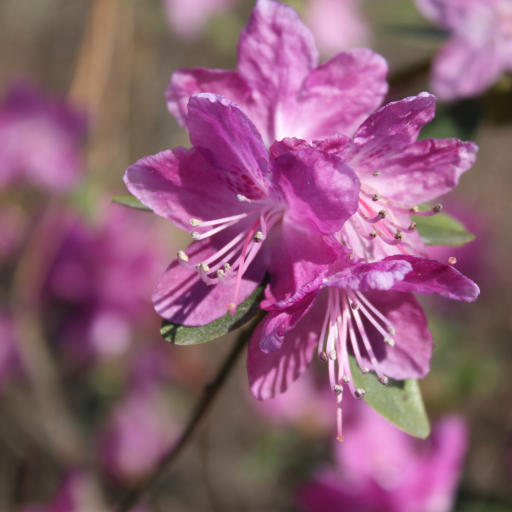
Plant Overview
Known as the Dahurian Rhododendron, this resilient shrub is nature’s way of announcing spring while winter is still lingering. Often called the "Siberian Rose," it hails from the frigid landscapes of Eastern Siberia, Mongolia, and Northern China, making it one of the toughest and most cold-hardy members of the heath family. It is beloved for its ability to erupt into a sea of purple petals when most other plants are still dormant.
🔍 How to Identify
- 🌸 Early Blooms: Bright rosy-purple to lavender, funnel-shaped flowers that usually appear on bare branches before the leaves fully emerge.
- 🍃 Small Foliage: Unlike the giant, leathery leaves of some cousins, these leaves are small (about 1-2 inches), oval, and release a spicy scent when crushed.
- 🌳 Semi-Evergreen Habit: In milder winters, it keeps its dark green leaves, but in harsh cold, it may drop them entirely to survive, showing off its twiggy, upright structure.
🏡 In Your Garden
- ❄️ The Winter Warrior: This plant is legendary for its hardiness. It can survive temperatures as low as -30°F, making it the perfect choice for high-altitude or northern gardens where other shrubs might fail.
- 🥣 Acidic Appetite: Like all rhododendrons, it is an "acid-loving" plant. It requires a low pH soil (4.5 to 5.5). If the soil is too alkaline, the leaves will turn yellow because the plant cannot absorb iron properly.
- ☀️ Light & Air: While it loves the sun more than larger-leafed varieties, it appreciates a spot that is protected from harsh, drying winter winds which can "burn" the flower buds before they open.
⚠️ Safety & Toxicity
- 🚫 Highly Toxic: All parts of the Rhododendron dauricum contain grayanotoxins, which are harmful if ingested.
- 🐾 Pets & Kids: Keep this plant away from curious nibblers. Ingesting leaves or flowers can lead to vomiting, drooling, heart rhythm issues, and in severe cases, paralysis for dogs, cats, and horses.
- 🍯 "Mad Honey": Even honey made by bees that frequent these flowers can be toxic to humans, leading to a condition historically known as "mad honey disease."
✨ Fun Fact
In its native Siberia, Rhododendron dauricum is famous for its "bravery." It is often seen blooming right through a layer of fresh spring snow, a sight that has inspired countless poems and pieces of folklore about the triumph of life over winter.

Detailed Care Instructions
To grow Rhododendron dauricum, also known as the Dahurian Rhododendron, you need to provide the right growing conditions and follow some basic care guidelines. Here are the steps to cultivate this beautiful plant:
- Choose the right location: Rhododendron dauricum prefers a partly shaded location, especially during the hot afternoon hours. It thrives in well-draining soil with a slightly acidic pH between 5.0 and 6.0.
- Prepare the soil: Prior to planting, amend the soil by adding organic matter like compost, peat moss, or well-rotted manure. This will improve drainage and enrich the soil with nutrients.
- Planting: Dig a planting hole that is wider and slightly shallower than the root ball of the plant. Place the root ball in the hole, ensuring that the top of the root ball is level with or slightly above the soil surface. Gently backfill the hole, firming the soil around the roots.
- Watering: Keep the soil moist but not waterlogged. Rhododendron dauricum prefers consistent moisture, so water regularly, especially during dry periods. Mulching around the base of the plant can help retain moisture.
- Fertilizing: Use a slow-release fertilizer specifically formulated for acid-loving plants, such as a rhododendron or azalea fertilizer. Apply the fertilizer according to the manufacturer's instructions in early spring and again in summer.
- Pruning: Rhododendron dauricum generally requires minimal pruning. However, you can remove any dead, damaged, or diseased branches to maintain plant health and shape. Prune after flowering to avoid removing next season's buds.
- Winter protection: Rhododendron dauricum can be vulnerable to winter damage in colder regions. To protect the plant, apply a thick layer of mulch around the base in late fall to insulate the roots and protect them from freezing temperatures.
- Pest and disease control: Regularly inspect the plant for common rhododendron pests such as aphids, spider mites, and scales. Treat any infestations promptly using appropriate insecticides, following the instructions carefully. Monitor for signs of fungal diseases like powdery mildew or leaf spots and treat accordingly.
By following these steps, you can successfully grow Rhododendron dauricum and enjoy its beautiful flowers in your garden.

Place in a window with dappled sun or a spot in the middle of a room. Or directly in a window facing west or east.

1. Understand the watering needs of the plant
Rhododendron Dauricum plants are known for their shallow root systems, which means they need more frequent watering as the surface soil dries out faster than deeper soils. However, it is important not to overwater them as they are susceptible to root rot.
2. Check the soil moisture level
Before watering, check the soil moisture level by sticking your finger about an inch into the soil. If it feels dry, it's time to water.
3. Water the plant early in the morning or late in the evening
Watering the plant early in the morning or late in the evening when the temperatures are cooler helps the water to penetrate the soil without evaporating quickly.
4. Water the soil, not the leaves
It is important to direct the water onto the soil rather than onto the leaves as wet leaves can lead to fungal diseases.
5. Use room temperature water
Rhododendron Dauricum plants are sensitive to temperature changes, so it's important to use room temperature water to prevent shock to the plant.
6. Water deeply but don't overwater
Water the plant deeply to encourage the roots to grow deeper. However, don't overwater as the plant is susceptible to root rot. A good way to check if you're watering enough is if the water is seeping out of the drainage holes at the bottom of the pot.
7. Adjust watering according to season
During the spring and summer growing season, the plant will generally need more water due to increased temperatures and higher levels of sunlight. In the winter, the plant will need less water as it enters into a dormant phase.
To fertilize this plant, use a balanced fertilizer with equal parts nitrogen, phosphorus, and potassium. Apply the fertilizer in early spring before new growth begins, and again in late spring when new growth is visible. Avoid fertilizing later in the growing season, as this can stimulate new growth that may not have sufficient time to harden off before winter. The amount of fertilizer to use depends on the size of the plant - follow the manufacturer's instructions for the specific brand of fertilizer you are using. Use a slow-release or organic fertilizer for best results. Water the plant well after fertilizing to avoid burning the roots.
Rhododendron Dauricum plant requires a specific type of soil to grow properly. It needs well-draining, acidic soil that is high in organic matter. The ideal pH level for the soil is between 4.5 to 5.5. Peat moss can be added to the soil as it helps to retain moisture and create the acidic environment in which Rhododendron Dauricum thrives. The soil should be kept moist but not waterlogged, and the plant should be planted in a well-draining location to avoid waterlogging. Fertilizer should be applied sparingly, as Rhododendron Dauricum is sensitive to high levels of nutrients. Overall, the plant requires a delicate balance of soil conditions to grow and thrive.
Rhododendron Dauricum is a type of flowering plant that can be propagated through stem cuttings. Here are the steps to propagate the plant:
- Choose a healthy plant: Select a healthy rhododendron dauricum plant that has no signs of disease or pests.
- Take cuttings: Cut 4-6 inch long stem cuttings from the plant during the dormant season, which can be in late fall or early spring. The chosen cutting should have a leaf and a bud on it.
- Prepare the cuttings: Remove the lower leaves on the cuttings and dip the cut end of the stem into rooting hormone powder.
- Plant the cuttings: Place the cuttings in a well-draining potting mixture consisting of equal parts peat moss, perlite, and sand. Water the soil until it is moist but not waterlogged.
- Provide optimal conditions: Place the potted cuttings in a warm and bright location, but avoid direct sunlight. Keep the soil moist and maintain a warm and humid environment. Cover the pot with a clear plastic bag or a plastic lid to create a humid environment.
- Monitor growth: After a month, check for signs of new growth. Once the cuttings have rooted and grown to a few inches tall, they can be transplanted to a larger pot or into the ground.
By following these steps, you can successfully propagate rhododendron dauricum plant and grow more of these lovely flowering plants.








