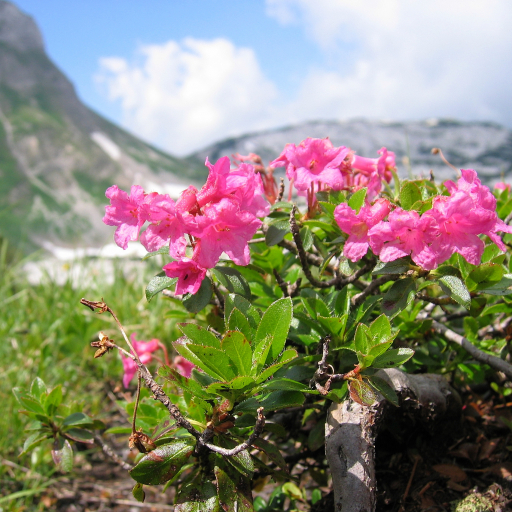
Plant Overview
Commonly known as the Hairy Alpenrose, this resilient dwarf shrub is a true mountain dweller of the European Alps. Unlike many of its cousins that hide in acidic woodland soils, this plant is a "pioneer of the peaks," famous for its ability to grow directly out of limestone crevices. In alpine folklore, its bright pink blooms are celebrated as a symbol of the high summer and the endurance of life in harsh climates.
🔍 How to Identify
- 🌿 The "Hairy" Leaves: The most defining feature is the fringe of long, stiff hairs (cilia) along the edges of its small, oval, evergreen leaves.
- 🌸 Bell-Shaped Blooms: It produces clusters of vibrant rose-pink to funnel-shaped flowers that appear at the tips of the branches from June to August.
- 🪵 Compact Stature: It maintains a low, spreading growth habit, rarely exceeding three feet in height, which helps it stay protected beneath the winter snowpack.
🏡 In Your Garden
- ⛰️ The Lime-Lover: While 99% of Rhododendrons demand acidic soil, R. hirsutum is a rare "calcicole." It thrives in alkaline (lime-rich) soil, making it the perfect choice for gardeners who struggle with high pH levels.
- 💧 Drainage is Key: Because it naturally grows on rocky slopes, it hates "wet feet." In a garden setting, it requires gritty, well-draining soil to prevent root rot, mimicking its native mountain scree.
⚠️ Safety & Toxicity
- 🚫 Toxic Status: Harmful if ingested.
- 🐾 The Danger: Like all members of the Rhododendron genus, it contains grayanotoxins. If leaves or flowers are eaten, it can cause salivation, vomiting, and heart rhythm issues in pets (dogs, cats, horses) and humans. Always handle with care and keep away from curious nibblers.
✨ Fun Fact
- 🏔️ The Hairy Alpenrose is so hardy it can survive at altitudes of up to 2,800 meters (over 9,000 feet). Because it specifically prefers limestone, hikers often use the presence of this plant as a biological map to tell exactly when the geology of the mountain has shifted from granite to lime!

Detailed Care Instructions
To grow Rhododendron hirsutum, also known as Alpine Rose or Hairy Alpine Rose, follow these steps:
- Climate and Location: Rhododendron hirsutum is native to alpine regions, so it prefers cool, moist climates with mild to moderate summers. Choose a location in your garden or landscape that receives partial shade, especially in the afternoon. The soil should be acidic with good drainage.
- Soil Preparation: Before planting, ensure the soil is well-drained and acidic. Amend the soil with organic matter such as compost or well-rotted manure to improve moisture retention and drainage. Rhododendrons thrive in slightly acidic soil with a pH between 4.5 and 6.0.
- Planting: Dig a hole three times wider than the rootball and slightly shallower. Place the plant in the hole, ensuring the top of the rootball is level with or slightly above the soil surface. Backfill the hole with the amended soil and gently firm it around the base of the plant. Water thoroughly after planting.
- Watering: Rhododendrons require consistent moisture, especially during dry periods. Water deeply and regularly, keeping the soil moist but not waterlogged. Avoid overhead watering, as this can lead to foliar diseases. Mulch around the base of the plant to help retain moisture and reduce weed growth.
- Fertilizing: Apply a slow-release, acidic fertilizer formulated for rhododendrons in early spring before new growth appears. Follow the package instructions for proper dosage. Avoid excessive fertilization, as it can lead to root burn. Regularly monitor the plant's response to the fertilizer and adjust accordingly.
- Pruning: Prune your Rhododendron hirsutum after it finishes flowering. Deadhead spent flowers by removing the faded blooms just above the next bud. Remove any dead, damaged, or diseased branches as well. This encourages healthy growth and promotes better flowering the following year.
- Protection from Cold: In areas where winters are harsh, protect your Rhododendron hirsutum from freezing temperatures and drying winds. Apply a layer of mulch around the base of the plant and wrap it with burlap or use frost covers during winter months.
- Pest and Disease Control: Monitor your plants for common pests like aphids, mites, or caterpillars. Apply appropriate organic or chemical controls if necessary. Rhododendrons can be susceptible to diseases such as root rot or powdery mildew. Ensure proper watering and good air circulation to avoid these issues.
By following these guidelines, your Rhododendron hirsutum should thrive and provide beautiful blooms in the right conditions.

Place in a bright room that is sun drenched almost all day. Or directly in a south-facing window.

Rhododendron Hirsutum plants require consistent moisture but not waterlogging. They thrive in soil that is consistently moist but well-drained. Watering should be done deeply but infrequently to encourage deep root growth and prevent shallow roots. It is important to avoid overhead watering as this can damage the leaves and encourage disease. Instead, water at the base of the plant using drip irrigation, soaker hoses, or a watering can. Watering should be done in the morning to allow the leaves to dry before nightfall. During dry periods or hot weather, it may be necessary to water more frequently. Checking the soil moisture level regularly will help determine when to water.
To provide optimal fertilizing instructions for Rhododendron Hirsutum plants (without mentioning the common names), please follow these guidelines:
- Timing: Fertilize the plant in early spring before new growth emerges, or in late fall after blooming has completed.
- Choose the right fertilizer: Use a balanced slow-release fertilizer formulated specifically for acid-loving plants. Look for a product with an NPK ratio around 10-10-10 or 12-6-6. Additionally, ensure the fertilizer contains key micronutrients like iron and magnesium.
- Proper application: Sprinkle the fertilizer evenly around the drip line of the plant, avoiding direct contact with the stems or foliage. Follow the package instructions for the appropriate amount based on the size and age of your plant.
- Watering: After applying the fertilizer, thoroughly water the soil to help distribute the nutrients to the plant's roots.
- Mulching: Add organic mulch, such as pine needles or bark chips, around the base of the plant to conserve moisture, regulate soil temperature, and enhance nutrient uptake.
- Frequency: Repeat the fertilization process once per year, either in spring or fall, depending on your initial application.
- Caution: Avoid over-fertilizing, as it can lead to nutrient imbalances and harm the plant. Always follow the recommended dosage on the fertilizer package.
Remember to observe your plant's specific needs and adjust the fertilization schedule accordingly. Regular fertilization, combined with proper watering and care, will help your Rhododendron Hirsutum plant thrive and produce beautiful blooms.
When planting Rhododendron Hirsutum, it is important to choose the appropriate soil for optimal growth and health. The ideal soil for this plant should be acidic with a pH range of 4.5 to 6.0. It should also be well-draining, moist, and rich in organic matter such as compost or peat moss.
A mixture of sphagnum peat moss, perlite or vermiculite, and coarse sand is a good choice for growing Rhododendron Hirsutum. This mixture will ensure that the soil is well-draining and will also provide the necessary nutrients for healthy growth.
It is important to avoid using heavy, clay soils or alkaline soils when planting Rhododendron Hirsutum as they can cause root rot and other plant diseases. Additionally, you should avoid using fertilizers that contain too much nitrogen, as this can lead to excessive foliage growth and poor flower development.
Finally, it is important to maintain proper soil moisture levels for this plant by watering it regularly and ensuring that the soil does not dry out. Mulching around the base of the plant can also help to retain moisture in the soil and prevent weed growth.
To propagate this particular plant, you will need to take a stem cutting from a healthy parent plant. Choose a stem that is at least 4 inches long and has several healthy leaves on it.
Using a clean, sharp pair of scissors or pruning shears, cut the stem at a 45-degree angle just below a node (a point where a leaf meets the stem).
Remove all but the top few leaves from the stem, leaving just enough foliage to allow the cutting to photosynthesize. Then, dip the cut end of the stem into rooting hormone powder, shaking off any excess.
Fill a small pot with a well-draining, high-quality potting mix. Make a small hole in the soil with your finger or a pencil and carefully insert the stem cutting into the soil.
Water the cutting thoroughly and cover the pot with a plastic bag to create a mini greenhouse effect. This will help to keep the cutting moist and warm, which will encourage rooting.
Place the pot in a warm, bright location with indirect sunlight. Check the soil regularly and water as needed to keep it moist but not waterlogged.
After a few weeks, gently tug on the stem cutting to test for root growth. If you feel resistance, it means that roots have formed and the cutting has successfully rooted.
At this point, you can remove the plastic bag and begin to slowly acclimate the new plant to normal growing conditions.








