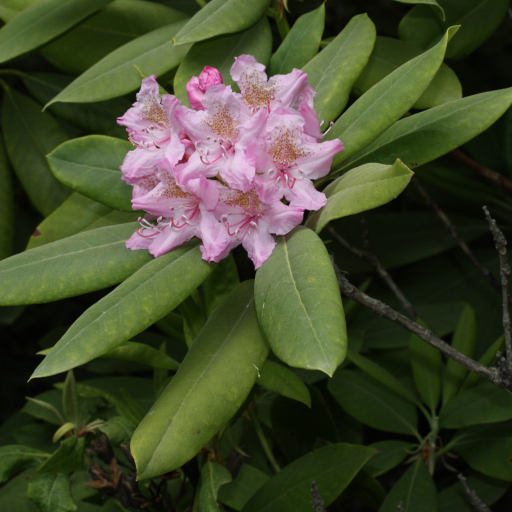
Plant Overview
Known as the "Pacific Rhododendron" or "California Rosebay," this stunning evergreen is the undisputed royalty of the Pacific Northwest forests. It is famous for its massive, showy clusters of pink blossoms that light up the misty understory of coniferous woods. As the official state flower of Washington, it holds a special place in the hearts of hikers and coastal gardeners alike.
🔍 How to Identify
- 🌸 The Blossoms: Large, bell-shaped flowers grow in rounded clusters called "trusses." They range from pale pink to deep rose-purple, often featuring delicate yellow or greenish spots on the upper petal.
- 🍃 Leathery Foliage: The leaves are thick, oblong, and evergreen, reaching up to 6 inches in length. They are dark green on top and a paler, matte green underneath, providing year-round structure.
- 🌳 Growth Habit: This is a tall, often leggy shrub that can reach heights of 15 to 25 feet in its natural habitat, though it stays more compact and bushy when grown in sunny garden spots.
🏡 In Your Garden
- 🌲 The Forest Floor Vibe: Because it evolved in the shadow of giants like Douglas Firs and Redwoods, it thrives in acidic, organic-rich soil. It is particularly sensitive to soil pH; if the ground is too alkaline, the leaves will turn yellow (chlorosis).
- 💧 Drainage is Vital: While it loves the humidity of the coast, it absolutely "hates wet feet." It has a shallow, fibrous root system that will rot quickly in heavy clay or standing water. Planting it on a slight mound can help manage moisture.
- ⛅ Light Nuance: In the wild, it reaches for light, becoming "leggy." In a garden, dappled sunlight is the "Goldilocks" zone—too much hot afternoon sun will scorch the leaves, while deep shade will prevent those famous flowers from blooming.
⚠️ Safety & Toxicity
- 🚫 Status: Toxic to Humans and Pets.
- 🐾 The Details: All parts of the plant, including the leaves and nectar, contain grayanotoxins. If ingested by dogs, cats, or horses, it can cause vomiting, drooling, and in severe cases, heart failure. Even honey made from its nectar (sometimes called "Mad Honey") can be toxic to humans.
✨ Fun Fact
The Pacific Rhododendron was selected as the Washington State flower in 1892 by Washington women who wanted a floral representative for the World's Fair in Chicago. It beat out the "Coast Wallflower" in a popular vote!

Detailed Care Instructions
| Color | Purple, Pink |
| Soil Ph | 4.5 - 5.5 |
| Soil Type | Loamy, Well-Draining Soil |
| Bloom Time | Spring |
| Plant Type | Shrub |
| Mature Size | Up To 20 Feet (6 M) |
| Native Area | Western North America |
| Sun Exposure | Full And Partial Sun |
| Hardiness Zones | 7 To 9 |
To grow Rhododendron macrophyllum, also known as Pacific rhododendron or coast rhododendron, you can follow these steps:
- Choose a suitable location: Rhododendron macrophyllum prefers partial shade to full shade, although it can tolerate some sun in the morning or late afternoon. The soil should be well-draining and rich in organic matter. Avoid planting in areas with strong winds or extreme temperatures.
- Prepare the soil: Before planting, amend the soil with organic matter such as compost or peat moss to improve its fertility and drainage.
- Planting: Dig a hole slightly larger than the root ball of your rhododendron. Place the plant in the hole, making sure the top of the root ball is level with or slightly above the soil surface. Backfill the hole with amended soil, gently firming it around the roots.
- Watering: Rhododendrons need regular watering, especially during the first year after planting. Water deeply and regularly, ensuring the soil remains consistently moist but not waterlogged. Mulching around the base of the plant can help retain moisture and regulate soil temperature.
- Fertilizing: Rhododendrons benefit from using a slow-release fertilizer formulated specifically for acid-loving plants. Apply the fertilizer according to the package instructions in early spring before new growth appears.
- Pruning: Pruning is usually not necessary for Rhododendron macrophyllum, except to remove dead or diseased branches. If desired, light pruning for shape can be done after flowering.
- Protection from extreme conditions: Protect the plant from extreme temperatures, frost, and strong winds. When temperatures drop below freezing, you can cover the plant with a frost cloth or burlap to prevent frost damage.
Remember that Rhododendron macrophyllum is native to the Pacific Northwest region of North America and its growth requirements may vary slightly depending on your specific location. Regular monitoring and care, including checking for pests and diseases, will ensure a healthy and thriving plant.

Place in a window with dappled sun or a spot in the middle of a room. Or directly in a window facing west or east.

To water this plant, it is important to keep the soil consistently moist. However, it is essential not to let the soil become waterlogged. It is recommended to use a watering can or a hose with a gentle nozzle, which will allow for slow and steady watering. Additionally, it is best to avoid getting the leaves wet, as this can promote disease and fungal growth. Ideally, this plant should be watered in the morning or late afternoon to avoid exposing it to the harsh midday sun. Finally, it is essential to monitor the plant's water needs carefully, adjusting the frequency and amount of watering based on weather conditions and the plant's growth rate.
To provide proper fertilization for this plant, apply a slow-release, organic fertilizer in the early spring. Use a balanced 10-10-10 formula and spread it evenly around the base of the plant, avoiding the stem. Water thoroughly after application. Avoid fertilizing in late summer or fall as this can encourage new growth that may be damaged by frost. Additionally, monitor the plant's growth and health throughout the growing season and adjust fertilization accordingly if the plant appears to need more or less.
Rhododendron Macrophyllum plant prefers a well-draining soil that is slightly acidic and rich in organic matter. It is important to avoid heavy clay soils that can cause poor drainage and waterlogging, as well as alkaline soils that can lead to nutrient deficiencies. A good soil mix for this plant may include a blend of acidic soil elements such as peat moss, sphagnum moss, and pine bark fines. Adding compost, leaf mold, and aged manure can also provide essential nutrients and help improve soil structure. It is recommended to test the soil regularly to ensure that it maintains the proper pH balance and nutrient levels for the Rhododendron Macrophyllum plant.
To propagate this plant, you will need to first take stem cuttings that are approximately four to six inches in length. The best time to take these cuttings is in the early spring when the plant is just starting to grow. Once you have your cuttings, dip them in rooting hormone and plant them in a well-draining soil mix. Keep the soil moist, but not waterlogged, and place the cuttings in a warm and bright location, out of direct sunlight.
After a few weeks, you should start to see new growth on your cuttings, which means they have rooted successfully. At this point, you can transplant them into individual pots and continue to care for them until they are large enough to be planted in the ground. It is important to note that propagation success rates can vary and it may take several attempts to successfully propagate this plant.








