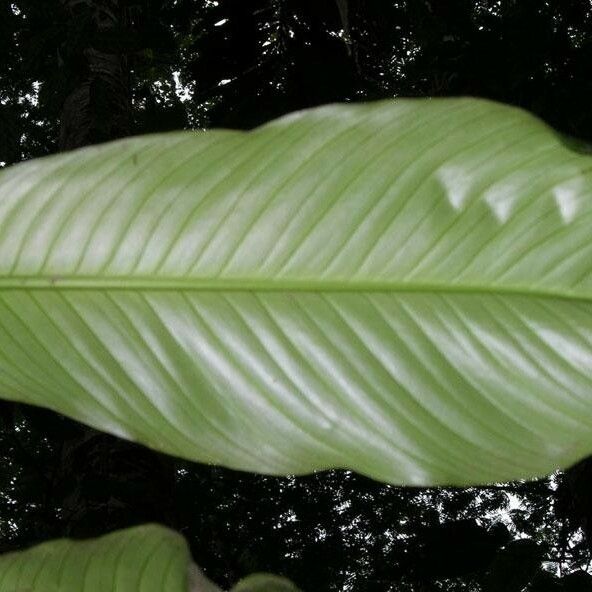
Plant Overview
Often called the "Translucent Rhodospatha" or the "Ghost Aroid," this rare South American beauty is a prized gem among serious plant collectors. Native to the humid rainforests of Ecuador and Peru, it belongs to the Araceae family, making it a cousin to the famous Monstera. It is celebrated for its ethereal, paper-thin leaves that seem to glow when back-lit by the morning sun.
🔍 How to Identify
- 🍃 Leaf Texture: The foliage is exceptionally thin and smooth, appearing almost "pellucid" (translucent) as the species name suggests.
- 📐 Leaf Shape: While juvenile leaves are small and oval, mature leaves transform into long, elegant lance-like blades that can reach impressive lengths.
- 🧗 Growth Habit: It is a climbing hemiepiphyte, meaning it starts its life on the forest floor and eventually winds its way up tree trunks using sturdy aerial roots.
🏡 In Your Garden & Home
- ☁️ Humidity is Vital: Because its leaves are so thin, they lack the heavy waxy coating found on tougher plants. It will crisp up quickly in dry indoor air; it thrives best in a dedicated "plant nook" or near a humidifier.
- 🪵 Vertical Aspirations: To see this plant reach its full potential, you must provide a moss pole or wooden plank. Without a vertical surface to grip, the leaves will remain small and the plant will eventually "crawl" across the pot in search of a tree.
- 🪴 Breathable Soil: It despises "wet feet." Use a chunky aroid mix (bark, perlite, and charcoal) to ensure the roots get plenty of oxygen, mimicking the airy debris found in its natural canopy home.
⚠️ Safety & Toxicity
- 🚫 Status: Toxic to humans and pets.
- 🐶 The Danger: Like most aroids, it contains insoluble calcium oxalate crystals. If leaves are chewed or swallowed, they cause immediate stinging and swelling of the mouth, throat, and tongue. Keep it on a high shelf away from curious cats or toddlers.
✨ Fun Fact
The genus name Rhodospatha literally translates to "Rose Spathe" from the Greek words rhodon (rose) and spatha (spathe). This refers to the stunning pink or reddish tint of its flowering bracts, a stark and beautiful contrast to its deep green foliage!

Detailed Care Instructions








