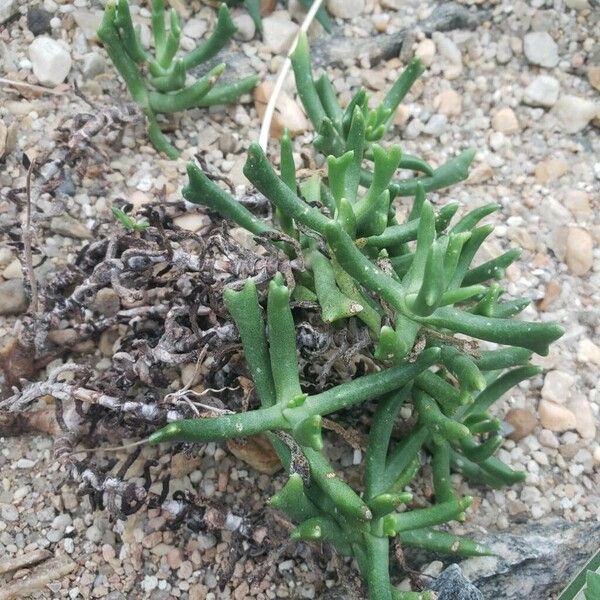
Plant Overview
Often called the Elkhorn Plant or Moose-horn Succulent, Rhombophyllum nelii is a sculptural marvel from the arid Eastern Cape of South Africa. With its uniquely lobed leaves that resemble miniature antlers, it brings a prehistoric, whimsical vibe to any sunny windowsill. This "mimicry plant" is a master of disguise, perfectly evolved to blend into rocky landscapes while surprising its keepers with brilliant, sun-activated blooms.
🔍 How to Identify
- 🦌 Antler Foliage: The most striking feature is the fleshy, silver-green leaves that split into two or three "prongs," mimicking the branching shape of elk horns.
- ✨ Speckled Surface: Upon close inspection, the leaves are covered in tiny, dark green or translucent dots. these are "idoblasts," specialized cells that help the plant process intense light.
- 🌼 Golden Rays: It produces vibrant, multi-petaled yellow flowers that look like miniature daisies. These typically appear in pairs or small clusters during the warmer months.
🏡 In Your Garden
- 🏜️ Taproot Nuance: This succulent grows a significant taproot to store nutrients and water. Because of this, it hates being moved frequently and prefers a deeper pot than most small succulents to allow its "anchor" to settle comfortably.
- ☀️ Sun Seekers: The flowers are highly light-sensitive; they usually wait until the brightest part of the afternoon to open and will snap shut as soon as the sun begins to set. If your plant isn't blooming, it’s likely asking for a brighter spot.
⚠️ Safety & Toxicity
- ✅ Non-Toxic Status: Rhombophyllum nelii is generally considered safe and non-toxic for both humans and household pets like cats and dogs.
- 🧤 Brittle Texture: While it won't hurt you, you might hurt it! The "horns" are surprisingly brittle and can snap off with even a light bump. It is best placed in a "low-traffic" area where tails or elbows won't knock into its delicate structure.
✨ Fun Fact
In its native South African habitat, this plant is a camouflage expert. Its grey-green color and jagged shape allow it to hide in plain sight among broken shards of stone and quartz, protecting it from thirsty animals looking for a succulent snack in the desert.

Detailed Care Instructions
To grow a Rhombophyllum Nelii plant, follow these steps:
- Choose a suitable location: Rhombophyllum Nelii needs bright sunlight to thrive. Select a spot that receives direct sunlight for at least 6 hours a day.
- Prepare the pot: Select a well-draining pot with drainage holes to prevent waterlogging. Fill the pot with a succulent or cactus-specific potting mix.
- Planting: Gently remove the Rhombophyllum Nelii plant from its nursery container and place it in the center of the pot. Ensure the plant is at the same depth as it was in the previous container.
- Watering: After planting, water the plant thoroughly until water drains from the bottom of the pot. Allow the soil to dry completely before watering again. Rhombophyllum Nelii is a drought-tolerant plant and can survive in dry conditions, so it's important not to overwater it.
- Fertilization: Use a balanced, diluted succulent fertilizer during the growing season (spring and summer) to provide essential nutrients to the plant. Follow the instructions on the fertilizer packaging for application details.
- Pruning: Rhombophyllum Nelii typically does not require much pruning. However, if you notice any dead or damaged leaves, trim them off with clean, sharp scissors or pruning shears.
- Propagation: Rhombophyllum Nelii can be propagated through stem cuttings. Take a healthy stem cutting from the plant, let it dry for a few days to callus, and then plant it in a well-draining soil mix. Keep the soil slightly moist until new growth appears.
- Protection: Protect the plant from extreme temperatures. Rhombophyllum Nelii is adapted to hot and dry conditions, so it may not survive in freezing temperatures or excessive humidity.
- Monitoring: Keep an eye out for pests such as mealybugs or spider mites. If any infestation occurs, treat it promptly with an appropriate insecticide or by wiping off the pests with a cotton swab dipped in rubbing alcohol.
By following these steps, you can successfully grow and care for a Rhombophyllum Nelii plant. Remember that each plant has unique needs, so observing and responding to its specific requirements is crucial for healthy growth.

Place in a bright room that is sun drenched almost all day. Or directly in a south-facing window.

To properly water the Rhombophyllum Nelii plant, it is essential to understand its specific watering requirements. Here are the steps to water the plant effectively:
1. Consider the plant's water requirements: Rhombophyllum Nelii is a succulent plant that belongs to the family Aizoaceae. Succulents are known for storing water in their leaves, stems, or roots. Therefore, they have adapted to thrive in arid conditions and require less water compared to other houseplants. Understanding this, it is important not to overwater the plant.
2. Check for signs of watering needs: Before watering, check the soil moisture level. Inserting your finger about an inch into the soil will help assess the moisture content. If the soil feels dry, it is an indication that the plant requires watering. However, if the soil is still slightly damp, it is better to hold off watering for a few more days.
3. Select an appropriate watering method: When watering the plant, it is important to avoid excessive moisture around the plant's stem, as this can lead to issues like root rot. To prevent this, it is recommended to use the bottom watering method. Place the pot in a shallow tray or saucer filled with water, allowing the plant to absorb water through the drainage holes in the bottom of the pot. This method ensures that the plant takes up only the necessary amount of water and avoids over-saturation.
4. Water sparingly: Water should be applied sparingly to the Rhombophyllum Nelii plant. Pour enough water into the tray to immerse the bottom of the pot for about 10-15 minutes. After this time, remove the pot from the tray and allow excess water to drain out completely. Remember, the goal is to moisten the soil without leaving it waterlogged.
5. Observe drainage: Proper drainage is crucial for succulents, as they are susceptible to root rot in waterlogged conditions. The plant pot should have drainage holes at the bottom to facilitate the smooth excess water runoff. Avoid using saucers or trays that collect water, as this can lead to stagnation and potential damage to the plant.
6. Maintain a watering schedule: Rhombophyllum Nelii prefers infrequent but deep watering. It is better to underwater succulents than to overwater them. Typically, watering once every two weeks is suitable for this plant, but factors such as temperature, humidity, and the size of the pot can influence the watering frequency. Monitoring the soil moisture level and adapting the watering schedule accordingly is key to maintaining a healthy plant.
By following these steps, you can provide appropriate watering conditions to ensure the Rhombophyllum Nelii plant thrives and remains healthy.
To fertilize the Rhombophyllum Nelii plant, you will need a balanced, water-soluble fertilizer designed for cacti and succulents. Here are the fertilizing instructions:
- Dilute the fertilizer according to the package instructions. Use half or quarter strength, as succulents generally require less fertilizer than other plants.
- Apply the diluted fertilizer to the soil around the base of the plant, avoiding direct contact with the leaves or stem.
- Water the plant thoroughly after fertilizing to ensure the nutrients are absorbed by the roots.
- Fertilize the Rhombophyllum Nelii plant during the growing season, which is typically spring and summer. Reduce or stop fertilizing during the dormant winter period.
- It is important not to over-fertilize, as this can lead to nutrient burn and damage the plant. If in doubt, err on the side of under-fertilizing rather than overdoing it.
- Observe the plant for any signs of nutrient deficiencies or excessive growth. Adjust the fertilization frequency or strength accordingly.
- Remember to follow the specific instructions provided by the fertilizer manufacturer for best results.
By following these fertilizing instructions, you can help provide the Rhombophyllum Nelii plant with the necessary nutrients for healthy growth and development.
When selecting soil for Rhombophyllum Nelii, it is important to consider its natural habitat and growing conditions. This plant is native to arid regions and thrives in well-draining soil that mimics its natural environment.
Ideally, the soil for Rhombophyllum Nelii should have a sandy texture, allowing water to pass through easily without retaining excess moisture. This is crucial to prevent root rot and other moisture-related issues. Additionally, the soil should have good aeration to promote oxygen flow to the roots and prevent soil compaction.
An appropriate soil mixture for this plant can be prepared by combining coarse sand, perlite, and a small amount of regular potting soil. The sand and perlite help to improve drainage and prevent waterlogging, effectively replicating the natural rocky and sandy soil found in its native habitat.
It is worth noting that fertilizers should be used sparingly with Rhombophyllum Nelii, as it is adapted to nutrient-poor soils. A dilute cactus or succulent fertilizer can be applied occasionally during the growing season, following the instructions on the package.
Remember to repot Rhombophyllum Nelii every few years to refresh the soil and ensure the health and vitality of the plant.
To propagate Rhombophyllum Nelii, you can follow the process of leaf propagation. Here are the step-by-step instructions:
- Prepare the materials: You will need a healthy Rhombophyllum Nelii plant, a clean sharp knife or scissors, a well-draining potting mix suitable for succulents, a small pot or container, and a misting spray bottle.
- Select a healthy leaf: Choose a mature leaf from the Rhombophyllum Nelii plant. Look for a leaf that is plump, thick, and free from any damage or disease. It's best to choose a leaf from the lower part of the plant.
- Cut the leaf: Using a sharp knife or scissors, carefully remove a leaf from the stem of the Rhombophyllum Nelii plant. Make a clean cut close to the main stem, ensuring that you do not damage the stem or the remaining plant.
- Allow the leaf to heal: Place the cut leaf in a dry and shaded area for a few days to allow the cut end to dry and heal. This step helps to prevent potential rotting or infection during the propagation process.
- Prepare the potting mix: While the leaf is healing, prepare a potting mix suitable for succulents. Create a well-draining mix by combining equal parts of cactus soil or regular potting soil with perlite, pumice, or coarse sand. This blend will provide adequate drainage for the developing roots.
- Plant the leaf cutting: Once the cut end of the leaf has healed, gently press it into the prepared potting mix, ensuring the cut end is inserted about half an inch below the soil surface. The remaining portion of the leaf should be above the soil.
- Provide appropriate conditions: Place the potted leaf cutting in a bright location with indirect sunlight. Avoid exposing it to intense sunlight, as it can scorch the fragile leaf. Maintain a warm temperature of around 70-80°F (21-27°C) to promote successful propagation.
- Mist the cutting: To provide sufficient humidity for the leaf cutting, regularly mist it using a spray bottle. Make sure not to overwater, as excessive moisture can lead to rotting.
- Wait for root development: Over the next few weeks, be patient as the leaf cutting begins to develop roots. It may take 4-6 weeks, or even longer, for the roots to emerge.
- Transplant the rooted leaf: Once the leaf cutting has developed a substantial root system, gently remove it from the initial pot and transfer it into a separate container filled with succulent potting mix. Take care not to damage the delicate roots during the process.
- Provide ongoing care: After transplanting, continue to care for the new plant as you would for a mature Rhombophyllum Nelii. This includes providing adequate sunlight, watering sparingly, and ensuring proper drainage.
Note: Leaf propagation may not always be successful, but with patience and care, you can increase your chances of successfully propagating Rhombophyllum Nelii.








