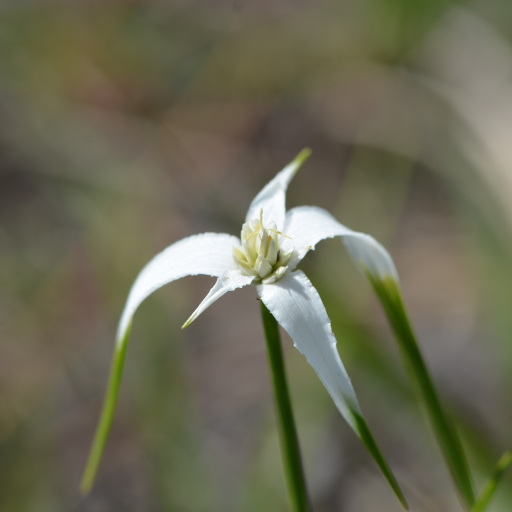
Plant Overview
Often called the Starrush Whitetop or White-topped Sedge, this striking plant looks like it dropped straight out of a celestial painting. While it appears to have large, snowy-white blossoms, it is actually a master of disguise from the sedge family. Native to the damp wetlands and marshes of the Southeastern United States, it adds a bright, "everlasting" spark to bog gardens and pond edges.
🔍 How to Identify
- ⬜ The "Star" Bracts: The most striking feature isn't a flower, but 3 to 10 long, pointed white leaves (bracts) that transition from green to snowy white at the base, creating a starburst effect.
- 🟢 The Hidden Flowers: At the very center of the white stars sit small, inconspicuous brownish-green clusters which are the actual reproductive flowers.
- 📐 Triangular Stems: As the old saying goes, "Sedges have edges." The stems of this plant are distinctly three-sided; if you roll them between your fingers, you will feel the sharp angles.
🏡 In Your Garden
- 💧 Wet Feet Welcome: Unlike most garden plants that fear root rot, Starrush thrives in standing water or consistently muddy soil. It is a "workhorse" for rain gardens or the "boggy spot" in your yard where nothing else seems to survive.
- ☀️ Sun Seeker: To keep those white bracts vivid and high-contrast, it needs plenty of direct sunlight. In heavy shade, the white coloration may fade back to a dull green as the plant struggles to photosynthesize.
- 🌱 Spreading Habits: It grows via underground runners called rhizomes. While it isn't usually considered "invasive," it will happily fill a container or a pond margin over a few seasons, providing excellent cover for small frogs.
⚠️ Safety & Toxicity
- ✅ Non-Toxic: Rhynchospora colorata is generally considered safe and non-toxic for humans, dogs, and cats.
- 🌾 Physical Texture: While not chemically toxic, the leaves are stiff and have a slightly rough texture. Curious pets that enjoy "grazing" on grasses might find the edges a bit scratchy on their throats, so it’s best kept as an ornamental rather than a snack.
✨ Fun Fact
Because sedges are typically wind-pollinated and have very dull flowers, the Starrush evolved its flashy white bracts to "mimic" a traditional nectar-bearing flower. This clever trick lures in bees and butterflies that wouldn't normally bother visiting a sedge!

Detailed Care Instructions
To grow Rhynchospora Colorata, also known as Starrush Whitetop, you can follow these steps:
- Find a suitable location: This plant thrives in wet or moist environments such as wetlands, ponds, or the edges of streams. Make sure the area receives partial to full sun.
- Prepare the soil: Rhynchospora Colorata prefers acidic pH levels between 4.5 and 7.5. If the soil is too alkaline, you can amend it with peat moss or sulfur to lower the pH. Loosen the soil and remove any weeds or debris.
- Planting: You can start the plant from seeds or purchase young seedlings. If using seeds, spread them evenly on the prepared soil, and then lightly rake the soil to cover them. If using seedlings, dig small holes and place each seedling in the hole. Space them at least 6 inches apart to allow proper growth.
- Watering: Ensure the soil remains consistently moist. These plants love water, so it's essential to water them regularly. However, avoid overwatering, as this can lead to root rot. A good practice is to keep the soil damp, but not waterlogged.
- Fertilization: Rhynchospora Colorata generally doesn't require much fertilization. If the soil lacks nutrients, you can apply a slow-release fertilizer suitable for wetland plants following the instructions on the package. Be cautious not to over-fertilize, as excessive nutrients can harm the plant and nearby water bodies.
- Maintenance: Monitor the plant for pests and diseases. Rhynchospora Colorata is relatively resistant to pests, but occasional inspection can prevent any infestations. If necessary, treat the plant with appropriate methods or natural remedies.
- Winter care: In colder regions, Starrush Whitetop may go dormant during winter. If temperatures drop below freezing, protect the plant by covering it with mulch or leaves. This insulation will help it survive the winter and regrow in spring.
- Propagation: To expand your Rhynchospora Colorata population, you can collect seeds from mature plants. Allow the seeds to dry thoroughly before storage, and then plant them following the instructions mentioned earlier.
Remember, proper habitat restoration, as well as adherence to local regulations, is necessary when growing wetland plants like Rhynchospora Colorata. Ensure you have the required permissions, especially if you plan to cultivate them in protected areas.

Place in a bright room that is sun drenched almost all day. Or directly in a south-facing window.

To water the plant, keep a watering can or hose nearby and carefully pour water onto the soil around the base of the plant. Avoid getting water on the leaves or flowers, as this can cause damage. Water the plant deeply, ensuring that the soil is consistently moist but not waterlogged. Check the soil regularly and adjust watering as needed, especially during hot, dry weather. Avoid letting the soil dry out completely between waterings. Use well-draining soil and a pot with drainage holes to prevent water from pooling in the soil.
To fertilize the Rhynchospora Colorata plant, use a balanced, water-soluble fertilizer with equal parts nitrogen, phosphorous, and potassium. Apply the fertilizer once every month during the growing season. Dilute the fertilizer in water according to the package directions and then apply it to the soil around the base of the plant. Water the plant before and after fertilization to prevent stress. Avoid over-fertilizing the plant, as this can lead to nutrient burn and damage to the root system.
The soil that is suitable for the plant species with the scientific name Rhynchospora Colorata should be moist and acidic. It should be well-draining and rich in organic matter. The plant prefers soil that has a pH range between 4.5 and 5.5. Sphagnum peat moss, pine bark fines, and sand are good additions to the soil mix to achieve the proper pH level and drainage. Fertilizers high in nitrogen should be avoided, as Rhynchospora Colorata prefers low nutrient soil. The soil should be kept consistently moist but not waterlogged to support the growth of this plant species.
To propagate this plant, first obtain mature healthy plant specimens with sturdy root systems. Carefully remove the plants from the soil, being cautious not to damage the roots. Next, separate the plant into sections by cutting it into smaller pieces using a clean, sharp knife or pruning shears. Each section should have a healthy root system and several well-developed shoots.
Prepare a potting mixture made up of a combination of peat moss and sand. Fill small propagation pots with the potting mixture and place the separated sections of the plant into the pots. Water the plants thoroughly and place them in a warm, humid location with bright, indirect light.
Maintain the soil moisture level by watering the plants whenever the top inch of the soil feels dry to the touch. Within a few weeks, new growth should appear from the separated sections of the plant. Once the new growth appears, the plant is established and can be transplanted into larger containers or into the garden.








