Plant Overview
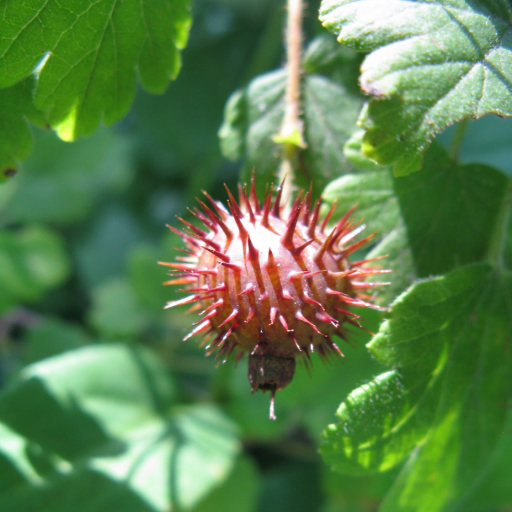
Often called the Prickly Gooseberry or Dogberry, Ribes cynosbati is a woodland native of North America that looks like it stepped out of a medieval herbalist’s garden. While many garden gooseberries are smooth-skinned, this wild relative protects its sweet-tart fruit with a coat of soft, hair-like prickles, giving the berries a "hedgehog" appearance. It is a resilient shrub that plays a vital role in forest ecosystems, providing food for specialized pollinators and nesting sites for small birds.
🔍 How to Identify
- 🌿 The Foliage: Leaves are roundish or heart-shaped, deeply divided into three to five toothy lobes. They feel soft and slightly velvety to the touch due to fine hairs on both sides.
- 🔔 The Blooms: In late spring, small, greenish-white flowers hang downward like delicate bells. Look closely at the long, protruding stamens that give the flowers a "fringed" look.
- 🍒 The Fruit: The most distinctive feature is the berry. Initially green and covered in stiff, harmless spines, they ripen to a deep reddish-purple. Despite their "scary" look, the spines often soften as the fruit matures.
🏡 In Your Garden
- 🌳 The Shade Lover: Unlike most fruit-bearing plants that demand full sun, the Prickly Gooseberry thrives in the dappled light of the forest floor. It is an excellent choice for "wild" corners of the garden where other shrubs might struggle with lower light.
- 🪨 Substrate Nuance: It loves rocky, well-drained soil. If your garden has a slope or a limestone-heavy area, this plant will feel right at home. It is quite hardy but dislikes "wet feet," so ensure the soil doesn't stay soggy.
- 🦋 Wildlife Magnet: It serves as a host plant for the larvae of several butterflies, including the Comma and Question Mark butterflies. Planting it is a direct way to support your local pollinator population.
⚠️ Safety & Toxicity
- 🟢 Status: Generally safe and edible.
- 🧤 Physical Hazard: While the berries are not toxic, the stems and the fruit itself are covered in prickles. These can cause minor skin irritation or "splinters" if handled roughly. Always wear gloves when pruning or harvesting.
- 🐾 Pets & Kids: The plant is non-toxic to dogs and cats, but the prickly texture usually discourages them from nibbling. The berries are edible for humans and are often used in jams or pies, though the outer "hairs" are usually strained or cooked down.
✨ Fun Fact
The species name cynosbati is derived from the Greek words for "dog" and "brier," which is why it is still colloquially called "Dogberry" in many parts of the Appalachian and Great Lakes regions!

Detailed Care Instructions
To grow Ribes Cynosbati, also known as Prickly Gooseberry, follow these steps:
- Location: Choose a suitable location for planting Ribes Cynosbati. It prefers partial shade to full sun and well-drained soil. Ensure the location is protected from strong winds.
- Soil Preparation: Prepare the soil by loosening it with a garden fork or tiller. Remove any weeds or grass and mix in some organic matter, such as compost, to enrich the soil.
- Planting: Dig a hole that is slightly larger than the root ball of the Ribes Cynosbati plant. Carefully place the plant in the hole, making sure the roots are spread out. Backfill the hole with soil and gently firm it around the plant.
- Watering: Water the plant thoroughly after planting. Ribes Cynosbati plants prefer consistently moist soil, but avoid overwatering. Water when the top inch of soil feels dry.
- Mulching: Apply a layer of organic mulch around the plant, about 2-3 inches deep. Mulch helps retain moisture, suppresses weeds, and keeps the plant's roots cool.
- Pruning: Prune Ribes Cynosbati in late winter or early spring before new growth begins. Remove any damaged or dead branches, as well as any overcrowded or crossing branches. This will help maintain an open and healthy plant structure.
- Fertilization: Apply a balanced fertilizer in early spring to provide necessary nutrients. Follow the instructions on the fertilizer packaging for proper application.
- Pest and Disease Control: Ribes Cynosbati may be susceptible to aphids, powdery mildew, and gooseberry sawfly. Monitor the plant regularly and take appropriate measures, such as using insecticidal soap or organic insecticides if necessary.
- Harvesting: Ribes Cynosbati produces small edible berries. Harvest them when they are ripe and fully colored. Use gloves while picking the berries due to the plant's prickly nature.
By following these steps, you can successfully grow Ribes Cynosbati plants in your garden.

Place in a bright room that is sun drenched almost all day. Or directly in a south-facing window.

Ribes Cynosbati plant prefers moist soil, and it should be thoroughly watered once a week during dry periods. However, the plant is prone to root rot if overwatered, so it is essential to ensure proper drainage. The soil should be evenly moist but not waterlogged. It is recommended to water the plant early in the morning or evening when the sun is not too hot. The plant should be watered at its base, avoiding watering the foliage as it may lead to mildew or other fungal diseases. If the plant is grown in a container, ensure that the pot has proper drainage holes, and excess water should be drained. The frequency of watering may vary depending on the temperature, soil type, and humidity level. It is always better to monitor the soil moisture level and water accordingly rather than following a strict watering schedule.
To fertilize this plant, use a balanced fertilizer with equal parts nitrogen, phosphorus and potassium. Apply the fertilizer once in early spring before new growth appears and once in late summer after fruiting has finished. Spread the fertilizer evenly around the base of the plant and water well after applying. Avoid getting fertilizer on the leaves or stems of the plant.
The ideal soil for this plant should be well-draining, moist but not waterlogged, and rich in organic matter. It should have a pH level between 5.5 and 6.5. The soil should be deep enough to accommodate the plant's root system, which can spread out considerably. It is a good idea to dig in some compost or other organic matter before planting to improve the soil's nutrient content and water retention. Avoid planting in heavy clay soils or soils that are prone to waterlogging. Consider using a mulch around the base of the plant to help retain moisture and regulate the soil temperature.
Ribes Cynosbati can be propagated using several techniques including division, cuttings, and layering.
Division:
To propagate Ribes Cynosbati by division, you need to dig up an established plant and separate it into smaller plants, each with its own root system. This method is best for mature plants that have become crowded.
Cuttings:
Another propagating method is cuttings. Taking cuttings should be done in the spring or early summer. Cut 4-6 inch stem sections from the parent plant and remove the lower leaves. Place the cuttings in rooting hormone and plant them in moist potting soil or perlite. Keep the soil consistently moist, and in about six to eight weeks, you should see roots develop.
Layering:
A third technique is layering. This method involves bending a low-hanging branch of the parent plant and securing it in contact with the soil. You can then make a small wound on the underside of the branch where it touches the ground and dust a rooting hormone on it. Afterward, cover the branch with soil and keep it moist. In about six to eight weeks, roots should develop where the wound was made.
Once the new plants have developed, you should transplant them to their own pot or garden location.








