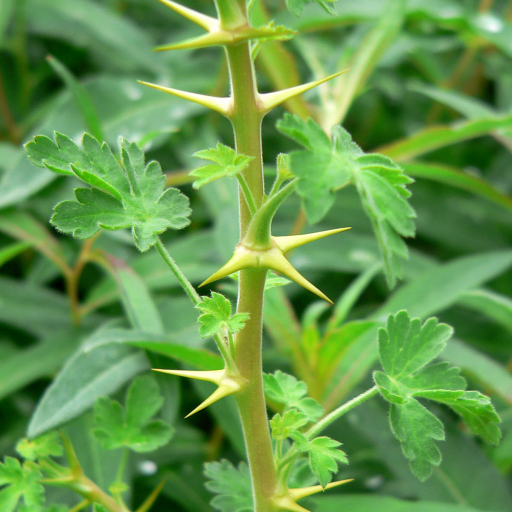
Plant Overview
Often called the Western Prickly Gooseberry, this high-altitude survivor is a staple of the rugged mountain landscapes across Western North America. It is a plant of beautiful contrasts—boasting delicate, saucer-shaped flowers and bright translucent berries, all while guarding itself with a fierce armor of spines. Whether found near a timberline or in a rock garden, it tells a story of resilience in thin, mountain air.
🔍 How to Identify
- 🌵 Thorny Armor: The stems are densely covered in fine, golden prickles and larger, sharp spines at the leaf nodes, making it a "no-touch" zone for most hikers.
- 🍃 Lacy Leaves: The foliage consists of small, fan-shaped green leaves that are deeply lobed (resembling tiny maple leaves) and often have a slightly fuzzy texture.
- 🌸 Saucer Blooms: Unlike the long tubes of some currants, these flowers are shallow and wheel-shaped, usually appearing in shades of dusty pink, orange-red, or pale yellow.
- 🍒 Bristly Berries: The fruit is a bright red, translucent berry. Unlike a smooth grape, these are covered in soft, glandular hairs (bristles) that give them a "fuzzy" appearance.
🏡 In Your Garden
- 🏔️ Mountain High: This plant is a specialist for rock gardens or high-elevation landscapes. It demands exceptional drainage and prefers gravelly, "lean" soil that mimics a mountain scree slope rather than rich, heavy potting mix.
- ❄️ Chill Factor: It is exceptionally cold-hardy but can be "diva-ish" in humid, low-elevation heat. It requires a distinct winter dormant period and struggles if the nights stay too warm during the summer.
- 🧤 Strategic Placement: Because of its spines, it makes an excellent "natural fence" to deter foot traffic, but keep it away from walkways where sleeves or skin might snag on its prickles.
⚠️ Safety & Toxicity
- ✅ Edible Fruit: The berries are non-toxic and edible. They have a sharp, tart flavor that is excellent for jams, though most foragers find them too acidic to eat by the handful.
- 🐾 Pet Safety: While the plant is not chemically toxic to pets, the sharp spines pose a significant physical risk to curious paws, noses, and eyes.
- 🧤 Physical Hazard: Always wear thick leather gloves when pruning. The spines are brittle and can easily break off under the skin, causing irritation similar to a splinter.
✨ Fun Fact
In the subalpine wild, these berries are a high-energy "superfood" for wildlife. Grizzly bears and various mountain birds rely on the Prickly Gooseberry to pack on fat reserves before the harsh winter snows bury the landscape.

Detailed Care Instructions
Ribes montigenum, commonly known as mountain currant or western red currant, is a deciduous shrub native to western North America. It produces small, edible berries and can be an attractive addition to your garden. Here are some steps to help you grow Ribes montigenum:
1. Site Selection:
- Sunlight: Choose a location that receives full sun to partial shade. It tolerates some shade, especially in hotter climates.
- Soil: Prefers well-drained, loamy soil but can tolerate a range of soil types, including sandy or clay soils. Ensure good drainage to prevent root rot.
2. Planting:
- Timing: The best time to plant Ribes montigenum is in the early spring or late fall when the plant is dormant.
- Spacing: Space plants about 3 to 5 feet apart to allow for adequate air circulation and growth.
3. Plant the Shrub:
- Preparation: Dig a hole twice as wide and the same depth as the root ball.
- Planting: Place the shrub in the hole, making sure the top of the root ball is level with or slightly above the ground surface. Fill the hole with soil, firming it gently around the roots.
- Watering: Water thoroughly after planting to settle the soil and eliminate air pockets.
4. Watering:
- Establishment: Keep the soil consistently moist but not waterlogged during the first growing season to help establish the root system.
- Regular Care: Once established, water during dry spells. Generally, Ribes montigenum is quite drought-tolerant but benefits from occasional deep watering.
5. Mulching:
- Apply a layer of organic mulch (such as wood chips or compost) around the base of the plant to conserve moisture, suppress weeds, and regulate soil temperature. Keep mulch a few inches away from the stem to prevent rot.
6. Pruning:
- Prune in late winter or early spring before new growth begins. Remove any dead, damaged, or crossing branches. Thin out older stems to allow light and air to reach the center of the plant.
7. Fertilizing:
- Generally, Ribes montigenum does not require heavy fertilization. You can apply a balanced, slow-release fertilizer in early spring if your soil is poor in nutrients.
8. Pests and Diseases:
- Ribes species can be susceptible to pests such as aphids and currant borers, as well as diseases like powdery mildew and rust. Regularly inspect your plants and treat issues promptly with appropriate pesticides or fungicides if necessary. Encourage beneficial insects and maintain good air circulation to minimize problems.
9. Harvesting:
- Berries typically ripen in mid to late summer. Once they reach a deep red color, they are ready to harvest. Picking them regularly can encourage more fruit production.
10. Propagation:
- Ribes montigenum can be propagated from seed, cuttings, or layering.
- Seeds: Stratify seeds by chilling them for 3-4 months before planting them in spring.
- Cuttings: Take hardwood cuttings in the fall or softwood cuttings in the late spring.
- Layering: Bend a low-growing branch to the ground, cover it with soil, and secure it until roots develop. Then, separate it from the parent plant.
Conclusion:
With these steps, you can successfully grow Ribes montigenum in your garden. Just remember to provide the right conditions, water appropriately, and keep an eye on pests and diseases to ensure healthy growth and a bountiful harvest.
- Seeds: Stratify seeds by chilling them for 3-4 months before planting them in spring.

Place in a bright room that is sun drenched almost all day. Or directly in a south-facing window.

Ribes montigenum, an intriguing plant native to the mountainous regions, requires considerate watering practices to ensure optimal growth. Here are some tips on how to water this plant:
1. Soil Moisture:
- Ensure the soil is consistently moist but not waterlogged. It thrives in well-draining soil that retains some moisture without becoming overly saturated.
2. Watering Frequency:
- In the growing season (spring and summer), water the plant regularly but allow the top inch of soil to dry out between watering sessions. This helps prevent root rot.
- During the dormant period (fall and winter), reduce the frequency of watering, as the plant's water needs decrease.
3. Watering Method:
- Water the base of the plant directly to avoid wetting the foliage, which can promote fungal diseases. Use a soaker hose or drip irrigation system to ensure even moisture distribution.
- It's best to water early in the morning to allow any excess moisture on leaves to dry off during the day, reducing the risk of disease.
4. Environmental Considerations:
- Be mindful of the local climate and adjust watering practices based on rainfall. In drier regions, more frequent watering may be necessary, while in areas with higher rainfall, you may need to water less often.
5. Mulching:
- Apply mulch around the base of the plant to help retain soil moisture and reduce the frequency of watering. Organic mulch, like compost or bark, works well.
6. Container-Grown Plants:
- If growing the plant in a container, check the soil moisture more frequently, as containers dry out faster than garden soil. Ensure the container has adequate drainage holes.
By carefully monitoring and adjusting your watering practices, you can help ensure the health and vitality of your Ribes montigenum plant.
Ribes montigenum, a species known for its edible fruits, requires careful fertilization to thrive. Here are some tailored instructions:
- Soil Testing:
- Prior to fertilizing, it's beneficial to conduct a soil test to understand the existing nutrient levels and pH. Ribes montigenum prefers slightly acidic to neutral soil (pH 6.0-7.0).
- Prior to fertilizing, it's beneficial to conduct a soil test to understand the existing nutrient levels and pH. Ribes montigenum prefers slightly acidic to neutral soil (pH 6.0-7.0).
- Choosing Fertilizer:
- Opt for a balanced, slow-release fertilizer with a 10-10-10 or 12-12-12 NPK ratio (Nitrogen, Phosphorus, Potassium). Alternatively, you can use an organic compost rich in nutrients.
- Opt for a balanced, slow-release fertilizer with a 10-10-10 or 12-12-12 NPK ratio (Nitrogen, Phosphorus, Potassium). Alternatively, you can use an organic compost rich in nutrients.
- Application Timing:
- Early Spring: Apply the fertilizer when new growth begins.
- Mid-Summer: A second, lighter application can be made to support fruit development.
- Early Spring: Apply the fertilizer when new growth begins.
- Application Amount:
- Follow the recommended amounts on the fertilizer package for shrubs. A general guideline is about 1/2 to 1 pound of balanced fertilizer per 100 square feet or around the drip line of the plant.
- Follow the recommended amounts on the fertilizer package for shrubs. A general guideline is about 1/2 to 1 pound of balanced fertilizer per 100 square feet or around the drip line of the plant.
- Method of Application:
- Granular Fertilizer: Evenly spread the fertilizer around the base of the plant, extending to the drip line. Avoid direct contact with the stem.
- Liquid Fertilizer: Dilute according to the instructions and water around the root zone. This can be done in place of one of the granular applications for quicker nutrient uptake.
- Granular Fertilizer: Evenly spread the fertilizer around the base of the plant, extending to the drip line. Avoid direct contact with the stem.
- Watering:
- After applying granular fertilizer, water the plant thoroughly to help nutrients penetrate the soil and reach the root zone.
- After applying granular fertilizer, water the plant thoroughly to help nutrients penetrate the soil and reach the root zone.
- Mulching:
- Apply a 2-3 inch layer of organic mulch (e.g., straw, composted leaves) around the plant to help retain moisture and provide additional slow-release nutrients.
- Apply a 2-3 inch layer of organic mulch (e.g., straw, composted leaves) around the plant to help retain moisture and provide additional slow-release nutrients.
- Monitoring:
- Regularly check the plant for signs of over-fertilization (excessive lush growth, leaf burn) or under-fertilization (yellowing leaves, poor growth). Adjust your fertilizing regimen accordingly.
By following these instructions, you can help ensure your Ribes montigenum receives the nutrients it needs for healthy growth and fruit production.
- Regularly check the plant for signs of over-fertilization (excessive lush growth, leaf burn) or under-fertilization (yellowing leaves, poor growth). Adjust your fertilizing regimen accordingly.
Ribes montigenum, a shrub commonly found in mountainous regions, thrives best in well-draining soil that is rich in organic matter. It prefers slightly acidic to neutral pH levels, typically ranging from 6.0 to 7.5.
Here's how to optimize the soil for Ribes montigenum:
- Drainage: Ensure the soil has good drainage. This can be achieved by incorporating materials such as sand or perlite if the native soil is heavy or clay-like.
- Organic Matter: Enrich the soil with organic matter such as compost, leaf mold, or well-rotted manure. This improves soil structure, nutrient content, and moisture retention.
- pH Level: The plant prefers slightly acidic to neutral soil. Test the soil pH and, if necessary, adjust it using amendments. For acidic soil, add sulfur or peat moss. For alkaline soils, incorporate lime.
- Nutrient Content: The soil should be fertile. A balanced slow-release fertilizer can be mixed into the soil at the time of planting. Opt for options rich in nitrogen, phosphorus, and potassium.
- Mulching: Apply a layer of organic mulch around the base of the plant to help retain soil moisture, moderate soil temperature, and reduce weed competition.
Before planting, prepare the soil by thoroughly mixing in the organic matter and any required soil amendments, ensuring a loose, aerated environment for root development. Continuous monitoring and adjustment throughout the growing seasons will aid in maintaining an optimal growing environment for Ribes montigenum.
Ribes montigenum can be propagated through both seeds and cuttings. Here are detailed steps for each method:
Propagation by Seeds
- Seed Collection:
- Collect ripe fruits in late summer or early fall.
- Extract seeds by mashing the berries and rinsing the pulp away in water.
- Collect ripe fruits in late summer or early fall.
- Cleaning Seeds:
- Separate seeds from the berry pulp using a fine strainer.
- Allow seeds to dry on a paper towel for a day or two.
- Separate seeds from the berry pulp using a fine strainer.
- Seed Stratification:
- Mimic natural winter conditions through cold stratification.
- Place seeds in a moist medium (like sand or peat) inside a plastic bag or container.
- Store in the refrigerator at approximately 5°C (40°F) for 2 to 3 months.
- Mimic natural winter conditions through cold stratification.
- Sowing Seeds:
- After stratification, sow seeds in pots or seed trays filled with a well-draining seed-starting mix.
- Press seeds lightly into the soil and cover them with a thin layer of mix.
- After stratification, sow seeds in pots or seed trays filled with a well-draining seed-starting mix.
- Germination:
- Place the pots or trays in a bright location with indirect sunlight.
- Keep the soil consistently moist but not waterlogged.
- Seeds generally germinate in 1 to 3 months after stratification.
- Place the pots or trays in a bright location with indirect sunlight.
- Transplanting:
- Once seedlings have grown several true leaves, they can be transplanted to larger pots or directly into the garden.
- Plant in a well-drained soil with partial to full sun exposure.
Propagation by Cuttings
- Once seedlings have grown several true leaves, they can be transplanted to larger pots or directly into the garden.
- Selecting Cuttings:
- Choose healthy, non-flowering stems from the current season’s growth.
- Take cuttings in early summer.
- Choose healthy, non-flowering stems from the current season’s growth.
- Preparing Cuttings:
- Cut 4-6 inch (10-15 cm) long sections from the stem.
- Remove the lower leaves, leaving a few at the top.
- Optional: Dip the cut end in rooting hormone to enhance root development.
- Cut 4-6 inch (10-15 cm) long sections from the stem.
- Planting Cuttings:
- Insert the cut end into pots filled with a moist, well-draining mix such as a combination of sand and peat.
- Ensure at least two nodes are buried in the soil.
- Water the cuttings thoroughly.
- Insert the cut end into pots filled with a moist, well-draining mix such as a combination of sand and peat.
- Providing the Right Conditions:
- Place the pots in a warm, bright location with indirect sunlight.
- Maintain high humidity around the cuttings. This can be achieved by covering them with a plastic bag or placing them in a propagation tray with a clear cover.
- Ensure the soil remains consistently moist.
- Place the pots in a warm, bright location with indirect sunlight.
- Root Development:
- Roots should develop in a few weeks to a few months.
- Check for root growth by gently tugging on the cuttings. Resistance indicates root formation.
- Roots should develop in a few weeks to a few months.
- Transplanting:
- Once a good root system has established, transplant the cuttings into larger pots or directly into the garden.
- Plant in well-draining soil with appropriate sunlight conditions.
Both methods can be effective, but propagation by cuttings is generally quicker and yields plants that are true to the parent. Seed propagation may produce plants with slight variations due to genetic diversity.
- Once a good root system has established, transplant the cuttings into larger pots or directly into the garden.








