Plant Overview
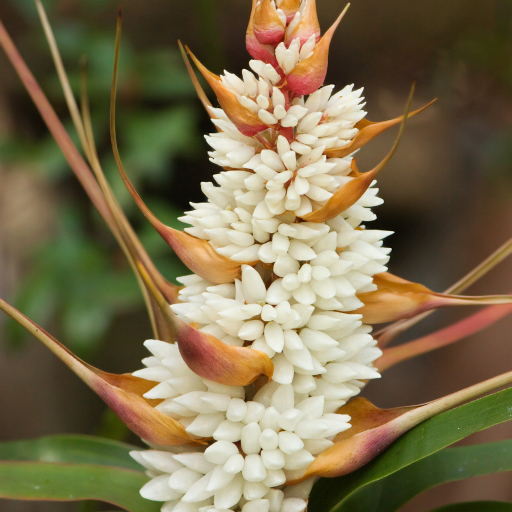
Known as the Pineapple Richea or Dragon-leaved Richea, this prehistoric-looking shrub is one of Tasmania’s most striking botanical treasures. Resembling something from a dinosaur-era landscape, it is famous for its massive, cream-colored flower spikes that pierce through the misty canopy of temperate rainforests. It belongs to the heath family, though its dramatic silhouette often leads people to mistake it for a tropical yucca or agave.
🔍 How to Identify
- 🌿 Dragon-like Leaves: Long, sword-shaped leaves that taper to a sharp point, spiraling around the stem in a dense, crowded fashion.
- 🍍 Pineapple Blooms: Massive terminal flower spikes (up to 30cm long) featuring white to cream bracts that eventually drop to reveal small, bell-shaped flowers tucked inside.
- 🪵 Woody Stature: A slow-growing shrub or small tree that can reach several meters in height, often developing a rugged, branched trunk as it ages.
🏡 In Your Garden
- 💧 Cool & Constant: This plant is a "cool climate specialist." It thrives in high humidity and consistent moisture, mirroring the damp mountains of the Australian wilderness. It will struggle significantly in hot, dry, or inland climates with low humidity.
- ⛰️ Acidic Roots: Like its cousins the Blueberries and Azaleas, it requires well-draining, acidic soil rich in organic matter. It is particularly sensitive to root disturbance, so it is best to choose a permanent "forever home" for it rather than transplanting it later.
⚠️ Safety & Toxicity
- ✅ Non-Toxic: The Richea dracophylla is not known to be poisonous to humans, cats, or dogs.
- 🗡️ Physical Hazard: The most significant danger is mechanical; the leaf tips are remarkably sharp and rigid. Planting it away from narrow pathways is wise to avoid accidental scratches or "stabs" from the foliage.
✨ Fun Fact
The name dracophylla literally translates to "dragon leaf." In the wild, these plants are vital for local biodiversity, serving as a high-energy nectar source for Tasmanian honeyeaters (birds) during the chilly early spring.

Detailed Care Instructions

Some plants require more regular watering than others, which should be done every few days. It's critical to maintain the soil moist all of the time. The water requirements of the same plant placed in pots with varying sizes will differ. Because the water in the smaller pot evaporates faster than the water in the larger pot, it will require more watering. Regardless of pot size, the surface should constantly be maintained moist.








