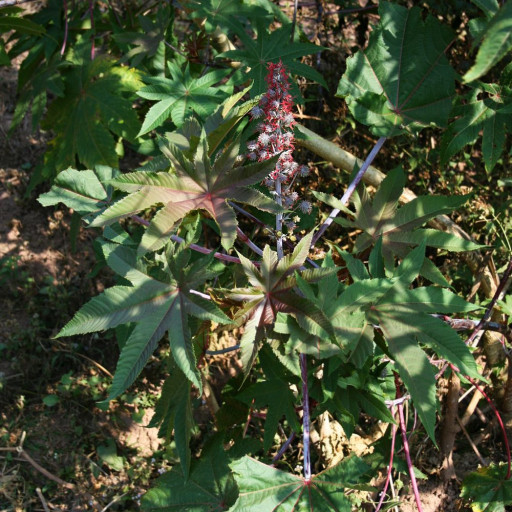
Plant Overview
Often called the "Palma Christi" (Palm of Christ) due to its hand-shaped leaves, the Castor Bean plant is a stunning, fast-growing architectural marvel. While it looks like a tropical escape, it holds a dual reputation as both a source of healing oil and one of the most toxic plants on Earth. Its bold colors and "alien-looking" seed pods make it a favorite for gardeners wanting a dramatic focal point.
🔍 How to Identify
- 🍃 Star-Shaped Leaves: The foliage is massive, palmate, and deeply lobed with 5 to 12 points, often reaching over 2 feet across. Depending on the variety, they can be glossy green, deep bronze, or a striking maroon.
- 🎋 Bamboo-Like Stems: The main stalks are thick, hollow, and smooth, frequently tinted with a reddish-purple hue that glows when backlit by the sun.
- 🧶 Spiny Seed Pods: In late summer, the plant produces clusters of round, prickly husks that look like miniature, colorful sea urchins. These contain the infamous mottled, bean-like seeds.
🏡 In Your Garden
- 🚀 Extreme Growth Speed: This plant is a "one-season wonder." In warm climates, it can rocket from a tiny seed to a 10-foot-tall tree in just a few months, making it perfect for temporary privacy screens.
- ☀️ Sun and Space: It is a hungry, thirsty sun-lover. It requires deep, rich soil and plenty of room to expand; otherwise, its heavy canopy might cause it to topple in high winds.
⚠️ Safety & Toxicity
- 🚫 DEADLY WARNING: The entire plant is toxic, but the seeds contain ricin, one of the most potent natural toxins known. Just a few chewed seeds can be fatal to humans or pets.
- 🐾 Pets & Children: It is highly recommended to snip off the flower spikes before they develop into seed pods if you have curious toddlers or dogs.
- 🧤 Skin Sensitivity: Some gardeners experience "contact dermatitis" (itchy skin) when handling the leaves or sap, so wearing gloves during pruning is a wise move.
✨ Fun Fact
The genus name Ricinus is the Latin word for "tick." This isn't a coincidence—the seeds have a unique mottled pattern and a small bump at one end that makes them look exactly like a bloated dog tick!

Detailed Care Instructions
| Invasive | Weed |
| Lighting | Full Sun |
| Toxicity | Poisonous |
| Mature Size | Height Of 6 To 10 Feet |
To grow Ricinus Communis, also known as the castor oil plant, follow these steps:
- Obtain the seeds: Purchase or collect mature castor oil plant seeds. They can be found at garden stores or online suppliers.
- Choose the planting location: Select a well-draining area with full sun exposure. The soil should be fertile with a pH level between 5.5 and 6.5.
- Prepare the soil: Loosen the soil and remove any weeds or debris. Add organic matter like compost or well-rotted manure to enrich the soil. Mix it thoroughly.
- Sow the seeds: Plant the seeds about 1 inch deep in the soil. Space them around 3 feet apart as the plant can grow up to 10 feet tall and 3-6 feet wide.
- Water regularly: Keep the soil moist but not waterlogged. Water the seeds and young plants frequently until they establish themselves. Once established, water deeply but less frequently, allowing the topsoil to dry out between waterings.
- Provide support: As the castor oil plant grows, provide support such as stakes or a trellis to prevent it from toppling over in strong winds.
- Mulch: Apply a layer of organic mulch around the plant to retain moisture, suppress weed growth, and maintain a cool root environment.
- Fertilize: Feed the plant with a balanced fertilizer once a month during the growing season to promote healthy growth.
- Prune: Regularly prune the plant to maintain its shape and improve airflow. Remove any dead or damaged branches.
- Protect from frost: If you live in areas with cold winters, consider growing the castor oil plant as an annual or move it indoors during winter months.
Remember, while growing the castor oil plant, always wear gloves and handle the seeds with care as they contain toxic compounds. Additionally, the seeds should never be consumed or planted where pets or children may have access to them.

Place in a bright room that is sun drenched almost all day. Or directly in a south-facing window.

To water this plant, the first step is to check the moisture level in the soil by touching the top layer with your fingers. If it feels dry, it is time to water the plant. Use a watering can or a hose with a nozzle attachment to water the soil around the base of the plant. Water it slowly and evenly, making sure to saturate the soil but not to overwater it. Allow the water to absorb into the soil for a few minutes before checking the moisture level again. Avoid watering the leaves as this can lead to fungal diseases. Depending on the temperature and humidity levels, this plant may need to be watered once or twice a week.
To fertilize this plant, use a balanced fertilizer with equal parts nitrogen, phosphorus, and potassium. Apply the fertilizer in early spring before new growth appears and again in mid-summer. Water the plant after fertilizing to ensure that the nutrients are absorbed by the roots. Avoid over-fertilizing as it can burn the plant roots and lead to damage.
The optimal type of soil for the plant species with the scientific name Ricinus Communis is a well-draining and nutrient-rich soil mixture. It is recommended to use a soil mixture that contains loam, sand, and small amounts of organic matter. Additionally, as this plant species prefers slightly acidic soil conditions, it is recommended to add an acidifying agent to the soil mixture if necessary. It is important to ensure that the soil is not waterlogged, as the plant does not tolerate excess moisture. To achieve the best growth results, the soil should be kept moist but not saturated, and fertilizer should be added regularly during the growing season.
One way to propagate this particular plant is to collect its seeds and plant them in a well-draining soil mix. The seeds should be sown at a depth of about twice their own size and kept moist but not waterlogged. They should be placed in a warm, bright location and germination should begin within 7-10 days. Once the seedlings have emerged, they should be thinned to their own individual containers or spaced out in a garden bed.
Another method of propagation is to take stem cuttings from an existing plant in the springtime. The stem cuttings should be taken from the softwood at the top of the plant and should measure around 4-5 inches in length. The lower leaves should be removed, leaving a few at the top, and the stem should be dipped in rooting hormone before being planted in soil or a propagation media. The cuttings should be placed in a bright, warm location and kept moist until they begin to root, which should take around four weeks.
Finally, it is possible to propagate this plant through layering, which involves bending a stem to the ground and covering part of it with soil or a propagation media. The area of the stem that is buried should be wounded slightly to encourage root growth. Once the stems have rooted, they can be cut away from the parent plant and transplanted to their own container or garden bed.
Common pests of the castor-oil-plant include Spider mites, thrips, larvae. Make a habit of checking your castor-oil-plant frequently for pests so that any infestations can be caught and managed early.








