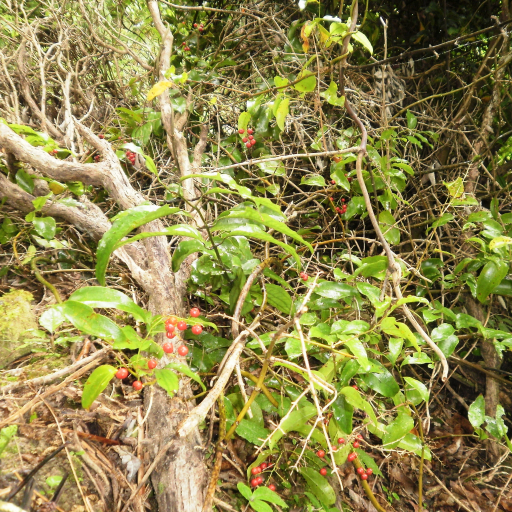
Plant Overview
Known as Kareao in Māori and Supplejack by early settlers, this climbing woody vine is the architectural "barbed wire" of the New Zealand bush. It is famous for creating impenetrable, tangled thickets that can frustrate hikers but provide vital highways for forest birds. In the deep forest, its dark, cable-like stems hang from the canopy like prehistoric ropes, giving the woods an ancient, untamed atmosphere.
🔍 How to Identify
- 🪵 The Stems: Smooth, dark brown to black, woody stems that look remarkably like flexible plumbing pipes or cables. They are extremely tough and can reach up to 5 centimeters in diameter.
- 🌿 Leaf Logic: Interestingly, you often won't see leaves at ground level. The plant only produces its shiny, lance-shaped, leathery green leaves once the vine reaches the sunlit forest canopy.
- 🍒 The Berries: In late summer and autumn, the vine produces clusters of bright, marble-sized red berries. These are a favorite feast for native birds like the Kererū.
🏡 In Your Garden
- 🌲 Growth Habit: This is a vigorous climber that uses a "twining" method to ascend. If planted in a garden, it needs a very sturdy structure or a large, established tree to climb. It prefers damp, rich soil and a shaded "foot" with its head in the sun.
- 🐦 Wildlife Magnet: If you have the space for a wilder corner in your landscape, Ripogonum is a powerhouse for biodiversity. It provides nesting sites for small birds and a reliable food source for nectar-seeking insects and berry-eating birds.
⚠️ Safety & Toxicity
- ✅ Status: Non-toxic and safe.
- 🛡️ Physical Hazards: While not chemically toxic, the primary danger of Supplejack is physical. The dense, looping vines at ground level are a major tripping hazard. The berries are technically edible but are generally described as bland or slightly bitter, so they are best left for the birds.
✨ Fun Fact
The supple, incredibly strong stems were traditionally used by Māori to weave hīnaki (eel pots) and as lashing for building houses and fences. Because the stems become very flexible when steamed or soaked, they were the "industrial-strength zip-ties" of the pre-colonial era!

Detailed Care Instructions

Place in a window with dappled sun or a spot in the middle of a room. Or directly in a window facing west or east.

When the top few inches of soil dry out, water your plants. If the top few inches of soil are still moist, do not water your plant. Wait a few days, then poke your finger into the soil to see if anything has changed. Overwatering poses a disease risk, such as the development of fungal diseases in the roots. These plants have adaptations in there leaves that allow them to survive in low water supply.








