Plant Overview
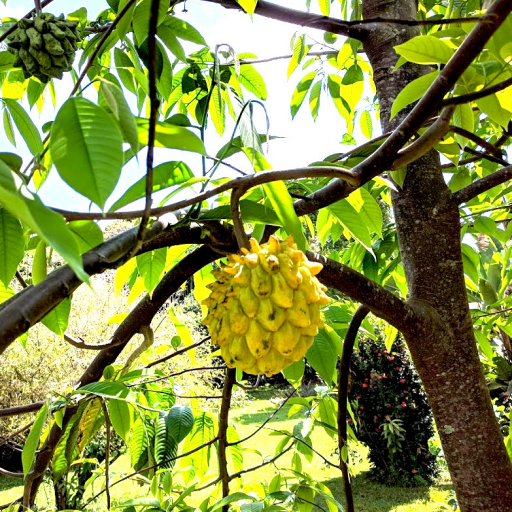
Often called the "Lemon Meringue Pie Tree," the Biriba is a tropical superstar known for its decadent custard-like fruit and prehistoric appearance. Native to the Amazon rainforest, it looks like something straight out of a jungle fantasy, featuring bright yellow fruit covered in soft, fleshy spikes. It is a prized possession for rare fruit collectors who crave its unique, zesty-sweet flavor profile.
🔍 How to Identify
- 🍋 The Fruit: A stunning, heart-shaped globe that turns from green to vibrant yellow when ripe. It is covered in soft, blunt "spikes" or tubercles that may bruise or turn black if handled roughly.
- 🍃 Foliage: Large, vibrant green leaves that are elongated (elliptical) and slightly fuzzy on the underside, arranged in a flat, decorative pattern along the branches.
- 🌸 Geometric Flowers: Three-petaled, light green or yellowish flowers that hang downward. They look like fleshy, three-sided propellers or tiny hanging lanterns.
🏡 In Your Garden
- 💧 Thirsty Growth: This tree is an exceptionally fast grower but possesses "soft wood." It requires consistent moisture and high humidity to thrive. Because the branches are brittle, it should be planted in a spot protected from strong winds to prevent breakage.
- 🌞 Tropical Needs: Biriba is strictly a warm-weather plant. It has zero tolerance for frost; even a light chill can cause the leaves to drop. If you live outside the tropics, it requires a very large, heated greenhouse to produce fruit successfully.
⚠️ Safety & Toxicity
- 🍽️ Edible Pulp: The creamy white pulp is safe and delicious for humans, often eaten fresh with a spoon.
- 🚫 Seed Warning: Like many members of the Annonaceae family (such as Pawpaw or Cherimoya), the seeds are hard and contain acetogenins. They should never be chewed, swallowed, or ground up.
- 🐾 Pets: Keep fallen, fermenting fruit away from dogs, as the seeds and high sugar content can cause digestive distress.
✨ Fun Fact
The Biriba is a "hyper-oxidizer." Once you slice the fruit open, the snow-white flesh starts turning brown or black within minutes—much faster than an apple or an avocado—so it is best enjoyed immediately after opening!

Detailed Care Instructions
To grow a Rollinia mucosa plant, you can follow these steps:
- Purchase or obtain a Rollinia mucosa plant or seeds from a reputable nursery or online store. Make sure the plant or seeds are healthy and disease-free.
- Choose a suitable location: Rollinia mucosa plants thrive in warm, tropical climates. They require plenty of sunlight, so choose a location with at least 6-8 hours of direct sunlight per day. The temperature should ideally be between 70-85°F.
- Prepare the soil: Rollinia mucosa plants prefer well-draining soil that is rich in organic matter. Mix equal parts of potting soil, compost, and coarse sand to create a well-draining mixture.
- Planting: If you have seeds, soak them in water for 24 hours before planting to increase the chances of germination. Plant the seeds or young seedling in a large pot or directly into the ground, ensuring that the soil is loose and well-draining. Space multiple plants at least 10-15 feet apart as they can grow into large trees.
- Watering: Keep the soil consistently moist, but avoid overwatering as it can lead to root rot. Water the plant deeply once or twice a week, depending on the climate and soil conditions.
- Fertilization: Apply a balanced, slow-release fertilizer every 2-3 months during the growing season (spring and summer). Follow the manufacturer's instructions for dosage.
- Pruning: As the plant grows, you may need to trim it to maintain a desired shape and size. Prune any dead, damaged, or overcrowded branches to promote healthy growth.
- Pests and diseases: Rollinia mucosa plants are generally disease-resistant, but they can be susceptible to common pests like aphids, mealybugs, and spider mites. Monitor your plant regularly and treat any infestations promptly using organic pest control methods.
- Harvesting: Rollinia mucosa plants typically start producing fruit within 2-3 years. The fruit is ripe when the skin turns a slightly yellowish-green color and feels slightly soft to the touch. Carefully cut the fruit from the tree to avoid damaging it.
Remember, growing Rollinia mucosa plants can be challenging outside of their natural tropical environment. However, with proper care, you can enjoy the unique fruits these plants produce.
To water this particular plant, it is important to check the moisture level of the soil before watering. One way to check is to insert your finger into the soil up to the first knuckle and see if it feels moist or dry. If it feels dry, it's time to water.
When watering, it is important to thoroughly saturate the soil until water drains from the bottom of the pot. Make sure not to overwater and allow the plant to sit in standing water, as it can lead to root rot.
The frequency of watering will depend on the environment the plant is in, such as temperature, humidity, and light levels. It is important to observe the plant and adjust watering accordingly. In general, Rollinia Mucosa prefers consistently moist but not waterlogged soil.
To fertilize this plant, use a balanced fertilizer with a ratio of 10-10-10. Apply the fertilizer every two weeks during the growing season, which is typically spring and summer. Mix the fertilizer at half strength before applying it to the soil around the plant. Be sure to water the plant thoroughly after fertilizing to avoid burning the roots. Avoid fertilizing during the dormant season.
The ideal soil for this plant should be well-draining and rich in organic matter, with a slightly acidic pH level. It should be able to retain moisture without becoming waterlogged. The soil should also have good aeration and be loose enough to allow the roots to grow and spread easily. Adding perlite or vermiculite to the soil can improve drainage and prevent compaction. It is important to avoid using heavy clay soils or soils with high salt content, as this can be harmful to the plant. If using a container, ensure it has drainage holes to prevent water from accumulating at the bottom.
Rollinia mucosa is a tropical fruit-bearing plant that can be propagated through several different methods. The most common way to propagate this plant is through seeds, which can be collected from mature fruits.
To propagate Rollinia mucosa through seed, the fruits should be picked when they are mature and fully ripe. The flesh should be scooped out and cleaned thoroughly to remove any remaining pulp. The seeds should then be dried for a few days before planting.
Another way to propagate Rollinia mucosa is by taking stem cuttings. This method involves taking a healthy stem from the plant and cutting it into sections that are approximately 4-6 inches long. Each section should have at least one leaf node, which is where the roots will grow from. The cuttings should be planted in a pot filled with well-draining soil and kept moist until roots start to form.
A third way to propagate Rollinia mucosa is through air layering, which involves wounding a branch of the plant and encouraging new roots to grow from that area. This method can take longer than other methods, but it is a reliable way to propagate older plants.
Regardless of the propagation method used, Rollinia mucosa plants require warm and humid conditions to thrive. They should be planted in a well-draining soil mix and kept moist but not waterlogged. With proper care and maintenance, Rollinia mucosa can be grown successfully and produce delicious tropical fruits.








