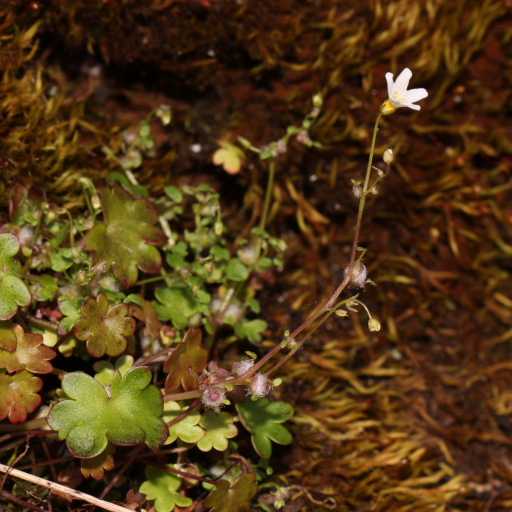
Plant Overview
Known as the California Mistmaiden, this delicate native beauty is often found clinging to mossy coastal bluffs and shaded, dripping rock faces. Its poetic name reflects its preference for the cool, damp "mist" of the Pacific Northwest and Northern California. While it looks like a fragile woodland fairy, it is a resilient perennial that brings a touch of wild, ethereal charm to shaded rock gardens.
🔍 How to Identify
- 🌼 The Blooms: Small, funnel-shaped flowers that are stark white with a bright yellow "eye" or throat. They grow in loose, nodding clusters atop slender stems.
- 🍃 The Foliage: Distinctive basal leaves that are scalloped or lobed, roughly kidney-shaped, and slightly fleshy. They often form a lush, green carpet before the flower stalks emerge.
- 🌱 Growth Habit: A low-growing, clumping plant that rarely exceeds 8–10 inches in height, often appearing as if it is emerging directly from a crack in a rock or a bed of moss.
🏡 In Your Garden
- 💧 The "Mist" Requirement: True to its name, this plant thrives in high humidity and constant moisture. It is perfect for a "rain garden" or a spot near a water feature where the soil remains damp but never stagnant.
- 😴 Summer Slumber: Don't panic if your Mistmaiden disappears! In many climates, this plant goes drought-dormant in the heat of summer. It retreats into its tubers to wait for the return of cool, wet weather, so avoid overwatering it during its "nap."
- 🪨 Niche Dweller: Because it has shallow roots, it struggles with aggressive garden weeds. It performs best in a dedicated rockery or a shaded container where it doesn't have to compete for space.
⚠️ Safety & Toxicity
- 🟢 Status: Generally considered non-toxic.
- 🐾 Details: There are no documented reports of Romanzoffia californica being poisonous to cats, dogs, or humans. However, because it is a delicate wild species, it is best kept as an ornamental rather than a snack for curious pets.
✨ Fun Fact
The genus Romanzoffia was named in honor of Count Nikolai Rumyantsev (Romanzoff), a Russian nobleman who sponsored the Kotzebue expedition to explore the Pacific coast in the early 19th century!

Detailed Care Instructions
To successfully grow the Romanzoffia Californica plant, also known as California mist, follow these steps:
- Choose a suitable location: Romanzoffia Californica prefers partial shade to full sun. Select a spot in your garden that receives 4-6 hours of direct sunlight per day.
- Prepare the soil: The plant thrives in well-draining soil with moderate moisture. Add compost or organic matter to improve soil fertility and drainage.
- Plant the seeds or seedlings: You can sow the seeds directly in the garden in the fall or early spring. Alternatively, you can start seeds indoors and transplant them when they are strong enough. Place the seeds about 1/8 inch deep and water lightly.
- Watering: Keep the soil consistently moist but not saturated. Water the plants lightly to prevent overwatering. Avoid allowing the soil to dry out completely, especially during hot, dry periods.
- Mulching: Apply a layer of mulch around the plants to help retain moisture and reduce weed growth.
- Fertilizing: California mist plants typically do not require heavy feeding. However, you can apply a slow-release balanced fertilizer in the spring to promote healthy growth.
- Pruning: Trim back any dead or damaged foliage to encourage new growth. Trim the plants to maintain their desired shape and size.
- Pests and diseases: Romanzoffia Californica is generally resistant to pests and diseases. However, you should regularly inspect the plants for any signs of issues and treat accordingly if necessary.
- Propagation: California mist can also be propagated by division. Divide established plants during early spring or fall every few years to create new plants.
- Enjoy the blooms: Romanzoffia Californica produces small, delicate flowers in shades of white, pink, or lavender. Enjoy their beauty and attract pollinators to your garden.
Remember to adjust your care regimen according to the specific needs and conditions of your garden. Regular observation and care will help ensure the health and growth of your Romanzoffia Californica plants.

Place in a window with dappled sun or a spot in the middle of a room. Or directly in a window facing west or east.

To water this plant, ensure that the soil is moist but not waterlogged. Allow the soil to dry out slightly between waterings, and be careful not to overwater as this can lead to root rot. Water thoroughly, making sure that the water reaches the entire root zone. Avoid getting water on the foliage as this can lead to disease. Watering frequency will depend on the temperature, humidity, and light conditions in its environment.
To promote healthy growth and development of the plant, fertilize it with a balanced, all-purpose fertilizer once per month during the growing season. Use a fertilizer with balanced amounts of nitrogen, phosphorus, and potassium. Be sure to follow the manufacturer's instructions for application rates and frequency. Avoid fertilizing too much, as this can result in excessive growth or damage to the plant. Additionally, it is important to water the plant regularly, taking care not to let the soil become too dry or waterlogged.
The ideal soil for the plant is a well-draining soil mix with high organic matter content. It prefers a slightly acidic soil with a pH range of 5.6 to 6.5. Sandy loam or loamy soil with good drainage is ideal for the plant. It also requires a soil that remains consistently moist but not water-logged. The plant can tolerate clay soils as long as they are well-draining. Soil with a high salt content or alkaline soil is not recommended for the plant. It is important to avoid compacted soil as it can hinder the growth and development of the plant's delicate root system.
To propagate this plant, first gather seeds from fully matured plants. Sow the seeds in well-draining soil that has been moistened beforehand. Cover the seeds with a thin layer of soil and water lightly. Place the container in a location that receives bright, indirect light and maintain consistent moisture levels. Germination can take up to six weeks. Once the seedlings have developed their second set of leaves, they can be carefully transplanted into individual containers with well-draining soil. Water as needed and gradually introduce the plants to brighter light.








