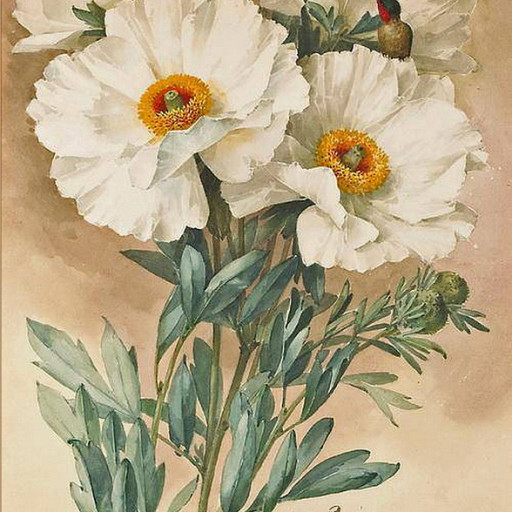
Plant Overview
Often called the "Fried Egg Plant" for its massive, sunny-side-up blooms, the Matilija Poppy is a showstopper native to California and Baja. It holds a legendary status in Western gardening, not just for its size, but for its defiant, untamed spirit. According to local lore, the flower was born from the tears of a grieving maiden named Matilija, turning a story of sorrow into one of the most spectacular floral displays in the botanical world.
🔍 How to Identify
- 🍳 The "Fried Egg": Each flower features six enormous, crinkled white petals that look like delicate crepe paper, surrounding a dense, globular center of bright golden-yellow stamens.
- 🌿 Silvery Foliage: The leaves are deeply lobed and possess a distinct glaucous (waxy) blue-gray or silver-green hue, which helps the plant reflect intense sunlight.
- 📏 Stature: This is no delicate wildflower; it is a shrubby perennial that can reach heights of 6 to 8 feet, with woody bases and branching stems.
🏡 In Your Garden
- 🏃 A Persistent Traveler: This plant spreads aggressively via underground rhizomes. While beautiful, it can quickly colonize a garden bed, so it is best suited for large slopes or areas where it has room to run wild.
- 🚫 Root Sensitivity: The Matilija Poppy is notoriously difficult to establish because it hates root disturbance. If you damage its fragile taproot during planting, the plant may fail to thrive. Once it "takes," however, it is nearly indestructible.
- ✂️ Post-Bloom Refresh: To prevent the plant from looking "leggy" or unkempt, gardeners usually cut the stems back to just a few inches above the ground in late autumn. This encourages vigorous, fresh growth in the spring.
⚠️ Safety & Toxicity
- 🛡️ Generally Safe: Romneya coulteri is not listed as a majorly toxic plant for humans or common household pets.
- 💧 Sap Irritation: Like many members of the poppy family, the stems contain a sap that may cause mild skin irritation or dermatitis in sensitive individuals. It is always wise to wear gloves when pruning large stands.
✨ Fun Fact
🔥 The Scent of Smoke: In the wild, Matilija Poppy seeds are "fire followers." They often refuse to sprout for years until the intense heat or the specific chemical signals from wood smoke trigger their germination, allowing them to dominate the charred landscape after a wildfire.

Detailed Care Instructions
| Color | White |
| Soil Ph | 5-8 |
| Lighting | Full Sun |
| Toxicity | Toxic |
| Soil Type | Sandy Loam, Tolerant Of All Soils |
| Bloom Time | March To August |
| Plant Type | Tender Perennial |
| Mature Size | 6 To 10 Feet Tall |
| Native Area | California, Northern Mexico |
| Sun Exposure | Full Sun |
| Hardiness Zones | 8-10 |
To successfully grow Romneya Coulteri, also known as Matilija poppy or California poppy, follow these steps:
- Climate requirements: Romneya Coulteri is native to California and flourishes in Mediterranean climates with mild, wet winters and hot, dry summers. Ensure that your region has similar conditions for optimal growth.
- Sunlight: Plant the Romneya Coulteri in a spot that receives full sunlight for at least 6-8 hours a day.
- Soil: The soil should be well-draining, sandy or loamy, and moderately fertile. If your soil is heavy clay, consider adding organic matter or sand to improve drainage.
- Planting: It's best to start with nursery-bought plants or propagated divisions in spring or early summer. Dig a hole that is slightly wider than the container, place the plant in the hole, and backfill with soil. The crown should be level with the soil surface.
- Watering: Initially, water the plant regularly to establish its root system. Once established, Romneya Coulteri is drought-tolerant and does not require frequent watering. Allow the soil to dry between waterings, but avoid extended periods of extreme dryness.
- Mulching: Apply a layer of organic mulch around the base of the plant to retain moisture and prevent weed growth. Keep the mulch a few inches away from the stem to prevent rot.
- Pruning: Prune Romneya Coulteri in late winter or early spring before new growth appears. Cut back any dead or damaged stems, and remove any weak or overcrowded growth to improve airflow. Be cautious as the sap can cause skin irritation.
- Support: Since Romneya Coulteri has tall, long flower spikes that may need support, consider using stakes or a trellis to prevent them from flopping over. Install these supports early in the growing season.
- Propagation: Romneya Coulteri is most easily propagated by root division. In early spring, dig up the root mass and carefully separate the sections with roots. Replant the divided clumps immediately.
- Pest and disease control: Generally, Romneya Coulteri does not suffer from serious pest or disease issues. Keep an eye out for aphids, snails, or slugs, and treat as necessary using organic pest control methods.
Remember, growing Romneya Coulteri may require patience, as it can take a few years to reach its full potential. But with the right conditions and care, you can enjoy its beautiful, large, white-petaled flowers and attractive foliage.

Place in a bright room that is sun drenched almost all day. Or directly in a south-facing window.

Romneya Coulteri plants prefer moderate watering during their growing season. Their watering needs may vary depending on the prevailing weather conditions. Thus, it's advisable to check the moisture content of the plant's soil before watering. One way to do this is by sticking a finger about two inches deep into the soil.
If the soil feels dry, then it is time to water the plant. It's essential to avoid overwatering the Romneya Coulteri plant as they are susceptible to waterlogged soil. This can cause root rot and eventually damage or kill the plant.
When watering, ensure the water is directed towards the base of the plant to help reach the roots. Use a watering can with a nozzle to control the flow and avoid splashing water on the plant's leaves and flowers. If the plant is potted, ensure there are drainage holes in the pot to drain excess water.
Lastly, it's advisable to water the plant in the early mornings or late afternoons when temperatures are cooler. This helps reduce water loss due to evaporation and prevents scorching of the plant's leaves and flowers.
To fertilize this plant, you should use a slow-release fertilizer in early spring, applying it to the soil around the base of the plant. Be sure to water the fertilizer in well. Avoid over-fertilization, as it can lead to excessive growth that can weaken the plant.
Romneya Coulteri is a plant that grows best in well-drained soil. It thrives in sandy or loamy soils that are slightly acidic to neutral in pH. It is recommended to use a soil mixture that is rich in nutrients such as compost or aged manure. Some gardeners also prefer to mix in perlite or sand to improve drainage and prevent waterlogging. It is important to avoid heavy clay soils as they tend to retain moisture, leading to root rot and other diseases. The ideal soil texture for Romneya Coulteri is loose, friable, and well-aerated.
Romneya coulteri can be propagated through the use of seeds and root cuttings. To propagate through seed, gather the seeds from the parent plant after they have fully ripened and are ready to be dispersed. Sow the seeds in well-draining soil and keep moist. Germination can take several weeks or even months.
To propagate through root cuttings, select a healthy parent plant and dig up a section of its roots. Cut the roots into sections that are about two inches in length and plant them in a mix of sand and peat moss. Keep the soil moist but not waterlogged. After several weeks, new shoots should start emerging from the cuttings.
Common pests of the matilija poppy include Spider mites, aphids. Make a habit of checking your matilija poppy frequently for pests so that any infestations can be caught and managed early.








